
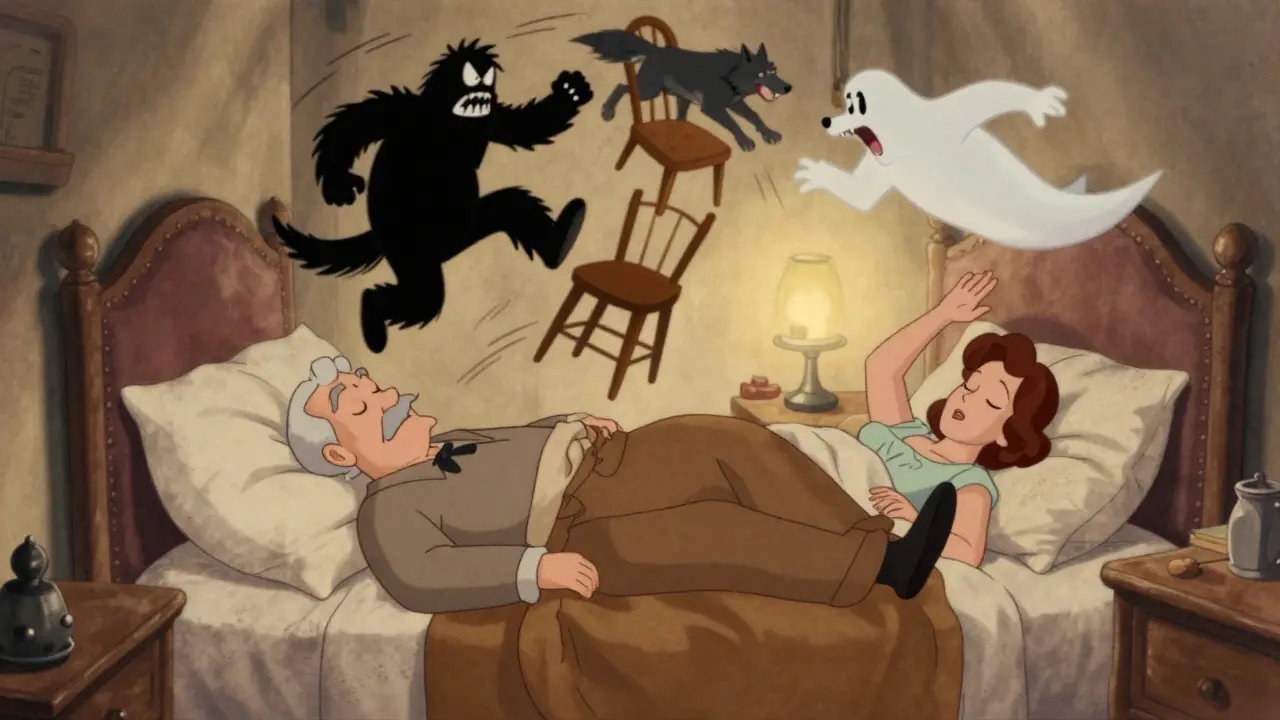
REM sleep behavior disorder (RBD) isn’t just about acting out dreams. It’s a warning sign that something deeper is happening in the brain. People with RBD kick, punch, yell, or jump out of bed while asleep-often without remembering it in the morning. Their bodies aren’t paralyzed during REM sleep like they should be. Instead, they’re physically living out vivid, sometimes violent, dreams. This isn’t normal sleepwalking. It’s a neurological red flag.
More than 90% of people diagnosed with RBD will eventually develop a neurodegenerative disease like Parkinson’s, dementia with Lewy bodies, or multiple system atrophy. Studies show that within 12 years, about 73.5% of those with idiopathic RBD (meaning no known cause) go on to develop one of these conditions. That’s why treating RBD isn’t just about stopping the nighttime chaos-it’s about catching brain disease early.
How RBD Is Diagnosed
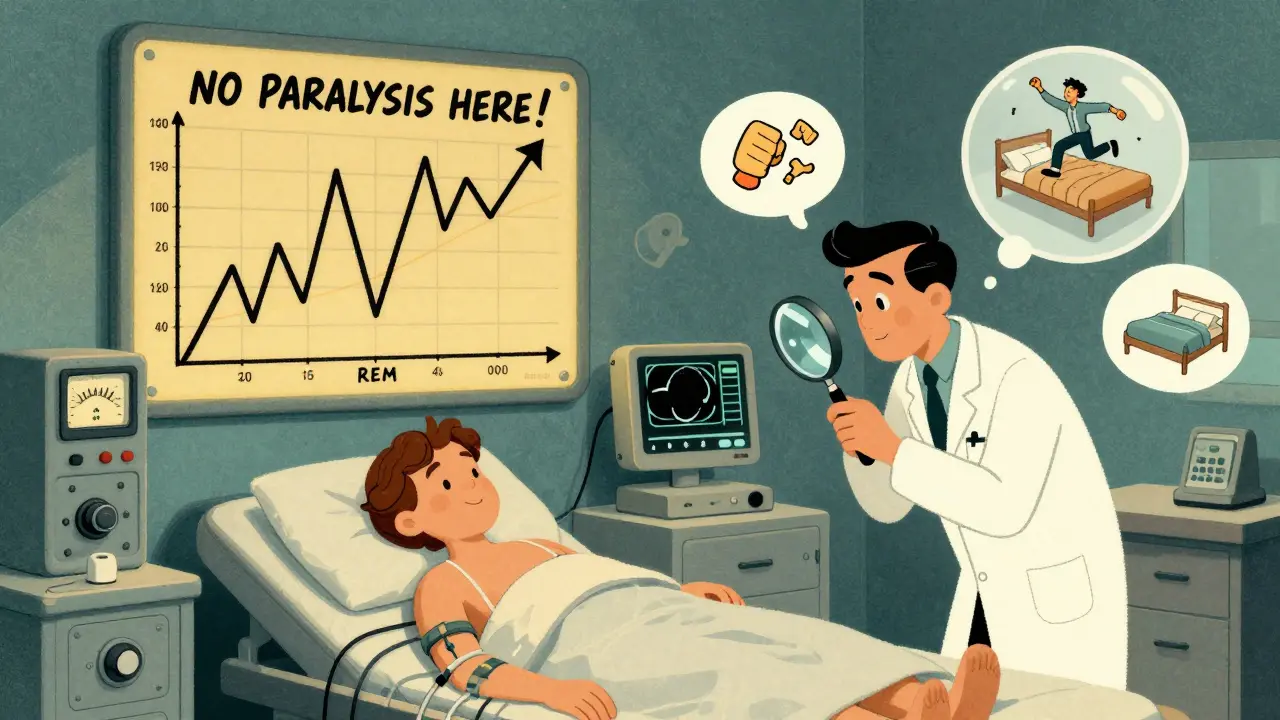
Diagnosing RBD starts with a detailed sleep history. Bed partners often notice the first signs: bruises, broken furniture, or someone screaming about being chased. But the real diagnosis comes from a sleep study called polysomnography (PSG). This test monitors brain waves, eye movements, heart rate, and muscle activity while you sleep.
The key finding? REM sleep without atonia (RSWA). Normally, during REM sleep, your muscles go completely limp to keep you from acting out dreams. In RBD, that paralysis fails. PSG shows muscle activity during REM sleep that shouldn’t be there. The International Classification of Sleep Disorders says this must happen in at least 15% of REM sleep epochs to confirm RBD.
On average, people with RBD show complex movements about 4.2 times per hour during sleep. That’s not occasional twitching-it’s frequent, dangerous behavior. Without a sleep study, RBD is often mistaken for nightmares, epilepsy, or even psychiatric issues.
First-Line Medications: Melatonin vs. Clonazepam
There are no FDA-approved drugs specifically for RBD. Treatment is off-label, based on decades of clinical experience and small studies. Two drugs dominate: melatonin and clonazepam.
Melatonin is now the first choice for most neurologists. It’s a natural hormone that regulates sleep-wake cycles. For RBD, it’s given in higher doses than for regular insomnia-starting at 3 mg at bedtime, and increasing up to 12 mg if needed. It takes 2 to 4 weeks to see full effects, so patience is key. About 65% of patients report significant improvement. Side effects are rare and mild: maybe a headache or morning grogginess. One 68-year-old man reduced his weekly RBD episodes from seven to one after starting 6 mg nightly. He kept sleeping in the same bed with his wife-safely.
Clonazepam, a benzodiazepine, has been used for decades. It works by calming overactive brain signals. Dose starts at 0.25-0.5 mg at bedtime and can go up to 2 mg. It often works within days. Studies show it helps 80-90% of patients. But it’s not without risk. Side effects include dizziness (22%), unsteadiness (18%), and daytime sleepiness (15%). For older adults, the fall risk jumps by 34%. Long-term use can lead to dependence. Withdrawal can trigger nightmares and agitation in 38% of people who stop suddenly.
A 2022 survey of 450 neurologists found that 58% now start with melatonin. Only 32% begin with clonazepam. The shift reflects growing awareness of safety, especially in elderly patients.
Other Medications and Emerging Treatments
Not everyone responds to melatonin or clonazepam. Some patients get partial relief. Others can’t tolerate side effects. That’s where other options come in.
Pramipexole, a dopamine agonist used for Parkinson’s and restless legs syndrome, is sometimes tried. It’s dosed at 0.125-0.5 mg daily. Studies show it helps about 60% of patients, especially those who also have restless legs. But it’s not reliable for everyone. It can cause nausea, dizziness, and impulse control issues.
Rivastigmine, a cholinesterase inhibitor used for Alzheimer’s and dementia, showed promise in one small trial for patients with RBD and mild cognitive impairment. It helped reduce dream enactment when other drugs failed. But it’s not a standard option yet.
The most exciting development? Dual orexin receptor antagonists. Orexin is a brain chemical that keeps you awake. Blocking it might calm the overactive signals driving RBD. Mount Sinai researchers found that in animal models, these drugs cut dream enactment behaviors by 78%. One drug, suvorexant (Belsomra), is already FDA-approved for insomnia. Early human trials are underway.
Neurocrine Biosciences is testing NBI-1117568, a selective orexin-2 receptor blocker. The FDA gave it Fast Track designation in January 2023. Results from Phase II trials are expected in mid-2024. If successful, this could be the first RBD-specific drug.
Neurological Monitoring Is Essential
Treating RBD isn’t just about sleeping better. It’s about watching for brain disease. Every patient with idiopathic RBD needs regular neurological checkups. The American Academy of Neurology recommends annual exams.
Why? Because RBD is one of the strongest predictors of future Parkinson’s or Lewy body dementia. Studies show a 6.3% annual conversion rate-meaning over time, more than half of untreated RBD patients develop a neurodegenerative disorder. Early signs include subtle changes in smell, constipation, mood, or movement. A tremor, stiff gait, or loss of facial expression can be early clues.
Neurologists use tools like the MDS-UPDRS (Movement Disorder Society-Unified Parkinson’s Disease Rating Scale) and olfactory testing to track progression. Brain imaging, like DaTscan, can detect dopamine loss before symptoms appear. These aren’t just routine visits-they’re early detection tools.
Safety First: Bedroom Modifications
No medication works perfectly. Even with treatment, about 42% of patients eventually sleep separately from their partners because of safety concerns. That’s why environmental changes are non-negotiable.
Here’s what experts recommend:
- Remove all weapons from the bedroom
- Pad sharp corners of furniture
- Place thick rugs or mats next to the bed
- Install bed rails if falls are frequent
- Move the mattress to the floor or use a bed with low sides
- Avoid alcohol-even one or two drinks can trigger episodes in 65% of patients
A 2019 study found that 78% of patients made at least one of these changes. Many spouses report feeling safe for the first time in years after these adjustments. One woman said, “After my husband started clonazepam, I could finally sleep in the same bed without fear of being kicked or punched.”
What’s Next for RBD Treatment?
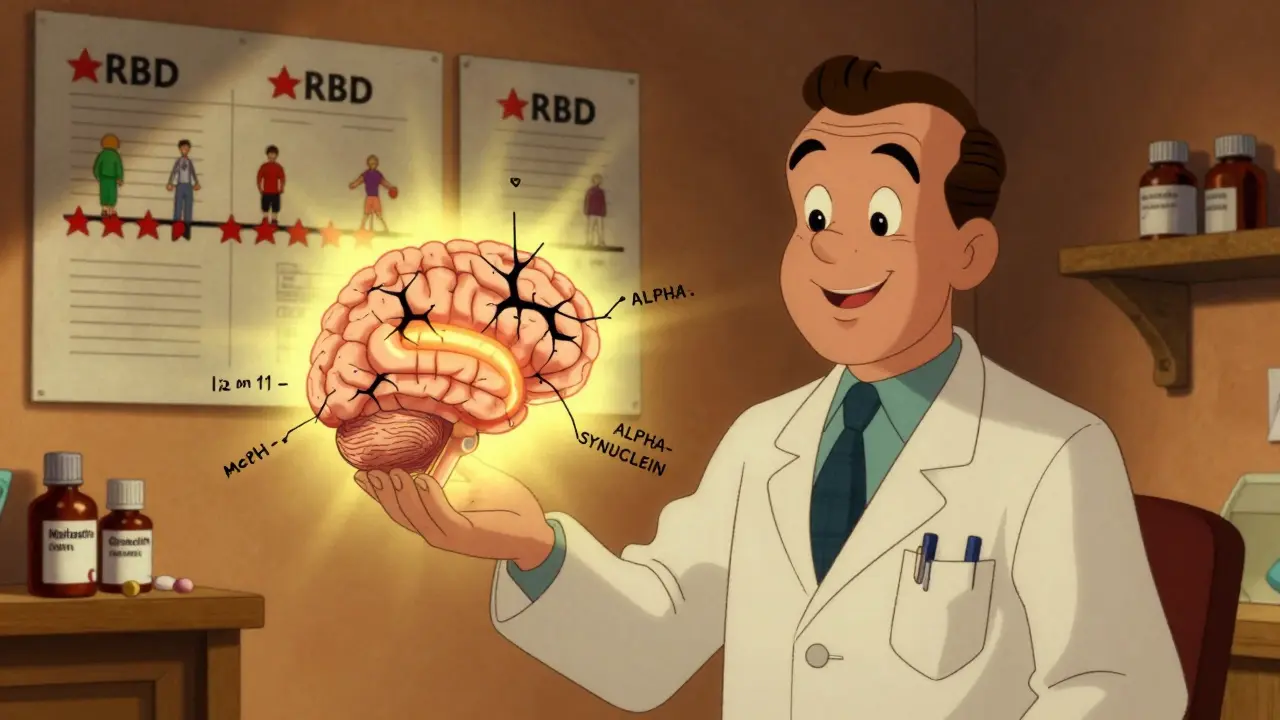
The field is shifting from symptom control to disease prevention. Researchers now believe RBD isn’t just a sleep disorder-it’s the earliest visible sign of a brain-wide protein misfolding process. Alpha-synuclein, the same toxic protein that builds up in Parkinson’s, starts accumulating in the brainstem years before movement problems appear.
That’s why the biggest unanswered question isn’t “How do we stop the kicking?” but “How do we stop the brain from degenerating?”
Several clinical trials are now testing drugs that target alpha-synuclein buildup in RBD patients. If successful, these could delay or even prevent Parkinson’s. The American Brain Foundation calls this “the most critical unmet need in the field.”
For now, the best we can do is treat symptoms, monitor closely, and protect lives. But the next five years may bring the first real hope: therapies that don’t just quiet the night-but change the future.



John Watts
I've seen RBD in my dad's neurology practice for years. It's wild how often people think it's just nightmares. The real red flag? When they start falling out of bed and cracking ribs. Melatonin's been a game-changer for older patients. No dependency, no dizziness. Just quiet nights. My dad started on 6mg and hasn't punched a wall since. Simple, safe, effective.
And yeah, the sleep study is non-negotiable. You'd be shocked how many get misdiagnosed with PTSD or epilepsy. PSG catches the RSWA pattern every time.
Ritteka Goyal
I live in India and we dont have much access to sleep labs but i heard about this from my cousin whos a neurologist in bangalore she said rbd is becoming way more common here now because of stress and bad sleep habits like using phones till 2am and eating spicy food before bed. we dont even have proper melatonin here so people just take clonazepam from the pharmacy like candy. its scary. my uncle took it for 3 years and now he cant sleep without it and his balance is shot. why dont we have better options? i mean america has all this research but we just get left behind. also i think the government should make sleep studies mandatory for people over 50. its cheaper than treating parkinsons later. p.s. i typed this on my phone so sorry for typos lol
Monica Warnick
I can't believe people are still using clonazepam. I mean, come on. Benzodiazepines? In 2024? That's like prescribing opioids for a headache.
And don't get me started on melatonin. It's a supplement. Not a drug. How is it even considered 'first-line'? The FDA doesn't regulate it. You can buy 500mg pills at Walmart. That's not medicine. That's a vitamin.
And yet, neurologists are recommending it? I'm not saying I'm an expert, but I read a lot. And I know what's right. The real answer is orexin blockers. That's the future. Everything else is just putting a bandaid on a broken leg.
Chelsea Deflyss
Ive been dealing with this for 5 years. My husband had rbd. We bought a mattress on the floor. Took all the lamps out. Put pillows on the walls. He still kicked me in the face last week. Clonazepam made him zombiey. Melatonin? 3mg? Pfft. I gave him 12mg and he still jumped out of bed screaming about snakes.
Now we sleep in separate rooms. And honestly? I sleep better. But I feel guilty. He says he doesn't remember. But I do. I see the bruises. I see the fear in his eyes when he wakes up alone.
And now he's getting tested for parkinsons. I knew it. I always knew.
Brandon Osborne
I'm not a doctor but I play one on Reddit. And I'm here to tell you: RBD is not a sleep disorder. It's a death sentence with a snooze button.
90% will turn into Parkinson's? That's not a statistic. That's a countdown. You think melatonin helps? It's just a placebo for people too scared to face the truth.
And don't even get me started on those 'orexin blocker' trials. They've been promising 'breakthroughs' for 15 years. Every time. Every. Single. Time.
The real solution? Stop sleeping. Don't go into REM. Just stay awake forever. That's the only way to avoid the brain rot. I'm not being dramatic. I'm being honest. And if you're reading this? You're probably already in stage 2.
Marie Fontaine
This is so important!! I just found out my mom has RBD and I had NO IDEA. She was always 'restless' at night. We thought it was anxiety. Turns out she's acting out dreams about being chased by wolves. 😱
Started her on 6mg melatonin. Two weeks later, she slept through the night for the first time in 10 years. I cried.
Also, bed on the floor? Genius. We moved her mattress down. No more broken lamps. She says she feels 'safe' now.
Also, I'm getting her checked for Parkinson's next month. Thanks for the heads up on the MDS-UPDRS. I'm bringing that printout to the doc. 💪
Lyle Whyatt
I'm an Aussie sleep tech. We run PSGs here every week. RBD is way more common than people think. Especially in men over 60. And you know what? The real story isn't just the meds. It's the partners.
I've seen wives who've slept on the couch for 7 years. One woman told me, 'I didn't know my husband was alive until he stopped hitting me in his sleep.'
And the safety stuff? Bed rails? Rugs? Removing knives? Yeah. It sounds extreme. But it's not. It's basic. Like wearing a seatbelt.
Also, alcohol. Don't even get me started. One beer? Poof. Full-on dream enactment. We tell patients: 'If you drink, you're putting your partner at risk.' And they still do it. Sigh.
Tatiana Barbosa
RBD is the canary in the coal mine for synucleinopathies. The brainstem's the first domino. Alpha-synuclein aggregates in the pons, disrupts REM atonia, and then it spreads. It's not a coincidence-it's a cascade.
That's why we're running longitudinal cohorts. We're tracking olfactory decline, autonomic dysfunction, subtle motor changes. DaTscan shows presynaptic dopaminergic loss years before tremor.
And melatonin? It's not just a sleep aid. It's a neuroprotective agent. Enhances mitochondrial function, reduces oxidative stress. The dose-response curve is real. 3mg to 12mg. Not a placebo.
We're not treating dreams. We're intercepting neurodegeneration.
Ken Cooper
So i just found out my brother has rbd. we thought he was just having bad dreams. turns out he was punching the wall, yelling 'get off me!' like he was in a fight.
we started him on 3mg melatonin. no change. then we bumped it to 6mg. after 3 weeks? he slept like a baby. no more broken lamps. no more black eyes on his wife.
also, we got rid of all the sharp furniture. moved the bed to the floor. it looks kinda weird but now he's safe.
and yeah, we're getting him tested for parkinsons. i know it's coming. but at least we're doing something now. thanks for this post. it saved our family.
MANI V
I'm sorry but this whole thing is just a capitalist scam. Why do you think they're pushing melatonin? Because it's cheap. Because they can sell it in bottles without a prescription.
Clonazepam? Dangerous? Maybe. But it works. Fast. Why are we pretending supplements are medicine?
And the 'orexin blockers'? That's just Big Pharma's next money grab. They'll charge $10,000 a year. And then they'll say 'we're saving lives.'
Meanwhile, people in India and Africa are dying because they can't afford a sleep study. This isn't science. It's profit.
Tasha Lake
I'm a neurology resident. Just wanted to say: RSWA is the diagnostic gold standard. 15% of REM epochs? That's the cutoff. Anything less? Not RBD.
Also: 73.5% conversion rate over 12 years? That's not a guess. That's from the 2021 Lancet Neurology meta-analysis.
And yes, the orexin trials are promising. NBI-1117568? Phase II data looks stellar. If it hits, it'll be the first disease-modifying therapy for RBD. Not just symptom control. Real neuroprotection.
Don't let the noise distract you. This is the frontier.
Tom Forwood
My wife has RBD. We did everything right. Melatonin. Bed on floor. No alcohol. Sleep study confirmed.
But here's the thing: no one talks about the emotional toll.
She doesn't remember the episodes. But I do. I see her face when she wakes up-confused, ashamed, scared.
She thinks she's broken. Like she's dangerous. Like she's losing her mind.
We're doing everything medically. But what about the guilt? The fear? The loneliness?
Maybe the real treatment isn't in the pill. Maybe it's in the hug after the nightmare.
Jacob den Hollander
I just want to say thank you. I read this post and cried. My mom was diagnosed last month. We thought she was just having nightmares. Now we know. We're getting her checked. We moved her mattress. We took the knives out.
I'm so glad someone finally explained it all so clearly. No jargon. Just truth.
And to anyone else out there-don't ignore it. Don't brush it off. This isn't about sleep. It's about survival.
John Watts
To the person above: you're not alone. My dad's wife told me the same thing. 'I don't remember hitting you,' he says. And I say, 'I know. But I do.'
That's the hidden cost. The silent trauma.
We fix the body. But who fixes the heart?