Steroid Skin Reaction Analyzer
Question 1: Where are the breakouts primarily located?
Analysis Result
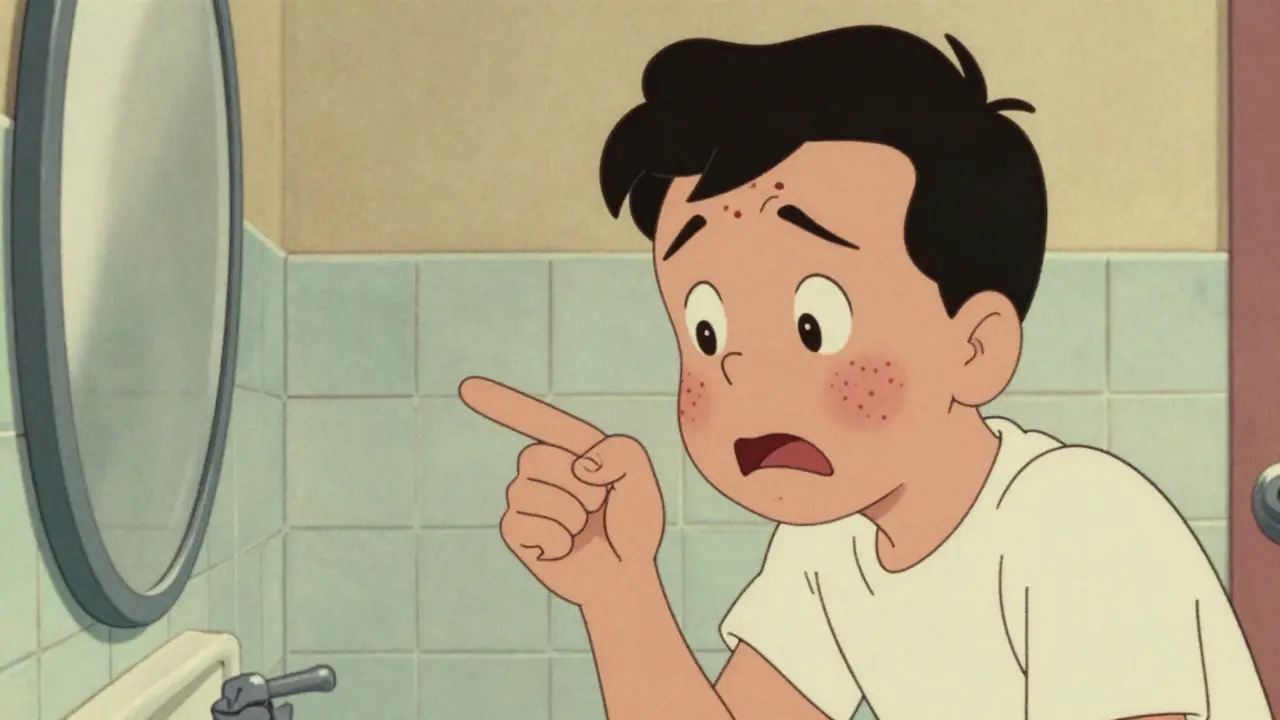
Dealing with a sudden explosion of pimples while taking medication for asthma or an autoimmune condition is frustrating. You're trying to get healthy, but your skin is paying the price. This isn't your typical teenage breakout; it's a specific reaction to medications that changes how your skin behaves. Whether you're using prescribed corticosteroids synthetic drugs that mimic cortisol to reduce inflammation and suppress the immune system or you've encountered the side effects of anabolic steroids, the result often looks the same: uniform, stubborn bumps that refuse to budge with a standard face wash.
The good news is that this is a known medical phenomenon with a clear path to management. While the most direct fix is stopping the medication-which obviously isn't an option for someone treating a serious illness-there are targeted topical and lifestyle shifts that can clear your skin without compromising your medical treatment.
Key Takeaways for Managing Steroid Acne
- Steroid acne often appears as uniform red bumps and whiteheads, primarily on the chest and back.
- Tretinoin is considered a gold-standard topical treatment for clearing dense steroid-induced comedones.
- Some "acne" caused by steroids is actually a yeast infection called Malassezia folliculitis, requiring antifungals rather than antibiotics.
- Skin barrier repair and strict sun protection are essential since steroids increase photosensitivity.
- Consult a dermatologist before starting oral isotretinoin, especially if using anabolic steroids, due to the risk of severe reactions.
How Steroids Actually Cause Breakouts
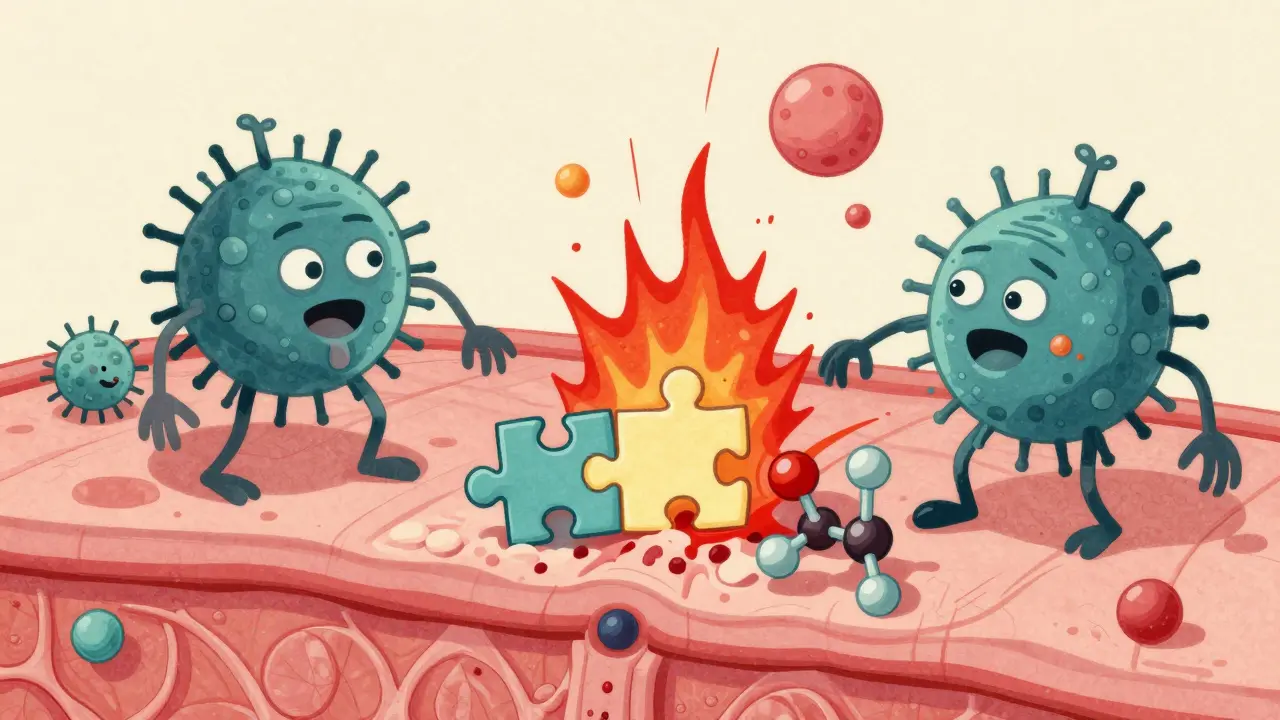
It's not just "hormonal imbalance." Recent research has pinpointed a more specific molecular trigger. Corticosteroids interact with something called Toll-like receptor 2 (TLR2) on your skin cells. When these receptors are triggered in the presence of Propionibacterium acnes a common bacterium found in human skin that can cause inflammation when overproduced, it creates a perfect storm for inflammation. This process leads to the characteristic "wave" of breakouts that usually hits several weeks after you start your medication.
The timing is a huge clue. Most people don't wake up with steroid acne on day one. It typically takes 4 to 6 weeks of exposure-usually at doses of 20mg of prednisone or higher-before the skin reacts. This delay often tricks people into thinking their skin is just "acting up" for other reasons, leading them to use the wrong products that can actually make the inflammation worse.
Spotting the Difference: Steroid Acne vs. Regular Acne
If you're wondering if your current breakout is caused by your meds, look at the patterns. Regular acne usually varies in size and type (a mix of blackheads, cysts, and small pimples). Steroid acne is eerily uniform. You'll see aggregates of reddish papules that all look nearly identical, often progressing into a sea of whiteheads.
Location is another giveaway. While your face can be affected, steroid-induced breakouts love the chest and upper back. However, there is a common "imposter" you should know about. In about 30-40% of cases, what looks like acne is actually Malassezia folliculitis an inflammation of the hair follicle caused by an overgrowth of yeast rather than bacteria. These look like itchy, superficial bumps and won't respond to traditional acne creams because they aren't caused by bacteria.
| Feature | Steroid-Induced Acne | Malassezia Folliculitis |
|---|---|---|
| Appearance | Uniform red papules/whiteheads | Itchy, small, uniform pustules |
| Comedones | Present (blackheads/whiteheads) | Usually absent |
| Primary Cause | Bacterial inflammation/TLR2 trigger | Yeast (fungal) overgrowth |
| Top Treatment | Tretinoin, Benzoyl Peroxide | Ketoconazole or Selenium Sulfide |
Topical Solutions That Actually Work
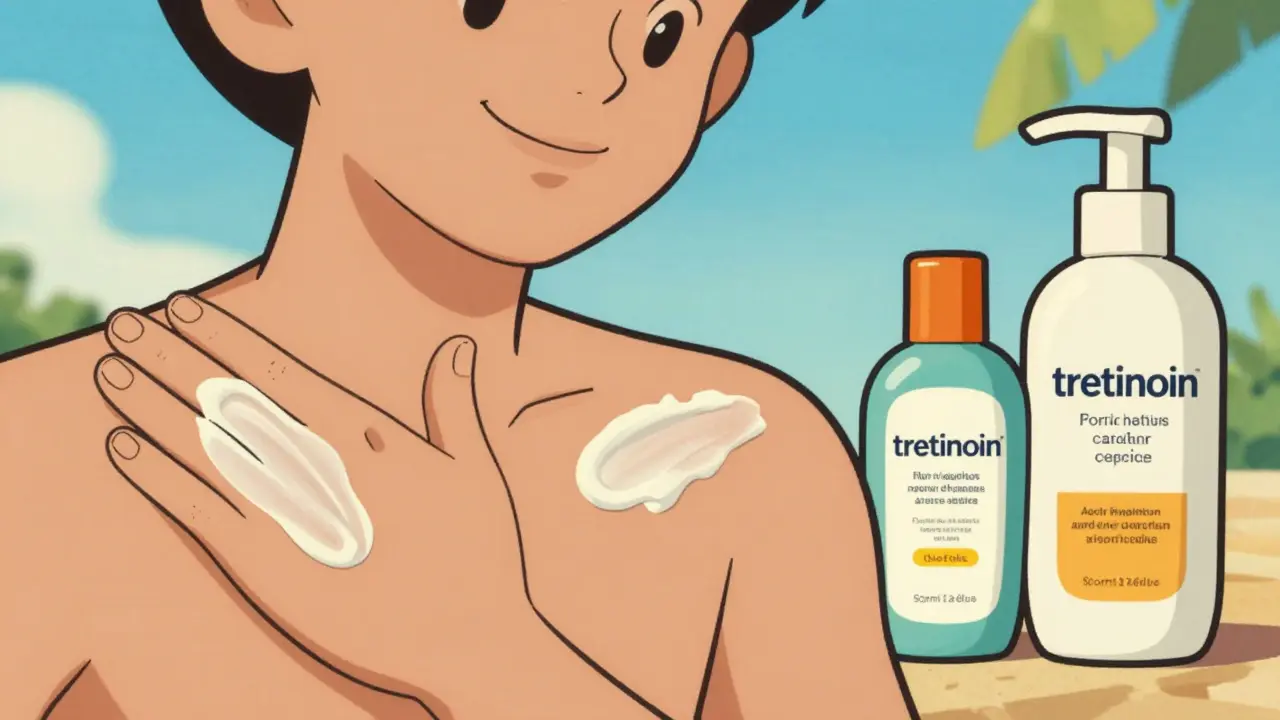
When you can't just stop taking your medication, you need ingredients that attack the problem without irritating an already sensitive skin barrier. Tretinoin a potent retinoid derivative of Vitamin A that increases skin cell turnover and clears pores is the heavy hitter here. Research dating back to the 70s shows that a 0.05% solution can clear dense aggregates of steroid acne with an 85-90% success rate, even if the patient stays on their steroids.
For those who find tretinoin too harsh, a combination approach is often better. Start with a 5% benzoyl peroxide wash to kill surface bacteria, followed by a non-comedogenic moisturizer. If you're dealing with the "yeast version" (folliculitis), swap the acne wash for a 2% Ketoconazole an antifungal medication used to treat fungal skin infections shampoo. Apply it to the chest and back, let it sit for 5-10 minutes, and then rinse. This approach often clears the itch and the bumps much faster than traditional acne meds.
Advanced Medical Interventions
Sometimes, topicals aren't enough. For moderate to severe cases, doctors might move to oral medications. Doxycycline is a common choice for reducing bacterial load, though experts warn against using it for more than 3-4 months to avoid antibiotic resistance. For women, spironolactone or certain oral contraceptives can help manage the hormonal shifts triggered by steroid use.
Then there is Isotretinoin a powerful oral retinoid used for severe cystic acne that shrinks oil glands. While it is incredibly effective for most steroid acne, there is a massive warning for the bodybuilding community. If you are using high-dose anabolic steroids, isotretinoin can occasionally trigger acne fulminans-a sudden, severe inflammatory reaction that can lead to ulcerated lesions and hospitalization. Never start this medication without a dermatologist who knows your full supplement and medication history.
Lifestyle Adjustments for Compromised Skin
Steroids don't just cause pimples; they thin the skin and disrupt the moisture barrier. This makes your skin more prone to irritation and significantly more sensitive to the sun. If you're using both steroids and retinoids like tretinoin, you are essentially a magnet for sunburns. Use a broad-spectrum SPF 30+ every single day, even if you're staying indoors near windows.
Avoid the temptation to "scrub away" the acne. Harsh physical exfoliants or scrubbing brushes can create micro-tears in steroid-thinned skin, leading to permanent scarring or secondary infections. Instead, focus on "barrier repair." Look for moisturizers containing ceramides or hyaluronic acid. These help seal the skin and prevent the moisture loss that often makes steroid acne feel tight and itchy.
How long does steroid acne last after stopping the medication?
In most cases, steroid-induced acne begins to resolve within 4 to 8 weeks after the medication is discontinued. Because the trigger (the steroid) is gone, the skin's receptors return to normal, and the inflammation dies down naturally.
Can I use over-the-counter acne creams while on prednisone?
Yes, but be careful. Benzoyl peroxide and salicylic acid are generally safe, but because steroids thin the skin, these can cause more irritation than usual. It's best to introduce them slowly and use a heavy moisturizer to protect your skin barrier.
Is steroid acne the same as hormonal acne?
They are related but different. Hormonal acne is usually driven by androgens. Steroid acne is a direct drug-induced reaction that affects the skin's inflammatory pathways and pores, often presenting with more uniform, dense clusters of bumps rather than the typical jawline cystic acne.
What is the best way to treat the 'itchy' type of steroid acne?
If the bumps are itchy and lack blackheads, it's likely Malassezia folliculitis. The most effective treatment is using an antifungal like ketoconazole or selenium sulfide shampoo as a body wash, leaving it on for several minutes before rinsing.
Will these breakouts leave permanent scars?
They can, especially if you pick at them or delay treatment. Because steroids thin the skin, the healing process can be slower. Starting a treatment like tretinoin within 8 weeks of the first breakout significantly reduces the risk of long-term scarring.
Next Steps and Troubleshooting
If you are currently experiencing a flare-up, your first move should be a skin analysis. Try to determine if your bumps are "classic" acne (with comedones) or the "itchy" fungal type. This determines whether you reach for a retinoid or an antifungal.
For those on lifelong steroid therapy, don't wait for the acne to become severe. Implement a gentle, non-comedogenic skincare routine early. If you notice red bumps appearing on your chest or back, schedule a dermatology appointment to get a prescription-strength retinoid. Early intervention is the key to avoiding the deep scarring that often accompanies high-dose steroid therapy.