
Vitamin C Iron Absorption Calculator
How to Maximize Absorption
For optimal iron absorption, take vitamin C within 30 minutes before or after iron intake.
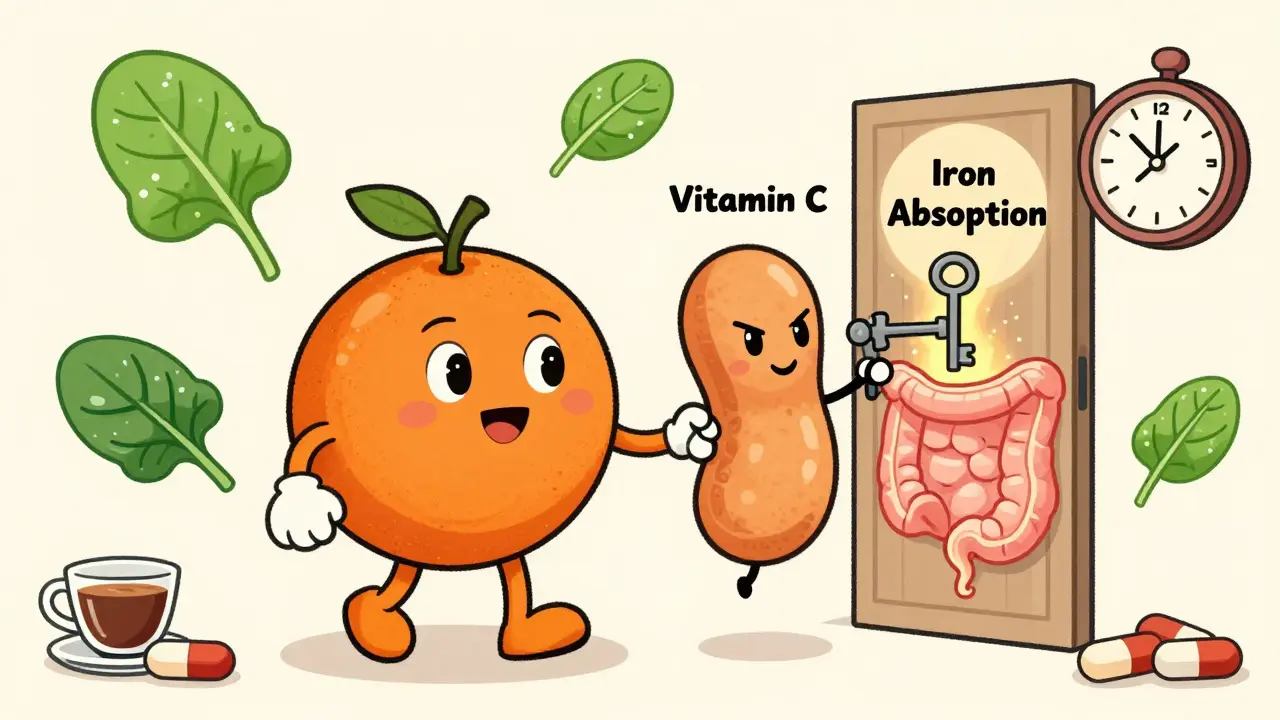
This allows vitamin C to convert non-heme iron (Fe³⁺) into the absorbable form (Fe²⁺) in your duodenum.
Many people take iron supplements to combat fatigue, anemia, or low energy-especially women, vegetarians, and pregnant individuals. But here’s the thing: vitamin C can make those supplements work up to twice as well. And if you’re taking them with the wrong other meds or foods, you might be wasting your money entirely.
Why Vitamin C Makes Iron Work Better
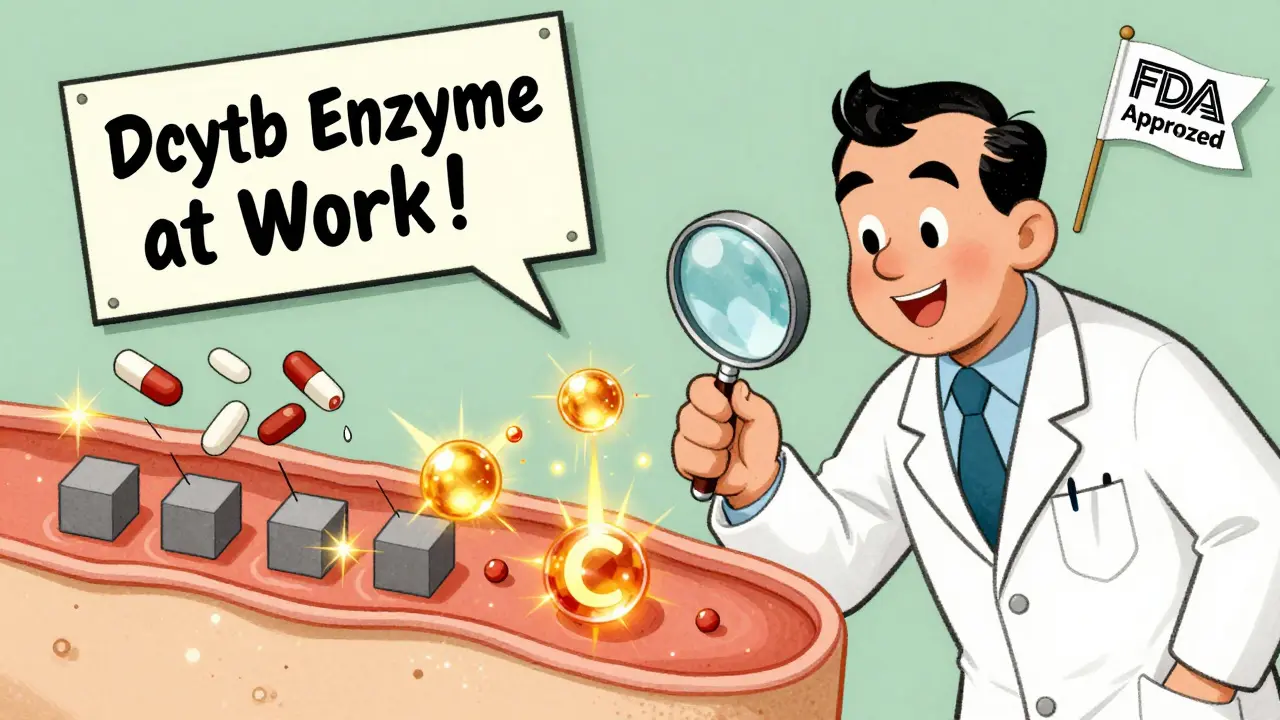
Not all iron is the same. Iron from meat (heme iron) is absorbed easily-15% to 35% of what you eat gets into your bloodstream. But iron from plants like spinach, lentils, beans, and fortified cereals (non-heme iron)? Only 2% to 20% gets absorbed. That’s why vegetarians and vegans are at higher risk for iron deficiency. Vitamin C changes that. It doesn’t just help-it transforms. When you eat vitamin C with plant-based iron, it converts hard-to-absorb ferric iron (Fe³⁺) into ferrous iron (Fe²⁺), the form your gut can actually pick up. This happens in your duodenum, the first part of your small intestine, where vitamin C donates electrons to iron through a protein called Dcytb. Think of it like unlocking a door: vitamin C is the key. Studies show this isn’t theory-it’s measurable. A 2020 study in the Journal of Nutrition found that adding 500mg of vitamin C to a meal increased iron absorption by 185%. Another study in ACS Omega (2022) confirmed that 100mg to 200mg of vitamin C per meal boosts absorption by 2 to 6 times. That’s the same effect as taking a higher dose of iron… without the side effects.How Much Vitamin C Do You Actually Need?
You don’t need a giant orange or a full supplement bottle. The sweet spot is 100mg to 200mg per meal with iron. That’s:- One medium orange (70mg)
- Half a cup of red bell pepper (95mg)
- One cup of strawberries (85mg)
- Six ounces of orange juice (120mg)
When Vitamin C Doesn’t Help (And Why)
Vitamin C only works on non-heme iron. If you’re eating chicken, beef, or fish, your body already absorbs the iron well. No need to chase vitamin C with your steak. It also doesn’t help if you’re taking it too early or too late. The window for maximum effect is within 30 minutes before or after your iron-rich meal. Take vitamin C an hour before? Absorption drops by half. Take it two hours after? You’ve missed the boat. The science is clear: they need to be in your gut at the same time. And if you have H. pylori infection, low stomach acid, or hemochromatosis (a genetic iron overload disorder), vitamin C won’t help-and could even make things worse. In those cases, talk to your doctor before combining them.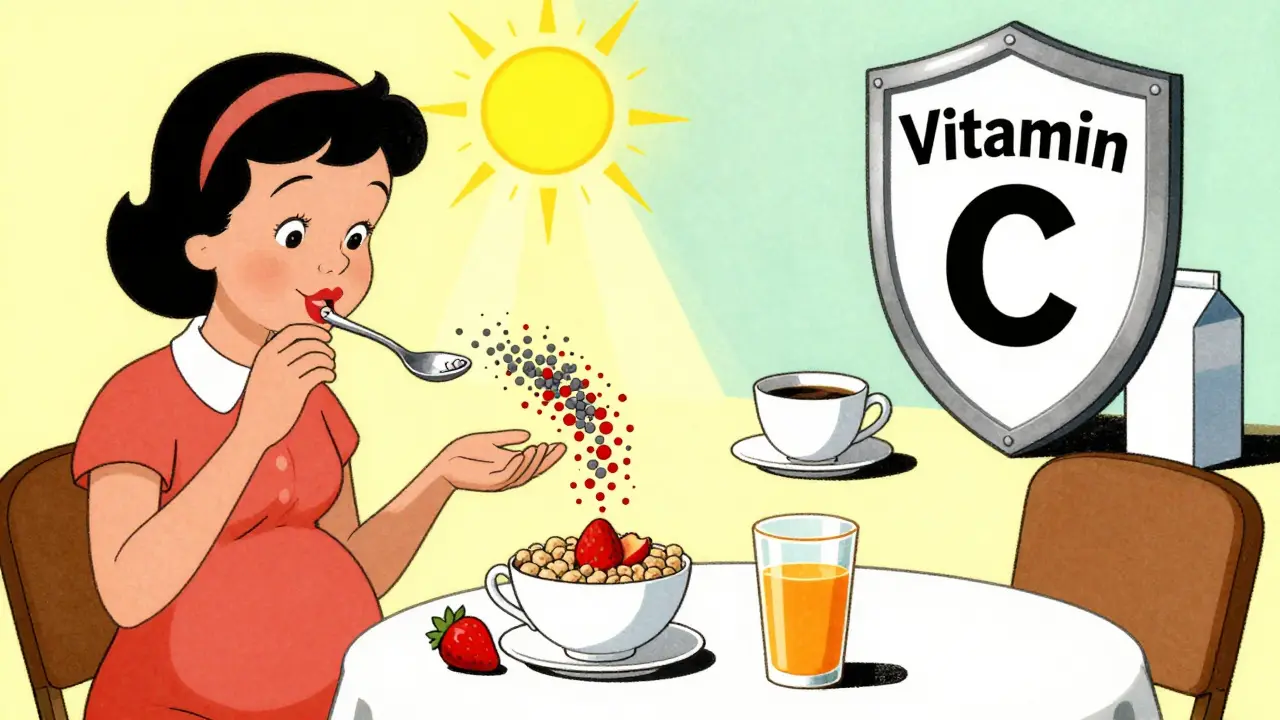
What Ruins Iron Absorption (And How to Avoid It)
Iron doesn’t just need vitamin C-it needs to avoid enemies. Four big ones:- Calcium: Found in dairy, supplements, and fortified foods. It blocks iron absorption by 50% to 60%. If you take calcium supplements, wait at least 4 hours after your iron-rich meal.
- Antacids: Medications like Tums, Maalox, or Pepcid reduce stomach acid. Iron needs acid to dissolve. These can cut absorption by 70% to 80%.
- Coffee and tea: They contain tannins (polyphenols) that bind to iron and stop it from being absorbed. Wait at least 2 hours after your meal before drinking them.
- Phytates: Found in whole grains, nuts, and seeds. Soaking, fermenting, or sprouting these foods reduces phytate levels by up to 80%-making iron more available.
Timing Matters: Separating Iron from Other Drugs
If you’re on medication, iron can interfere with how your body absorbs it-and vice versa.- Thyroid medication (levothyroxine): Iron binds to it and prevents absorption. Take iron at least 2 hours after thyroid meds.
- Antibiotics (tetracycline, quinolones): Iron reduces their effectiveness. Space them out by 3 to 4 hours.
- Medications for Parkinson’s (levodopa): Iron can reduce brain absorption. Avoid taking them together.
- Proton pump inhibitors (PPIs): These reduce stomach acid long-term, which already lowers iron absorption. Pairing with vitamin C helps, but you may still need higher doses.
Real-World Tips That Actually Work
You don’t need to memorize chemistry. Just use these simple habits:- Put sliced strawberries on your oatmeal or fortified cereal.
- Make a spinach salad with bell peppers, tomatoes, and lemon juice.
- Drink a glass of orange juice right after your iron pill-not before, not later.
- Use citrus salsa with black beans or lentils instead of plain water.
- Keep a small container of dried rose hips or acerola powder in your pantry-they’re packed with vitamin C and easy to sprinkle on food.
What the Market Is Doing
Supplement companies noticed this years ago. In 2019, only 42% of iron supplements included vitamin C. By 2024, that number jumped to 68%. You can now buy iron tablets with vitamin C built in. But even then, timing matters. If you take them with coffee or calcium, you’re still losing half the benefit. WIC programs across all 50 U.S. states now teach this pairing. They’ve seen a 30% drop in iron deficiency among pregnant women and young children since they started. But awareness is still low. A 2023 survey found 67% of iron supplement users didn’t know they needed vitamin C. And 44% said they forgot to take it with their pill.Future of Iron Absorption
Scientists are now looking at how your genes affect this. A 2024 study in Nature Communications found people with certain DMT-1 gene variants absorb less iron-even with vitamin C. That means in the future, genetic testing could tell you whether you need more vitamin C, more iron, or both. There’s also new research into timed-release capsules that release vitamin C and iron at the same time in the gut. And a team at Japan’s SPring-8 synchrotron is developing compounds that boost the Dcytb enzyme-potentially doubling vitamin C’s effect without needing more of it. But for now? The simplest solution still works best: eat your orange with your beans. Drink your OJ with your lentils. Skip the coffee for an hour. And don’t take iron with your calcium pill.What to Do If It’s Not Working
If you’re taking vitamin C with iron and still feeling tired, check these:- Are you taking iron on an empty stomach? It absorbs better that way.
- Are you drinking coffee or tea within 2 hours? That’s likely blocking it.
- Are you taking calcium supplements at the same time? Separate them by 4 hours.
- Have you been tested for H. pylori or low stomach acid? Those can prevent absorption no matter what you eat.
- Is your iron dose too low? Most women need 45-60mg daily. Check the label.
Does vitamin C help with iron from meat?
No. Iron from meat (heme iron) is already absorbed well-15% to 35%-so vitamin C doesn’t add much benefit. Its power is in helping plant-based iron (non-heme) get absorbed. If you eat meat regularly, you’re likely getting enough iron without extra vitamin C.
Can I take vitamin C and iron at the same time as a multivitamin?
It depends. Many multivitamins contain both, but they also often include calcium, zinc, or magnesium, which can block iron absorption. If you’re iron-deficient, it’s better to take iron with vitamin C separately-on an empty stomach, away from other minerals. Save your multivitamin for later in the day.
How long does it take to see results from vitamin C and iron?
You might feel less tired within 2 weeks, but it takes 6 to 12 weeks for your hemoglobin levels to rise noticeably. Blood tests are the only way to know for sure. Don’t stop just because you feel better-your body needs time to rebuild iron stores.
Is it safe to take 500mg of vitamin C with iron daily?
The upper limit for vitamin C is 2,000mg per day, so 500mg is safe for most people. But it can cause stomach upset, diarrhea, or cramps in 15% to 20% of users. Stick to 100-200mg per meal unless your doctor recommends more. More isn’t always better.
What if I’m vegan and can’t get enough iron?
You’re not alone. Vegans are at higher risk, but pairing vitamin C with legumes, tofu, quinoa, and fortified foods can bring absorption close to meat-eaters. Add lemon juice to lentils, strawberries to cereal, and bell peppers to stir-fries. If you still have low iron, talk to your doctor about a supplement. Many vegan iron supplements now include vitamin C.
Stephen Habegger
This is one of those posts that actually changes how you do things. I started pairing my iron pill with orange juice last month, and my energy levels haven't been this steady in years. No more mid-afternoon crashes.
Alexander Pitt
The science here is solid. The Dcytb-mediated reduction of ferric to ferrous iron is a well-documented mechanism in intestinal absorption. Vitamin C acts as an electron donor, stabilizing the Fe²⁺ state for DMT-1 transport. This isn't folklore-it's biochemistry in action.
jerome Reverdy
I've been working with patients on iron deficiency for over a decade, and this is one of the most underutilized interventions. The 2:1 vitamin C to iron ratio is gold. I tell everyone to keep a small container of acerola powder on their counter-it's 10x more concentrated than orange juice and doesn't come with sugar spikes.
cara s
I never realized how much of a game changer this was until I started eating strawberries with my fortified cereal. I used to take my iron pill with coffee because it was part of my morning routine. Turns out I was basically flushing money down the toilet. Now I drink my coffee after breakfast. Life-changing. I mean, seriously. Like, wow. Just... wow.
Amadi Kenneth
Wait... so you're telling me Big Pharma didn't want us to know this? They sell iron pills WITHOUT vitamin C on purpose? And now they're finally putting it in because the FDA forced them? That's not science-that's profit. They knew this for decades. They just didn't want you to save money. I'm not surprised. The system is rigged.
Shameer Ahammad
I find it fascinating that people are so easily convinced by a single study. The Journal of Nutrition? ACS Omega? These aren't peer-reviewed powerhouses. I've seen multiple meta-analyses where vitamin C's effect was negligible in populations with adequate dietary diversity. Also, why is no one talking about the fact that excess ascorbic acid can promote oxidative stress in iron-replete individuals? The risks are real, folks.
Manish Singh
As someone from India where lentils are a staple, this is life-changing. My mom used to cook dal with lemon juice-she didn't know why, she just did. Turns out she was doing science without knowing it. Now I sprinkle amchoor powder on everything. It's tangy, it's traditional, and it works. We didn't need Western science to tell us what our grandmothers knew.
Nilesh Khedekar
I don't trust any of this. Vitamin C and iron? Sounds like a marketing gimmick. What if they're just trying to make you buy more supplements? I read somewhere that the body just excretes excess iron anyway. And what about those synthetic vitamin C pills? They're made in labs in China. Are you sure you want that in your body? I just eat spinach and call it a day.
Robin Hall
The FDA's new labeling requirement is not evidence of scientific consensus. It's regulatory capture. The supplement industry lobbied for this. There are no long-term RCTs proving that this pairing reduces morbidity. It's correlation masquerading as causation. If you're truly iron-deficient, you need a hematologist-not a nutrition blogger.
Gaurav Kumar
Let me tell you something. In India, we've been using citrus with dal for centuries. This isn't some new breakthrough-it's ancestral wisdom. Western science just got around to confirming what our grandmothers taught us. Also, if you're taking iron with calcium, you're doing it wrong. Period. End of story. No debate.
Jeremy Van Veelen
I read this and I just... I cried. Not because I'm emotional-but because I finally understand why I’ve been exhausted for years. I was taking my iron with milk. I was drinking tea after every meal. I thought I was doing everything right. But I was sabotaging myself. This isn’t just advice. It’s a revelation. A scientific epiphany. I feel like I’ve been given back my life.
Justin Archuletta
Orange juice with your iron pill. Done. Works. No drama.