
Why Your Knee Hurts After a Twist or Jump
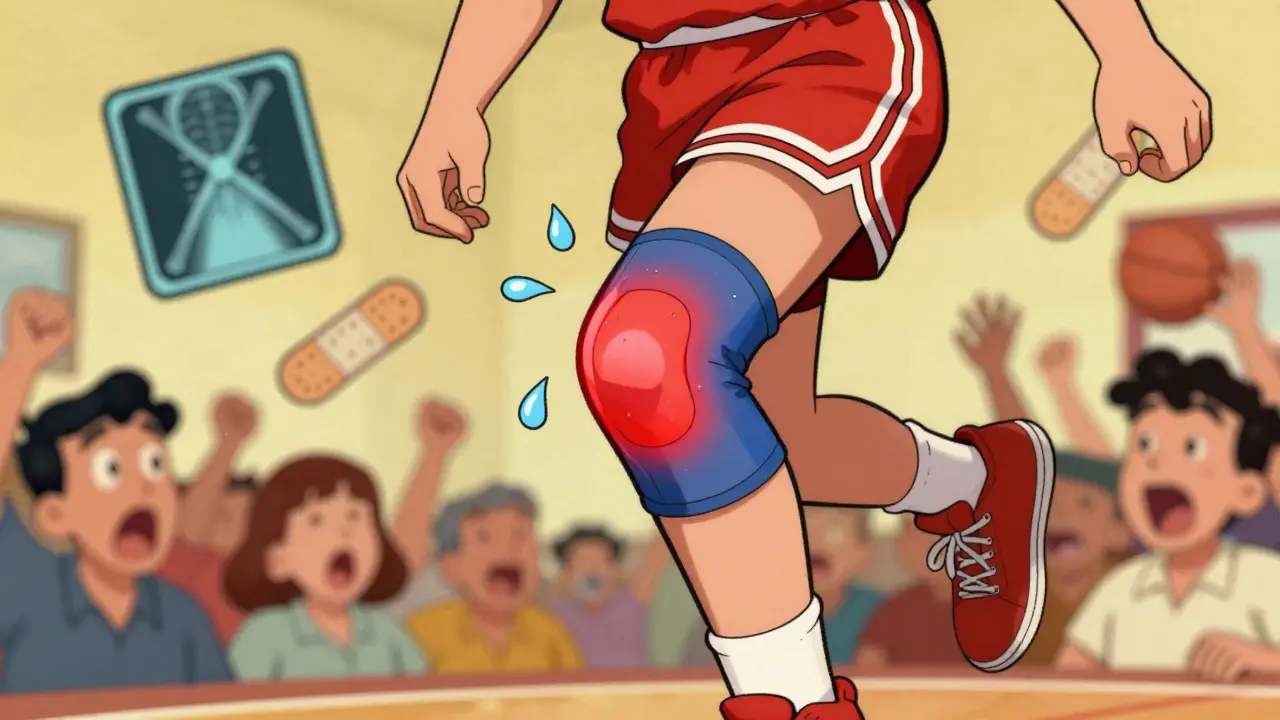
You’re playing basketball, change direction fast, and hear a pop. Your knee swells up by the next morning. Or you’re hiking, step wrong on a rock, and suddenly your knee locks up-can’t straighten it, can’t bend it. These aren’t just bad luck. They’re classic signs of a meniscus or ACL injury. Both are common, but they’re not the same. And how you treat them changes everything.
Every year, about 200,000 people in the U.S. tear their ACL. Meniscus tears are just as common, if not more. But here’s what most people don’t realize: not every tear needs surgery. In fact, more than half of meniscus tears can heal without it. The difference? Where the tear is, how old you are, and what you want to do with your knee after recovery.
What’s the Difference Between a Meniscus and an ACL?
Think of your knee like a hinge with shock absorbers. The ACL is the main stabilizer-it keeps your shinbone from sliding forward under your thigh bone. It’s strong, about 32mm long, and handles twisting motions. When it tears, you feel instability. You might wobble when you try to pivot. That’s why athletes often say, "My knee gave out."
The meniscus is different. It’s two C-shaped pieces of cartilage-medial and lateral-that sit between your thigh and shin bones. They’re not meant to hold you up; they’re meant to cushion. Think of them like rubber gaskets in a car engine. They absorb impact, spread pressure, and reduce wear on the joint. When they tear, you don’t feel instability-you feel catching, locking, or a sharp pain along the joint line.
And here’s the kicker: the meniscus has zones. The outer edge has blood flow-that’s the "red-red" zone. Tears there can heal. The inner part? No blood. That’s the "white-white" zone. If you tear there, your body can’t fix it. Surgery becomes more likely.
How Do You Know Which One You Broke?
ACL tears usually happen without contact. You stop suddenly, land awkwardly, or pivot hard. About 90% of people hear a pop. Swelling hits fast-within two hours in 85% of cases. Your knee feels loose. You can’t trust it. The pivot shift test (done by a doctor) confirms it: your shinbone slips forward when you bend the knee.
Meniscus tears? They’re sneakier. You might not even feel the tear. Maybe you twisted your knee while squatting to pick something up. Swelling comes slower-6 to 24 hours later. The big clue? Mechanical symptoms. Your knee locks. You can’t fully straighten it. Or it catches, like something’s stuck. You feel pain right along the joint line, not deep inside. A doctor can press along the side of your knee and reproduce the pain. That’s a strong sign.
One study found that 78% of meniscus tear patients reported catching or locking. Only 12% of ACL tear patients did. That’s a huge difference in symptoms. If your knee locks, it’s likely the meniscus. If it gives way, it’s probably the ACL.
When Is Surgery Really Needed?
For ACL: if you’re under 40 and active-especially if you play soccer, basketball, tennis, or ski-surgery is almost always recommended. Why? Because without a functioning ACL, your knee is unstable. That instability doesn’t just hurt. It damages the meniscus and cartilage over time. Studies show 20-30% of people with untreated ACL tears develop osteoarthritis within 10 years.
But here’s what many don’t tell you: not every ACL tear needs surgery right away. For people over 40 who don’t do cutting sports, physical therapy can be enough. A 2024 study found that 35% of ACL tears in patients over 40 were managed without surgery-up from 25% just five years ago. If you walk, bike, or swim, you might not need the graft.
For meniscus: surgery isn’t automatic. Only 30-40% of meniscus tears actually need it. If the tear is in the red-red zone, and you’re young, repair is the goal. If it’s in the white-white zone, or it’s a degenerative tear in someone over 50, trimming the damaged part (meniscectomy) is common. But here’s the catch: removing even 10% of your meniscus increases your risk of osteoarthritis by 14%. That’s not small. Every bit you cut out matters.
So the rule? Repair if you can. Trim only if you have to. And never trim without asking: "Will this stop my pain? Or just hide the problem?"
What Happens During Surgery?
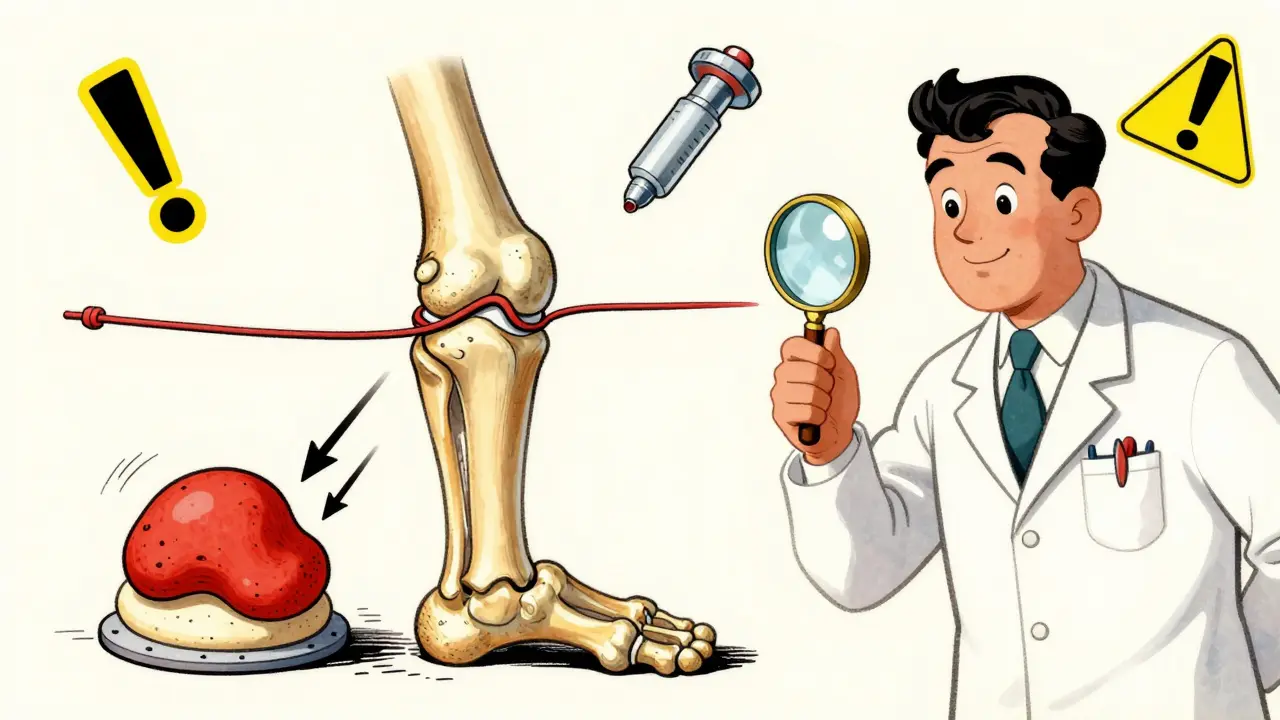
Both procedures are done arthroscopically-small incisions, a camera, tiny tools. But the goals are different.
ACL reconstruction replaces the torn ligament. Surgeons take a graft-usually from your own hamstring tendon or patellar tendon-and anchor it where the ACL used to be. Hamstring grafts are used 45% of the time in the U.S. Patellar tendon grafts are stronger (2,900N tensile strength) but cause more front-knee pain. Allografts (donor tissue) heal faster but fail more often in athletes under 25. One study showed allograft re-tear rates are 22% versus 7.7% for hamstring autografts in young athletes.
Meniscus repair? That’s stitching. Surgeons use sutures to pull the torn edges together so they can heal. There are two methods: inside-out (stitches come from outside the knee) and all-inside (tiny anchors inside). The repair must be stable. If the tear is too ragged, or too old, they can’t fix it. That’s why timing matters. If you wait more than three months, repair success drops from 80% to under 50%.
Meniscectomy? That’s trimming. The surgeon cuts out the torn part. It’s quick. But you lose cushioning. The more you remove, the more pressure goes to the bone. That’s why doctors now avoid removing large pieces. A 2023 study found that removing more than 20% of the meniscus triples the risk of arthritis in 10 years.
Recovery: It’s Not Just About Healing
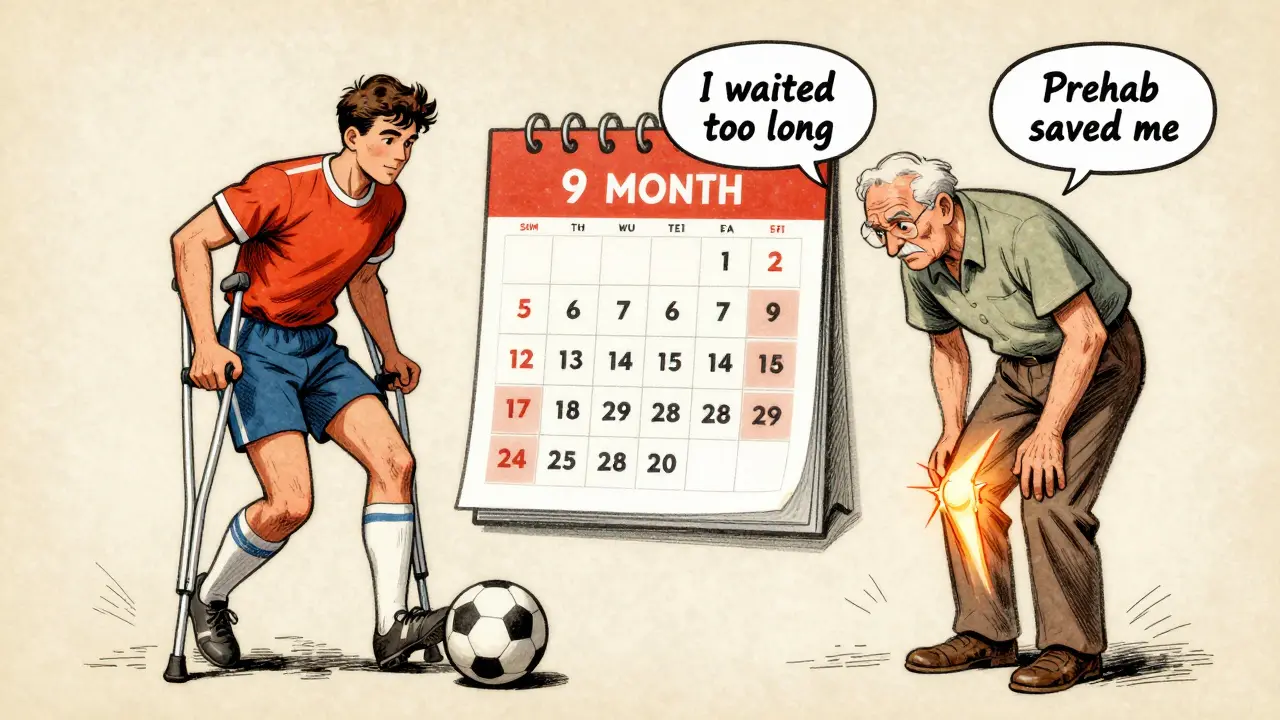
ACL recovery takes time. You can’t rush it. The standard is 9 months before returning to sports. Why? Because strength, balance, and neuromuscular control take that long to rebuild. Jumping back at 6 months? Your re-injury risk jumps from 5% to 22%. A 2023 MOON study showed athletes who returned before 9 months were 18% more likely to tear the graft again.
Rehab is strict. First two weeks: get full extension and 90 degrees of bend. Weeks 3-6: hit 120 degrees and balance on one leg. Months 4-9: sport-specific drills. If you skip steps, you risk stiffness, weakness, or re-tear.
Meniscus repair? Even slower. You’re on crutches for 6 weeks. No full weight-bearing. No bending past 90 degrees. Why? The stitches need time to hold. If you move too soon, the repair fails. Return to sport? 5-6 months. Meniscectomy? Faster. You can walk the same day. Back to light work in 2-4 weeks. But don’t be fooled-residual pain and swelling can linger for months. One patient on Reddit said, "I was back at my desk job in three weeks, but I still can’t squat without discomfort two years later."
Costs, Risks, and Real Outcomes
ACL reconstruction costs $15,000 to $25,000. Meniscectomy? $6,000 to $12,000. Meniscus repair? $9,000 to $18,000. Why the big range? It’s not just the surgery. It’s the rehab. ACL rehab takes 9-12 months of physical therapy. Meniscus repair needs 6 weeks of protected movement. That’s more visits, more time off work.
Success rates? ACL reconstruction has 82-92% good-to-excellent outcomes at 2 years. But 20-30% develop arthritis within 10 years. Meniscectomy has 85-90% short-term pain relief-but 14% higher arthritis risk per 10% of meniscus removed. Meniscus repair? 89% success in red-red tears. Only 43% in red-white.
And here’s the hidden cost: mental fatigue. One survey found 63% of ACL patients complained about "extended PT timelines." They felt stuck. Others said they lost confidence in their knee-even after healing. That’s not just physical. It’s psychological.
What Can You Do Before Surgery?
Prehab isn’t optional. It’s a game-changer. If you’re scheduled for ACL surgery, start strengthening your quad muscles 6 weeks before. Target 10% more strength than your injured leg. That reduces post-op weakness from 22% to just 8%. One study showed patients who did prehab returned to sport 3 weeks faster.
For meniscus tears, avoid activities that twist or squat deep. Use a knee brace if you’re walking. Ice, elevate, and get a good PT evaluation. Sometimes, a few weeks of therapy can delay or even eliminate the need for surgery.
What Happens If You Do Nothing?
Ignoring an ACL tear? You’re gambling. Every time your knee gives out, you’re scraping cartilage. That’s how arthritis starts. Even if you don’t play sports, daily activities wear you down. By age 50, you’re more likely to need a knee replacement.
Ignoring a meniscus tear? If it’s a bucket-handle tear, your knee might lock permanently. If it’s degenerative, you’ll get chronic pain and swelling. And if you wait too long, the tear gets bigger. Surgeons say: "Delay beyond 3 months, and your repair chances drop by 60%."
Final Decision: Surgery or Not?
Ask yourself these three questions:
- Do you want to return to sports that involve cutting, jumping, or pivoting? If yes → ACL surgery is likely necessary.
- Is your knee locking or catching? If yes → get an MRI. You may have a meniscus tear that can be repaired.
- Are you over 40 and mostly walk or bike? If yes → try 6-8 weeks of physical therapy first. Many avoid surgery entirely.
There’s no one-size-fits-all. But there is one truth: the sooner you act, the better your options. Delaying doesn’t help your meniscus heal. It just makes surgery harder.
Can a meniscus tear heal without surgery?
Yes, but only if the tear is in the outer third of the meniscus (the red-red zone), where blood flow exists. About 60-70% of meniscus tears, especially degenerative ones in older adults, can be managed with physical therapy, rest, and activity modification. Surgery is only needed if the tear causes mechanical symptoms like locking, catching, or persistent swelling that doesn’t improve after 6-8 weeks of rehab.
How long does ACL recovery take?
Full recovery from ACL reconstruction typically takes 9 to 12 months before returning to sports that involve cutting or pivoting. While you may walk normally within weeks, regaining strength, balance, and neuromuscular control takes much longer. Returning before 9 months increases the risk of re-tearing the graft by up to 18%. Most surgeons require you to pass strength tests (like single-leg hop symmetry over 90%) before clearing you to play.
Is an allograft better than an autograft for ACL surgery?
For athletes under 25, autografts (your own tissue) are strongly preferred. Studies show allografts have a 22% re-tear rate compared to just 7.7% for hamstring autografts in young, active patients. Allografts may offer faster initial recovery and less pain at 6 weeks, but they’re more likely to fail over time. Autografts take longer to heal at the donor site but last longer. For older, less active patients, allografts can be a reasonable option.
Will I get arthritis after ACL or meniscus surgery?
Yes, there’s a significant risk. After an ACL injury, 20-30% of people develop osteoarthritis within 10 years-even with surgery. After meniscectomy, removing 10% of the meniscus increases arthritis risk by 14%. That’s why surgeons now focus on preserving as much meniscus as possible. Repairing rather than removing is the goal. Even with surgery, you’re not fully protected from arthritis. Long-term joint health depends on weight, activity level, and ongoing strength training.
Can I avoid surgery altogether?
For some people, yes. If you’re over 40, not active in cutting sports, and your knee doesn’t lock or give way, physical therapy can be just as effective as surgery for both ACL and meniscus tears. Studies show that 35% of ACL tears in patients over 40 are managed without surgery. For meniscus tears, 60-70% improve with conservative care. The key is early movement, quad strengthening, and avoiding activities that worsen pain. Surgery isn’t always the best first step.
What’s Next? Protect Your Knees
If you’ve had one of these injuries, your next step isn’t just recovery-it’s prevention. Neuromuscular training programs like FIFA 11+ reduce ACL injuries by up to 50% in athletes. Focus on landing softly, strengthening your glutes and hamstrings, and improving balance. Even if you’re not an athlete, daily squats, step-ups, and single-leg stands build knee resilience.
And remember: your knee isn’t just a joint. It’s your foundation. Treat it with care-not just after injury, but before it happens.

Anna Giakoumakatou
Oh wow, another article that treats the human body like a BMW manual.
"Repair if you can. Trim only if you have to."
So what you're saying is, we're all just disposable mechanical parts now?
Next they'll tell us to replace our knees with carbon fiber after 10 years of "wear and tear."
Meanwhile, my 72-year-old yoga instructor still does full lotus-no surgery, no grafts, just decades of breathing and patience.
But sure, let’s monetize every pop and creak.
The real injury here is the medical-industrial complex selling fear as a treatment plan.
CAROL MUTISO
I love how this piece doesn’t just explain the anatomy-it paints a whole emotional landscape of the knee.
It’s not just cartilage and ligaments, it’s identity.
That moment your knee gives out? That’s not just a ligament snapping-it’s your confidence shattering.
And the meniscus? It’s the quiet, unappreciated hero that absorbs the chaos of your life: the misstep on the stairs, the awkward landing after jumping off the couch.
They say we’re losing our bodies to surgery, but what if we’re losing them to impatience?
Physical therapy isn’t just rehab-it’s a radical act of listening.
Most people want a fix, not a relationship with their own tissue.
And yet, the body remembers. It holds space. It heals, if you give it the silence it needs.
Erik J
Interesting stats on allografts vs autografts.
But I wonder-how many of those re-tears in allografts are due to biological failure vs. return-to-sport timing?
The study mentions 22% failure rate but doesn’t specify if patients were cleared based on strength symmetry or just time passed.
Also, the 14% arthritis risk per 10% meniscus removed-is that linear? Or exponential?
Would love to see the original data.
BETH VON KAUFFMANN
Let’s be real. If you’re over 40 and ‘mostly walk or bike,’ you’re not getting ACL surgery because you’re a liability to your own insurance premiums.
Meanwhile, the 25-year-old soccer mom who tears her ACL? She’s got a 9-month PT plan, a GoFundMe, and a personal trainer who texts her at 6 a.m.
It’s not medicine. It’s class-based rehabilitation.
And the meniscus? Don’t get me started.
They’re trimming menisci like they’re trimming hedges.
‘Oh, it’s just a little bit of cartilage.’
Yeah, and your liver is just a little bit of organ until you’re on the transplant list.
Martin Spedding
ACL surgery = scam.
Meniscus repair = overhyped.
PT = waste of time.
Doctors just want your cash.
My cousin did PT for 6 months. Still can’t squat.
Now he’s got a new knee.
Same result.
Just more $$$ gone.
Jigar shah
I’ve seen this in rural India too-people with meniscus tears walking for kilometers daily without surgery.
They don’t have MRIs, but they know their bodies.
Rest, turmeric paste, gentle movement, and time.
Not every tear is a crisis.
And yes, the red-red zone does heal.
But I’ve also seen people ignore pain until the joint collapses.
It’s not about surgery vs no surgery-it’s about awareness.
Education matters more than equipment.
Marie Mee
theyre all lying about the surgery thing
the real reason they push it is because they want you to need a new knee in 10 years
and then youll need a new one again
and again
and again
its all about the money
they dont care if you walk or not
they care if you keep coming back
and if you believe them you will
trust me i know
Naomi Lopez
The fact that you can’t even find a single peer-reviewed study in this post that’s not from 2023 or 2024 is telling.
It’s not medicine-it’s content marketing dressed as clinical guidance.
And don’t get me started on "prehab."
That’s just a fancy word for "pay us extra before you even get to the OR."
Real medicine doesn’t need a sales funnel.
Victoria Rogers
America’s obsession with fixing everything with surgery is why we have the worst healthcare outcomes on earth.
Other countries don’t operate on 20-year-olds for ACLs unless they’re pro athletes.
We turn every sprain into a Hollywood injury.
And then wonder why we’re bankrupt.
It’s not science. It’s capitalism with a stethoscope.
Jane Wei
i tore my meniscus in college playing soccer. did PT for 3 months. still play pick-up games at 34. no surgery.
my knee doesn't feel brand new but it feels like mine.
so yeah. sometimes you just gotta move and not panic.
Nishant Desae
I want to say something gentle here-because I know how scary it is when your body betrays you.
Whether you’re in India or Iowa, whether you have insurance or not, whether you’re 18 or 78-your knee is trying to tell you something.
It’s not broken. It’s adapting.
And healing isn’t always about fixing. Sometimes it’s about learning to live differently.
I’ve seen people with meniscus tears who never had surgery, but they learned to squat with their hips, not their knees.
They walked slower, lifted lighter, and listened closer.
And guess what? They lived fuller lives.
Surgery isn’t the hero. Awareness is.
Jody Patrick
I'm a physical therapist in Ohio.
90% of my ACL patients over 40 don't need surgery.
They just need to strengthen their quads and stop doing high-impact stuff.
But they come in scared.
They've been told "you're done" by YouTube docs and Instagram trainers.
Truth? You're not done. You just need to change your game.
Radhika M
My mom had a meniscus tear at 68. Doctor said surgery. She did 8 weeks of PT, walked with a cane, used ice, avoided stairs. Now she dances at weddings.
No graft. No scar. Just patience.
Don’t let fear make you choose surgery.
Ask for time. Ask for options.
Your body is smarter than your insurance plan.