
Statin Discontinuation Risk Calculator
Assess Your Risk of Stopping Statins
This tool helps you understand your personalized risk of cardiovascular events if you stop taking statins. Based on your health profile, it provides guidance for discussing discontinuation with your doctor.
Your Health Information
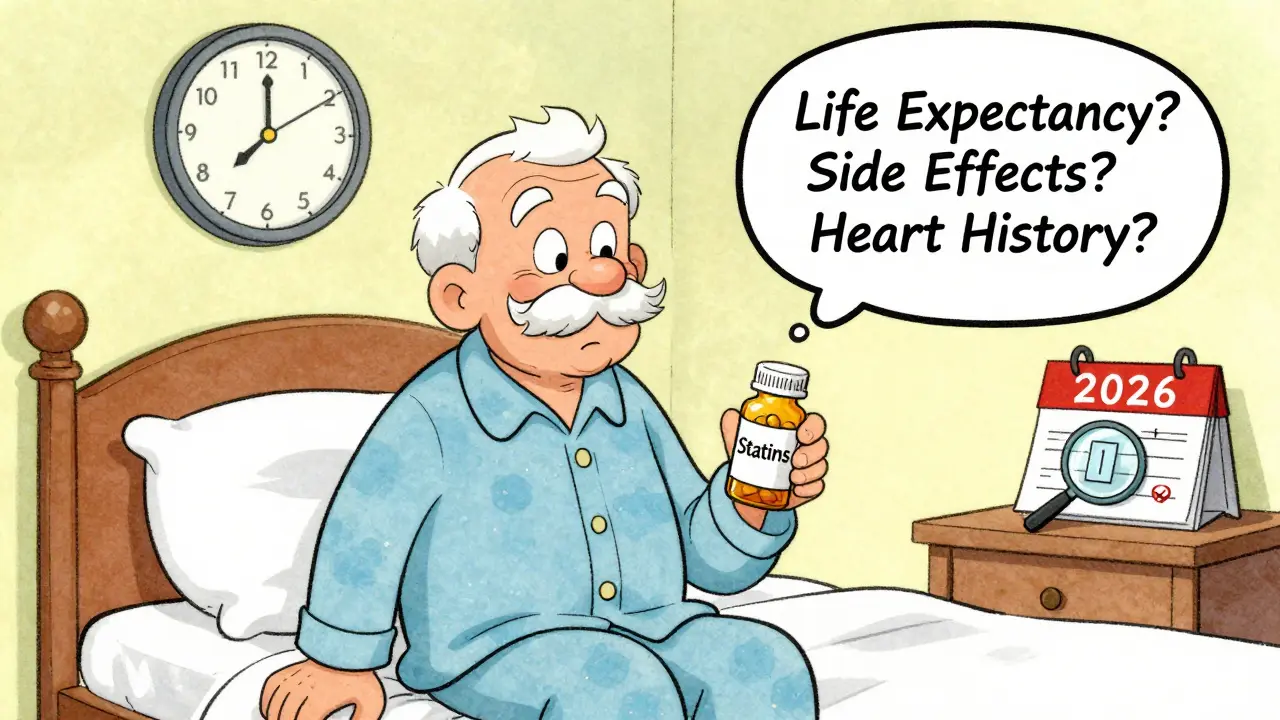
Many people take statins without ever questioning whether they still need them. These drugs have been prescribed for decades to lower cholesterol and prevent heart attacks and strokes. But what happens when you’re older, have multiple health issues, or feel side effects like muscle pain? Is it safe to stop? And if so, how do you do it without putting yourself at risk?
The truth is, statins aren’t for everyone forever. While they work well for many, stopping them can be the right choice - if done the right way. The key isn’t just about cholesterol numbers. It’s about your overall health, life expectancy, and whether the benefits still outweigh the downsides.
Why People Stop Statins
About 19% of people taking statins stop them for at least a year, according to a 2013 study. That’s nearly one in five. And it’s not always because they feel better. The most common reason? Side effects. Muscle aches, weakness, or fatigue are the top complaints. Some people worry about developing type 2 diabetes. Others just don’t want to take a pill every day for the rest of their life.
But here’s the catch: many of these side effects aren’t even caused by the statin. Studies show that when patients who stopped statins due to muscle pain were put back on a placebo, about 70% still reported the same symptoms. That means their pain wasn’t from the drug - it was from aging, inactivity, or another condition. Still, fear of side effects is powerful. It drives more discontinuations than any other factor.
Hospital stays, nursing home admissions, or a cancer diagnosis also increase the chance someone will stop. When life gets complicated, medications often get dropped - sometimes without anyone stopping to ask if it’s safe.
When Stopping Is Safe - and Smart
Not everyone needs statins for life. In fact, for some, continuing them does more harm than good.
If you have a life expectancy of less than two years - whether from advanced cancer, heart failure, or severe dementia - stopping statins is not only safe, it’s often recommended. A 2023 clinical guide from MyPCnow says continuing statins in these cases adds unnecessary pill burden without meaningful benefit. The same goes for patients on hospice care. If your time is measured in weeks or days, the goal shifts from preventing future heart attacks to comfort and quality of life.
For older adults with no history of heart disease, the case for stopping gets stronger. Statins are most effective for people who’ve already had a heart attack or stroke (secondary prevention). For those without known cardiovascular disease (primary prevention), the benefits are smaller. A 2021 study in JAMA Network Open found that for every 112 primary prevention patients who stopped statins, one had a major heart event over the next year. That’s a small risk increase - but for someone with limited life expectancy, it may not be worth the trade-off.
And here’s something surprising: a 2024 review in the Journal of the American Geriatrics Society found no increase in short-term death rates after stopping statins in end-of-life patients. That’s a big deal. It means stopping isn’t suddenly dangerous - it’s often just unnecessary.
The Real Danger of Stopping Too Soon
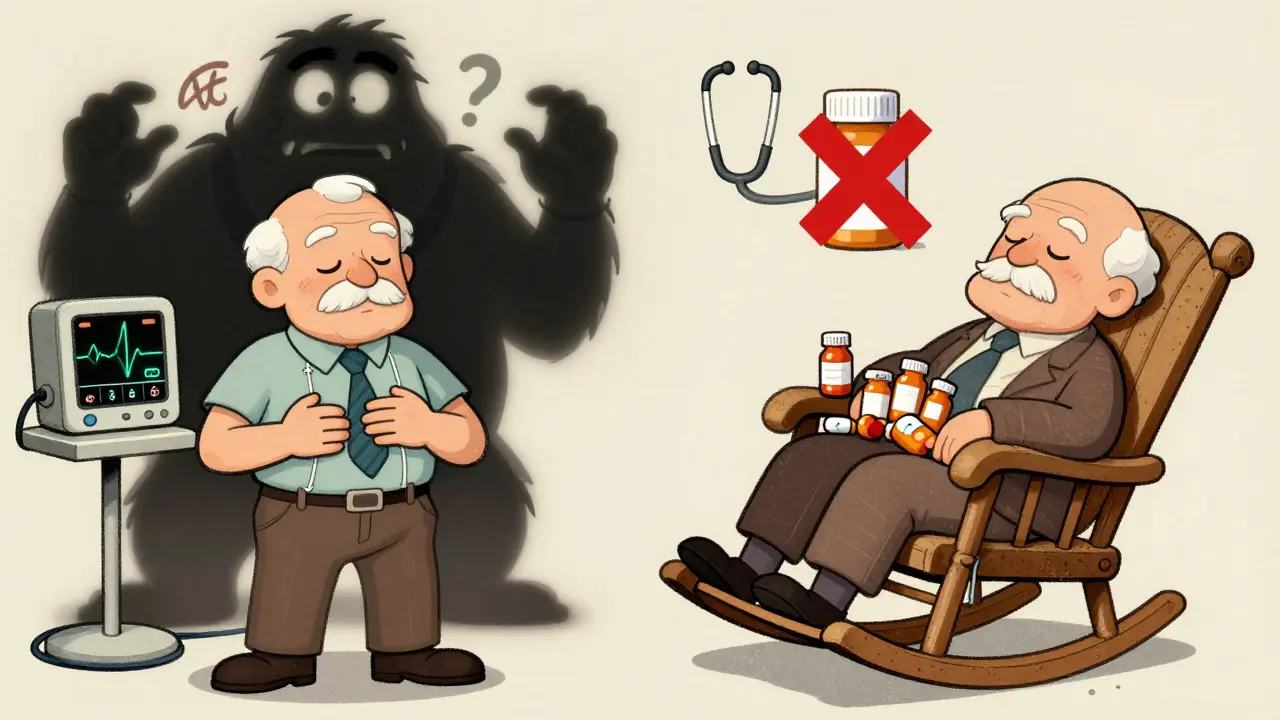
Stopping statins isn’t risk-free. For people with existing heart disease, the consequences can be serious.
The same 2021 study found that for every 77 secondary prevention patients who stopped, one had a major heart event within a year. That’s twice the risk compared to those who kept taking their statin. These events include heart attacks, strokes, or needing emergency heart procedures. For someone who’s had a stent or bypass surgery, skipping statins can undo years of progress.
That’s why blanket advice like “just stop if you feel bad” doesn’t work. You can’t treat all statin users the same. A 75-year-old with no heart history and mild muscle pain is very different from a 65-year-old with three stents and a history of angina. The risk isn’t in stopping - it’s in stopping without thinking.
How to Stop Safely
If you and your doctor decide stopping is right for you, here’s how to do it right:
- Don’t quit cold turkey - unless your doctor says so. For most people, especially those on high doses, gradually lowering the dose over a few weeks helps avoid rebound effects.
- Check your risk level - Are you on statins for primary or secondary prevention? If you’ve had a heart attack, your risk is much higher. Stopping isn’t a decision to make alone.
- Consider alternatives - If muscle pain is the problem, switching to a different statin (like pravastatin or fluvastatin) at a lower dose often helps. Some people do well with ezetimibe or PCSK9 inhibitors, though these are more expensive and require injections.
- Try intermittent dosing - Taking a statin every other day or twice a week can reduce side effects while still offering protection. This works best for lower-risk patients.
- Monitor symptoms - Keep track of any chest pain, shortness of breath, or unusual fatigue. These could signal returning cardiovascular risk.
- Document why you stopped - Many medical records just say “no longer necessary.” But if you stopped because of muscle pain, or because you’re in hospice, that matters. Make sure your doctor notes the real reason.
Pharmacists are great allies here. They’re trained in deprescribing - the process of safely stopping medications that aren’t helping anymore. Ask for their input. They can help you weigh options and spot interactions.
What About Alternatives?
Some people think switching to supplements like fish oil, red yeast rice, or plant sterols is a good substitute. But these aren’t proven replacements for statins. Red yeast rice, for example, contains a natural form of a statin - so if you had side effects before, you’ll likely have them again. Fish oil helps with triglycerides, but doesn’t lower LDL cholesterol the way statins do.
Non-statin options like ezetimibe or PCSK9 inhibitors can be used alongside or instead of statins - but they’re not cheaper or easier. PCSK9 inhibitors cost thousands per year and require monthly shots. For most, they’re not practical unless statins truly aren’t an option.
The best alternative? Lifestyle. Eating more vegetables, walking daily, managing blood pressure, and quitting smoking can do more than any pill. But they don’t replace statins for high-risk patients. They complement them.
What’s Changing in 2026
Research is shifting. A major clinical trial called “Discontinuing Statins in Multimorbid Older Adults” is wrapping up in 2025. It’s tracking 1,800 adults over 70 with multiple health problems who stopped or kept statins. The study isn’t just looking at heart attacks - it’s measuring muscle strength, falls, quality of life, and even cognitive function. Early results suggest that for many, stopping statins doesn’t hurt - and might even help them feel better.
Companies are also developing genetic tests to predict who’s likely to have side effects. One test looks at a gene called SLCO1B1, which affects how the body processes statins. If you have a certain variant, you’re more prone to muscle pain. That could one day help doctors decide who should stay on - and who should stop.
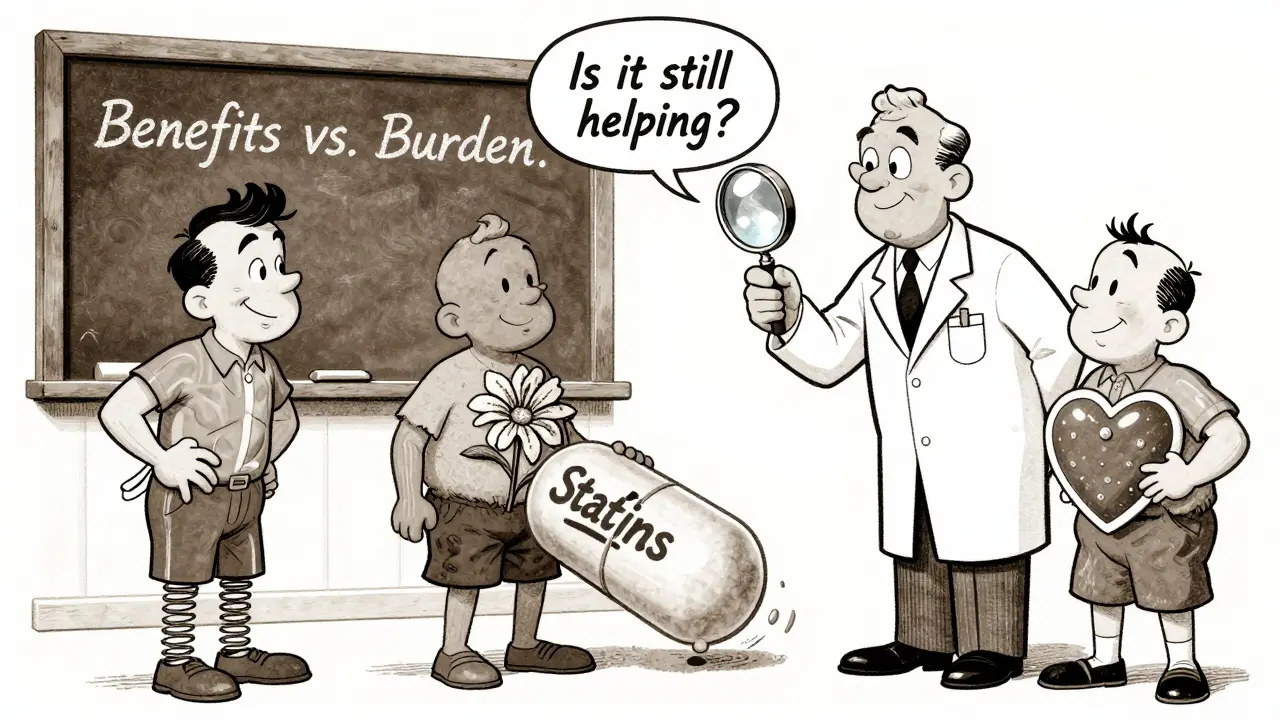
Meanwhile, guidelines are catching up. The American Geriatrics Society now explicitly recommends reviewing statins in older adults with poor health. No more automatic refills. No more “just keep taking it.” It’s time to ask: Is this still helping?
Final Thought: It’s Not About Fear - It’s About Fit
Statins saved millions of lives. But they’re not magic. They’re tools. And like any tool, they’re only useful if they fit the job.
If you’re 90, have dementia, and take eight other pills, continuing a statin might not be helping you live longer - it might just be adding confusion, cost, and discomfort. If you’re 60 with a stent and no side effects, stopping could put your life at risk.
The answer isn’t “always” or “never.” It’s “for you, right now.”
Ask your doctor: Why am I still on this? What happens if I stop? Is there a better way? Don’t wait for a side effect to force the conversation. Have it before you need to.
Can I stop statins if I have no symptoms?
Yes - but only if your doctor agrees. If you’re on statins for primary prevention (no history of heart disease) and have no side effects, stopping may still carry risk. The benefits are smaller, but not zero. A 2021 study found that for every 112 people who stopped, one had a heart event within a year. Never stop based on feeling fine alone. Use your risk profile, not your symptoms, to guide the decision.
Do statins cause long-term muscle damage?
No. Statins can cause temporary muscle pain or weakness, but they don’t cause permanent damage to muscle tissue. Symptoms usually go away within weeks of stopping. In rare cases, a serious condition called rhabdomyolysis can occur - but it’s extremely uncommon, affecting less than 1 in 10,000 users. If you have severe muscle pain, dark urine, or weakness, get checked immediately. Otherwise, most muscle discomfort isn’t from the statin at all.
Is it safe to stop statins if I’m over 75?
It depends. For people over 75 with no history of heart disease, stopping statins is often safe - especially if they have other chronic conditions or limited life expectancy. But if you’ve had a heart attack, stent, or bypass, continuing statins is still strongly recommended. Age alone isn’t the reason to stop. Health status, life expectancy, and personal goals matter more.
Can I restart statins after stopping?
Yes - and many people do. In fact, nearly half of those who stop statins restart them within a few years. But restarting after a long break can be tricky. Your doctor may need to start at a lower dose and monitor you closely. If you stopped due to side effects, switching to a different statin (like pravastatin or rosuvastatin) may help. Always talk to your doctor before restarting.
What’s the best way to talk to my doctor about stopping?
Be direct. Say: “I’ve been thinking about stopping my statin because I’m concerned about side effects / I’m not sure I still need it.” Bring up your life expectancy, other medications, and how you feel. Ask: “Based on my history, what’s my risk if I stop? What’s the benefit of continuing?” Bring a list of all your meds. Pharmacists and geriatricians are especially skilled at these conversations - ask if they can help.
Do statins affect life expectancy in healthy older adults?
For healthy older adults without heart disease, statins don’t extend life. Large studies show no clear survival benefit in people over 75 with no prior cardiovascular events. The risk reduction is small, and the burden of daily medication - including side effects and pill fatigue - may outweigh the benefit. This is why guidelines now recommend individualized decisions rather than automatic continuation.
There’s no one-size-fits-all answer with statins. The goal isn’t to take pills forever - it’s to live well. If a medication no longer fits your life, it’s okay to let it go. Just don’t do it alone.
Leon Hallal
I stopped my statin last year after my legs started aching. Didn't feel any different. My doctor said I was fine to quit. Now I walk every day and eat more greens. No more pills. No more pain. Just life.
Judith Manzano
This is such an important topic. So many older adults are just told to keep taking statins without ever re-evaluating. I had my 82-year-old mom go off hers after a fall and a cancer diagnosis. She’s actually more alert now, less groggy. It’s not about fear - it’s about fit. Glad to see this getting attention.
Jazminn Jones
The empirical evidence supporting statin discontinuation in multimorbid elderly populations remains methodologically insufficient. The JAMA Network Open study cited exhibits significant confounding bias due to residual confounders such as socioeconomic status and healthcare access. Moreover, the 2024 geriatrics review lacks longitudinal follow-up beyond 12 months, rendering its conclusions premature. A true risk-benefit analysis requires RCT-level data, which is currently absent.
Stephen Rudd
You people are falling for Big Pharma’s lie. Statins don’t save lives - they make people dependent. My uncle died after a heart attack because he was on statins for 15 years. Turns out his liver was fried. The real cause? Pill overload. They’re not treating disease - they’re creating patients. Wake up. This isn’t medicine. It’s a business model.
George Vou
statins are just part of the system. they want you hooked. i read somewhere that the FDA let them on the market because of lobbying. people who say 'i feel fine' are the ones who get screwed. they don't tell you about the diabetes risk. they just say 'lower cholesterol'. but what if your cholesterol is fine? what if you're just old? they don't care. they just want you to keep paying.
Mantooth Lehto
I'm so sick of doctors treating us like numbers. My mom's been on statins since she was 60. She's 80 now. Dementia. Can't remember her grandkids' names. But she still takes 8 pills a day. I cried when I told her to stop. She didn't even notice. That's not healthcare. That's neglect wrapped in a prescription pad. 🙃
Nicholas Gama
Statins for primary prevention in the elderly are a myth. The numbers don’t lie. 112 patients to prevent one event. That’s not medicine. That’s mass medication. Stop pretending it’s about health. It’s about liability.
Mary Beth Brook
This is why American healthcare is collapsing. We're abandoning evidence-based protocols for feel-good narratives. Statins reduce LDL, which reduces plaque. Plaque causes MI and stroke. Period. If you're not following clinical guidelines, you're not a clinician - you're an amateur. Stop playing doctor with lives.