
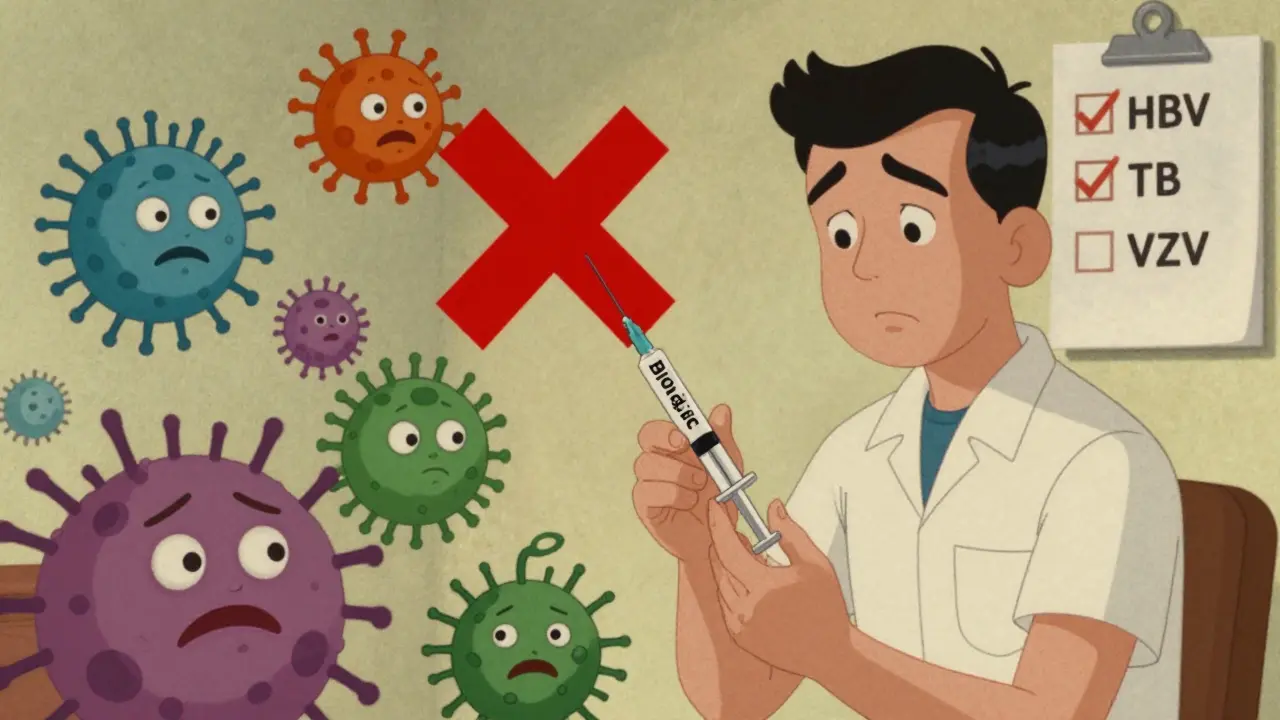
When you're managing an autoimmune disease like rheumatoid arthritis, psoriasis, or Crohn’s disease, biologics can be life-changing. These drugs-monoclonal antibodies and fusion proteins-target specific parts of your immune system to calm inflammation. But there’s a catch: biologics don’t just turn down the inflammation. They also turn down your body’s ability to fight off infections. That’s why safety isn’t optional. It’s mandatory.
Why Infection Risk Is Higher with Biologics
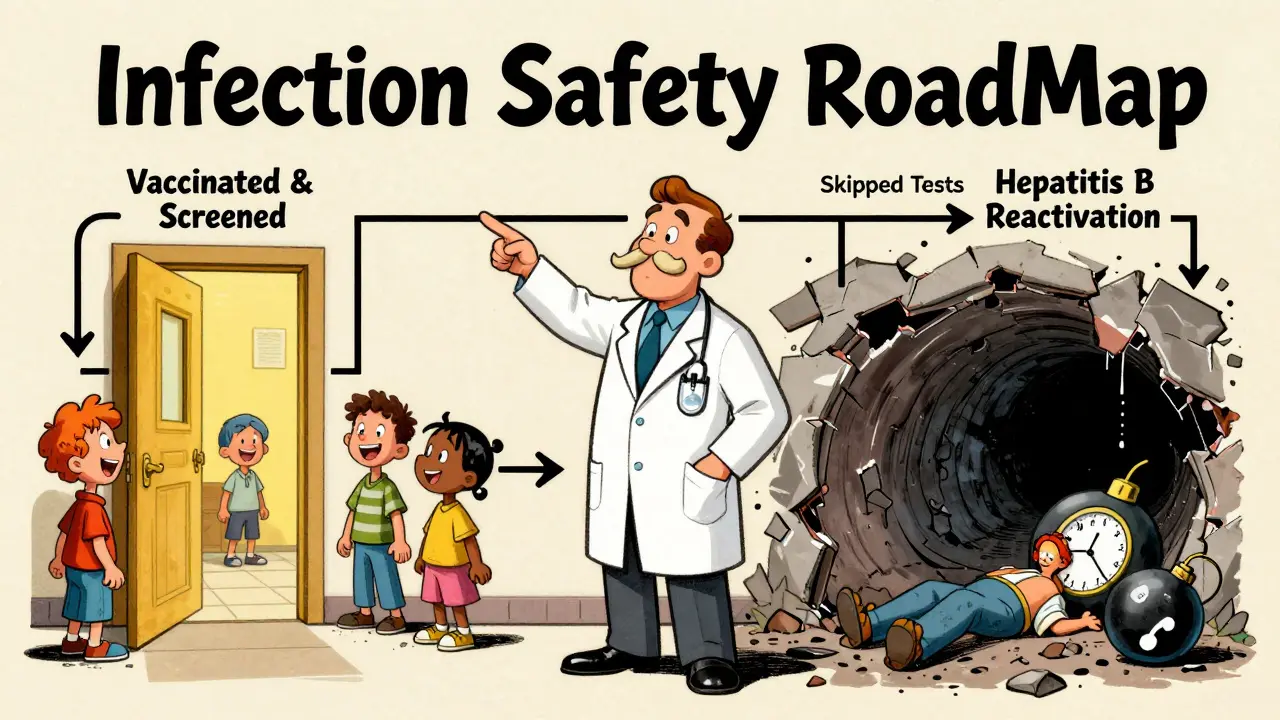
Not all biologics are the same, but they all share one big risk: they make you more vulnerable to infections. Studies show patients on biologics have about a 2.1 times higher chance of being hospitalized for an infection compared to those on traditional treatments like methotrexate. The biggest culprits? TNF inhibitors like adalimumab and infliximab. These make up nearly 70% of all biologic prescriptions, and they carry the highest infection risk among the class.It’s not just about getting a cold. Serious infections-pneumonia, tuberculosis, hepatitis B reactivation, and even rare fungal infections-can happen. Upper and lower respiratory infections are the most common, making up almost half of all serious cases. But the real danger isn’t always obvious. Some infections lie dormant. Hepatitis B, for example, can stay hidden in your liver for years and suddenly flare up once you start a biologic. Without screening, that’s a ticking time bomb.
Who’s at Highest Risk?
Risk isn’t the same for everyone. Certain factors stack the deck against you:- Age over 50: Your risk goes up 37% for every decade past 50.
- High-dose steroids: Taking more than 10mg of prednisone daily triples your infection risk.
- Chronic conditions: Diabetes raises your risk by almost 90%. Chronic kidney disease? That’s more than double. COPD? Over two and a half times higher.
- Other medications: Combining biologics with other immune suppressants like azathioprine or mycophenolate increases the danger even more.
Even your environment matters. Some viruses, like norovirus, can survive on surfaces for days. Others, like influenza, spread easily through the air. Your body’s defenses are already compromised. So extra precautions aren’t just smart-they’re essential.
Screening Before You Start: The Non-Negotiable Steps
Before you get your first biologic shot or infusion, you need a full infection risk checkup. This isn’t a suggestion. It’s standard of care. Here’s what you must get tested for:- Hepatitis B: You need all three tests-HBsAg, HBsAb, and HBcAb. Even if you’re negative for HBsAg, a positive HBcAb means you had a past infection. That’s enough to trigger reactivation. About 8.7% of these patients have hidden virus in their liver. Without antiviral prevention, reactivation rates hit 27.6%.
- Tuberculosis: The standard is an interferon-gamma release assay (IGRA), like Quantiferon. Some doctors debate whether this is overkill in low-risk areas, but guidelines still require it. Latent TB can turn active in weeks after starting a biologic.
- Hepatitis C: Routine screening is recommended, especially if you’ve had blood transfusions or IV drug use in the past.
- HIV: Often included as part of baseline testing.
- Varicella-zoster virus (VZV): Did you have chickenpox? Or get the vaccine? A blood test for IgG antibodies tells you if you’re protected. If you’re not, you need the vaccine-before starting treatment.
These tests aren’t just paperwork. They’re your safety net. One patient on Reddit shared how their GI doctor skipped HBV core antibody testing. Six months later, they had a full-blown hepatitis flare. That’s preventable.
Vaccinations: Timing Is Everything
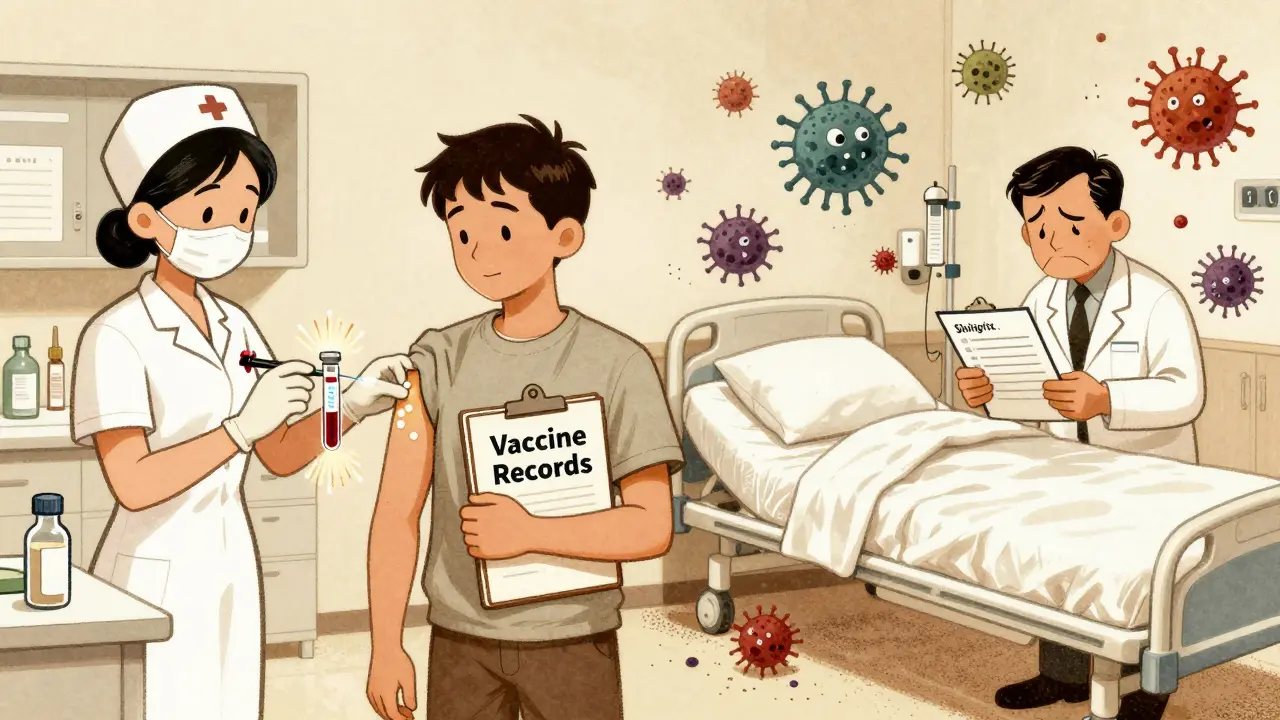
Vaccines are your best defense-but only if given at the right time. Once you start a biologic, your immune system can’t respond properly to live vaccines. That means you can’t get them after treatment begins.Here’s the schedule you need to follow:
- Live vaccines (MMR, varicella, nasal flu): Must be given at least 4 weeks before your first biologic dose.
- Inactivated vaccines (flu shot, pneumococcal, tetanus, hepatitis A/B): Should be given at least 2 weeks before starting.
- Shingrix (shingles vaccine): Two doses, 2-6 months apart. Complete both doses before starting biologics if possible. If you’re already on treatment, you can still get it-it’s not live-but it’s less effective.
Don’t assume your doctor will check your vaccine history. Many don’t. One patient on HealthUnlocked got started on Stelara without ever being asked about shingles shots. Four months later, she had shingles. That’s not bad luck-it’s a system failure.
After vaccination, some vaccines need confirmation. For hepatitis B, you need an anti-HBs level of at least 10 mIU/mL. For VZV, IgG should be above 140 mIU/mL. If you’re not protected, you may need a booster-before treatment starts.
How Biologic Types Compare
Not all biologics are created equal when it comes to infection risk. Here’s a quick breakdown:| Biologic Class | Examples | Relative Infection Risk | Key Infection Concerns |
|---|---|---|---|
| TNF Inhibitors | Adalimumab, Infliximab, Etanercept | High (1.6-1.9x higher than non-TNF) | TB reactivation, pneumonia, fungal infections |
| IL-12/23 Inhibitors | Ustekinumab | Moderate | Lower overall risk; safer in HBV carriers |
| IL-17 Inhibitors | Secukinumab, Ixekizumab | Moderate | Higher candidiasis (yeast) infections |
| JAK Inhibitors | Tofacitinib, Baricitinib | High (similar to TNF) | Herpes zoster (shingles), blood clots |
Ustekinumab stands out. It’s one of the safest options for patients with a history of hepatitis B. While TNF inhibitors carry a 27.6% reactivation risk without treatment, ustekinumab’s risk is under 2%. That’s a huge difference.
Certolizumab pegol is another outlier. Because it lacks an Fc region, it doesn’t activate immune cells as strongly. Real-world data shows 18% fewer respiratory infections compared to other TNF blockers.
What Happens If You Skip Screening?
It’s easy to think, “I feel fine. Why do I need all these tests?” But that’s exactly how problems start.A 2023 survey of over 2,000 patients found that 63% reported at least one missed screening step. The most common? Forgetting to test for HBV core antibody (41%) and not checking VZV immunity (37%).
One patient in a Mayo Clinic study had latent TB. Without screening, they would’ve started Humira-and likely developed active TB within months. Instead, they got treated for nine months first. Three years later? Zero infections.
On the flip side, patients who went through a full 12-point CDC infection prevention checklist had a 78% rate of zero serious infections. Those who didn’t? Only 43% stayed infection-free.
What You Can Do Right Now
If you’re considering a biologic-or already on one-here’s your action plan:- Request a full infection screen: HBV, TB, HIV, HCV, VZV.
- Bring your vaccine records. If you don’t have them, get titers drawn.
- Ask: “Which vaccines do I need before starting?” Don’t wait for them to ask you.
- If you’re positive for HBV core antibody, insist on HBV DNA testing and ask about antiviral prophylaxis.
- Complete all live vaccines at least 4 weeks before your first dose.
- Keep a copy of your screening results. Doctors change. Records get lost.
Don’t let convenience override safety. A quick blood test today can prevent a hospital stay tomorrow.
The Future: Better Tools, Better Outcomes
The field is evolving fast. AI tools like the Cerner Biologics Safety Algorithm now predict individual infection risk by analyzing 87 data points-from your age and diabetes status to your geographic location and medication history. These tools are being rolled out in major hospitals and are showing 87% accuracy in predicting who’s at highest risk.By 2026, Medicare will tie 15% of biologic payments to whether clinics follow infection safety protocols. That’s driving change. But in rural areas, only 28% of patients get all required screenings. That’s a gap we can’t ignore.
For now, your best protection is knowledge and preparation. Biologics are powerful. But they’re not magic. They need careful handling. The science is clear: screening and vaccination save lives. Don’t skip the steps. Your immune system is counting on you.
Do I need to get vaccinated before starting a biologic even if I’ve had all my shots as a child?
Yes. Immunity can fade over time, especially for vaccines like hepatitis B and shingles. Blood tests (titers) are needed to confirm protection. If your antibody levels are low, you’ll need a booster before starting treatment. Don’t rely on childhood records alone.
Can I get the flu shot while on a biologic?
Yes, and you should. The flu shot is inactivated and safe to take while on biologics. Get it every year, ideally in early fall. Avoid the nasal spray-that’s live and not safe.
What if I already started my biologic and never got screened for hepatitis B?
Get tested right away. If you’re HBcAb positive, your doctor should check your HBV DNA level. If it’s detectable, you’ll need antiviral medication like entecavir or tenofovir to prevent reactivation. Even if you’ve been on biologics for months, it’s not too late to act.
Are biologics safe if I’ve had tuberculosis in the past?
You can still use biologics, but only after completing full TB treatment and often with ongoing monitoring. Most guidelines recommend 9 months of treatment for latent TB before starting a biologic. Some doctors may also prescribe low-dose antibiotics long-term as extra protection.
Why is hepatitis B screening so important for biologics?
Hepatitis B can hide in your liver without symptoms. When you take a biologic, especially a TNF inhibitor, your immune system can’t control the virus anymore. This causes the virus to reactivate-sometimes violently. Up to 27.6% of untreated carriers develop severe liver damage, liver failure, or even death. Screening and preventive antivirals cut that risk to under 2%.
Can I get the shingles vaccine after starting a biologic?
Yes, but only the non-live version: Shingrix. It’s safe and recommended even if you’re on biologics. However, it works best if given before starting treatment. If you’ve already begun your biologic, you can still get Shingrix-it just might not be as effective. Talk to your doctor about timing.


Vatsal Srivastava
Biologics are just fancy placebo pills with extra steps. Everyone knows the real issue is Big Pharma pushing drugs to keep people dependent. Screening? More like a revenue stream for labs.
Also, why are we still using 2010 guidelines? The data's outdated.
Dan Pearson
Oh wow, another anti-American medical article. In the US we don't need all this nonsense. We just vaccinate, get the shot, and move on. Why are we testing for everything under the sun? We're not in India or some third-world clinic.
Also, Shingrix? We had chickenpox as kids. That's enough. Stop overmedicalizing everything.
jay patel
I mean... i totally get where the article is coming from but like... why do we always assume everyone has access to this level of care? My cousin in mumbai got started on adalimumab without a single test. He's fine now. Maybe the real problem isn't the drug, it's the system that makes people jump through hoops just to stay alive?
Also typo: 'hepatitis B reactivation' - i think they meant 'reactivation of hepatitis B' but whatever. Point stands.
Ansley Mayson
This is why people die. Overtesting. Overvaccinating. Overthinking. You don't need 12 blood tests to take a drug. If you're healthy, you're healthy. Stop treating patients like lab rats.
phara don
Wait so if I had chickenpox as a kid, I'm good for shingles? Or do I need Shingrix even if I'm 30? 🤔
Hannah Gliane
OMG I can't believe people still skip HBV core antibody testing 😭
My friend got liver failure because her doctor "didn't think it was necessary." She's 29. She had a transplant. Now she has to take 14 pills a day. 🙃
THIS ISN'T A SUGGESTION. IT'S A LIFESAVING STEP. STOP BEING LAZY.
Murarikar Satishwar
The data here is solid. Screening isn't bureaucracy-it's basic science. TNF inhibitors carry real risks, and HBV reactivation isn't theoretical. I've seen patients in Delhi who came in with acute liver failure after starting adalimumab. All preventable. The key is consistency. Not every clinic has the resources, but that doesn't mean we stop pushing for standards. Everyone deserves this level of care.
Bob Hynes
Man, I'm from Vancouver and we just got a new protocol where they screen for everything before biologics-even TB in the Arctic. It's wild. But honestly? I'd rather wait 3 weeks for bloodwork than end up in ICU. My uncle got hepatitis B from a biologic back in '18. Never again. Also, Shingrix is a beast. Two shots, arm sore for a week. Worth it.
Ellie Norris
Just a quick note-HBcAb positive means past infection, but if HBsAg is negative and HBV DNA is undetectable, you're usually fine with prophylaxis. Some docs forget that. Also, forgot to mention: get your anti-HBs titer checked after the HBV vaccine. I had a patient with 2 mIU/mL and thought they were protected. Nope.
Marc Durocher
Honestly? This post saved my life. I was about to start Humira. Never got screened. Thought I was fine. Then I read this. Got tested. Turned out I had latent TB. Did 9 months of isoniazid. Now I'm on ustekinumab. Zero issues. No hospital. No drama.
Do the tests. Don't be the guy who regrets it.
Akhona Myeki
In South Africa, we do not have access to these screening protocols. The government provides biologics but not the tests. We are forced to choose between treatment and survival. This article is written for the privileged. I appreciate the intent, but it ignores the global reality.
Chinmoy Kumar
Just got my first biologic shot last week. Did all the tests. Got Shingrix. Got the flu shot. Even checked my vitamin D. My doc was like "you're the first patient who came in with a printed checklist."
But honestly? I feel way better knowing I did everything right. No regrets. If you're reading this and haven't gotten screened yet-do it. Your future self will high-five you 🙌