
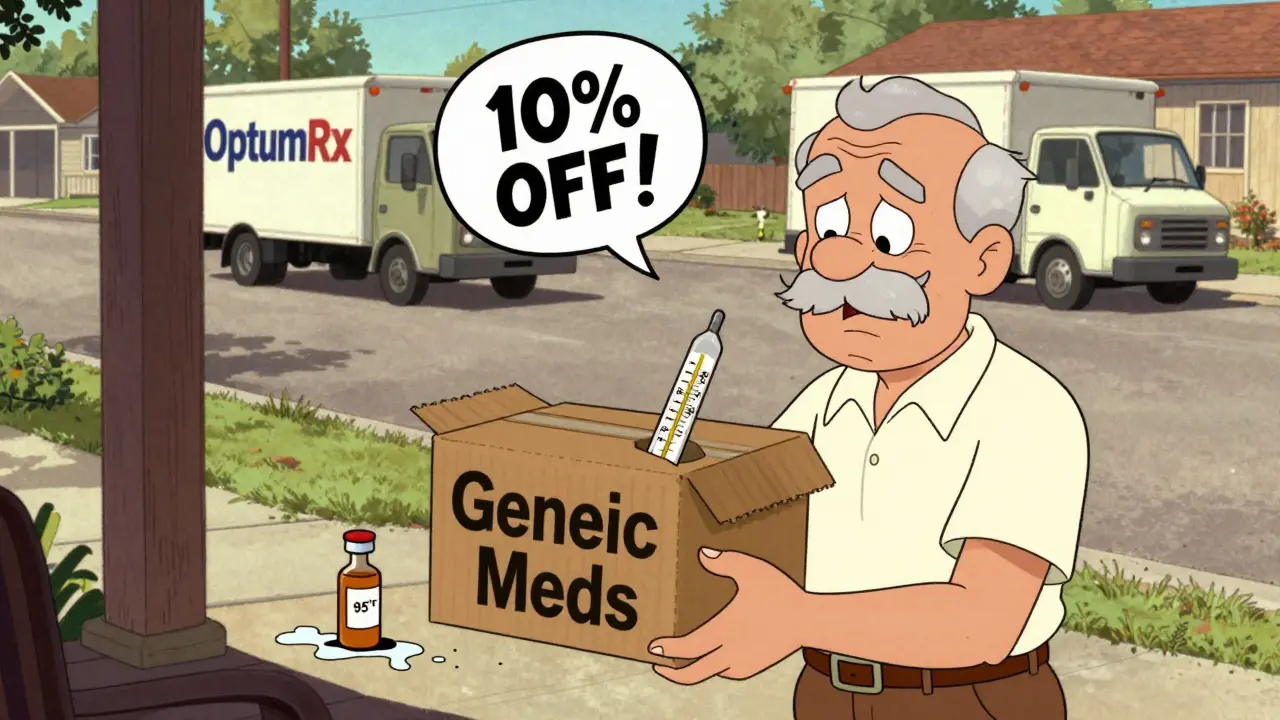
Buying your chronic meds online and having them shipped to your door sounds simple. And for many people, it is. But behind the convenience and low copays lies a system that’s often opaque, inconsistently regulated, and sometimes dangerous. Mail-order generics aren’t just a modern twist on pharmacy service-they’re a major shift in how America gets its medicines. And not all of it is good.
Why People Use Mail-Order Generics
Most people turn to mail-order pharmacies because they save money and time. If you’re on a daily medication for high blood pressure, diabetes, or depression, getting a 90-day supply delivered every few months cuts down on trips to the pharmacy. Many insurance plans make it even cheaper: a 90-day supply of a generic statin might cost $10 out-of-pocket, while the same drug at a local pharmacy could run $30 or more for just 30 days. It’s not just about cost. For people with mobility issues, busy schedules, or those living far from a pharmacy, home delivery removes a real barrier. A 2022 IQVIA study found that 63% of people with high blood pressure and 58% of those with diabetes use mail-order services-far higher than the 29% average for all prescription users. That’s because these conditions require long-term, consistent treatment. Mail-order fits that need. The system works best when it’s set up right. Automatic refills, reminders, and bulk pricing make it easier to stick to your meds. Studies from the National Institutes of Health show that people using mail-order pharmacies are more likely to take their medications as prescribed, especially for heart disease and diabetes. Better adherence means fewer hospital visits and lower long-term health costs.How the System Actually Works
You’re not ordering from some random website. Most mail-order pharmacies are run by big pharmacy benefit managers (PBMs)-companies that manage drug benefits for insurers. The top three: Express Scripts (owned by Cigna), CVS Caremark, and OptumRx. Together, they handle nearly 80% of all mail-order prescriptions in the U.S. Here’s how it usually goes: your doctor sends an electronic prescription to your insurer’s mail-order pharmacy. You sign up for a 90-day supply. The pharmacy fills it, packages it, and ships it via courier. Delivery typically takes about a week. You pay your copay-often fixed-and the rest is billed to your insurer. But here’s the catch: the price you see isn’t always the real cost. A generic antidepressant might cost $12 at your local pharmacy. But the mail-order pharmacy could bill your insurer $100 for it. That’s an 800% markup. And you’re not seeing that number. You just see your $10 copay. The difference? That’s profit for the PBM. This isn’t fraud. It’s how the system is built. PBMs negotiate rebates and markups behind the scenes. The savings you get? They’re often just a fraction of what’s being spent. Meanwhile, the total spending on mail-order prescriptions jumped from $86 billion in 2013 to over $206 billion in 2023-even though the number of prescriptions only went up by 11%.Temperature Risks: When Your Medicine Melts
Not all medications are created equal when it comes to shipping. Some, like insulin, certain biologics, and even some antibiotics, are sensitive to heat and cold. The FDA says they need to stay between 68°F and 77°F during transit to stay effective. A study from the Journal of the American Pharmacists Association found that only one-third of mail-order shipments kept medications within that safe range. That means two out of every three packages could be exposing your meds to temperatures that degrade them. There are real stories. On Reddit, users reported insulin vials arriving melted after summer deliveries. One woman in Texas said her diabetes meds arrived warm and cloudy-she had to rush to the ER because she didn’t know if they’d work. The FDA has logged over 1,200 reports of temperature-related medication failures between 2020 and 2023. Experts believe that’s just the tip of the iceberg. There’s no federal law requiring mail-order pharmacies to monitor or guarantee temperature control. No labels. No tracking. No penalties if your medicine goes bad in transit. If your insulin doesn’t work, you’re on your own.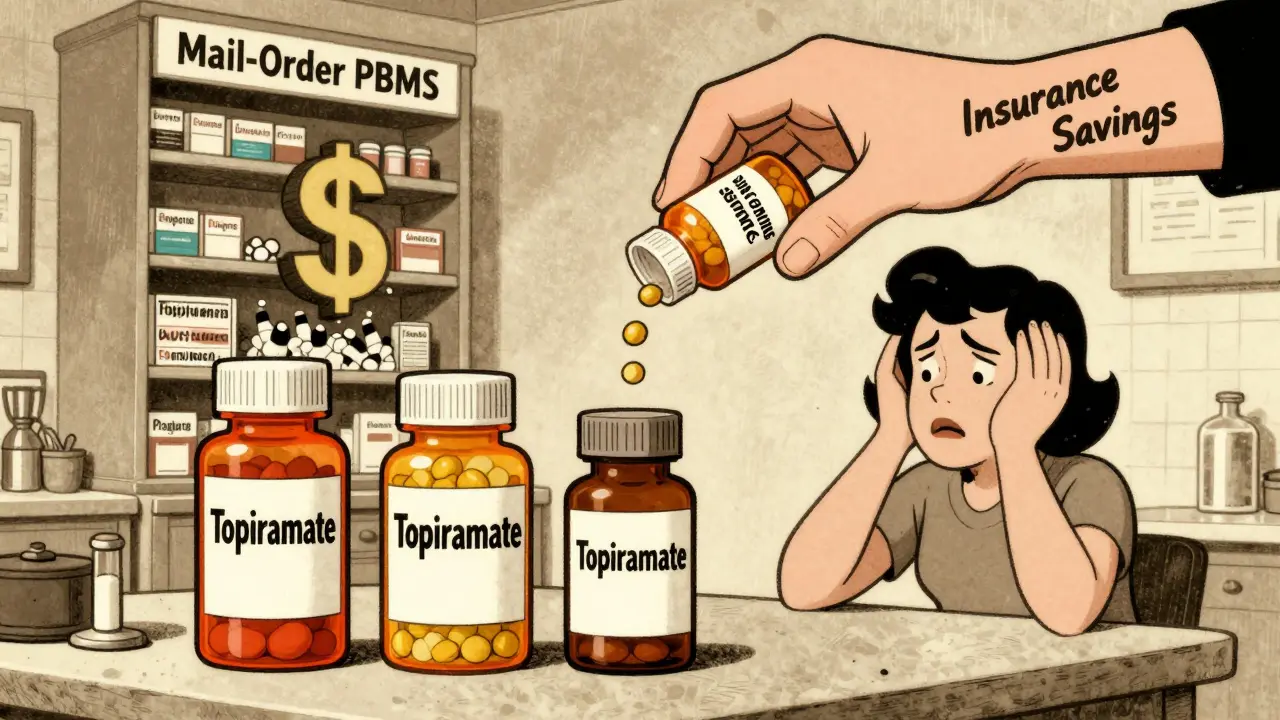
When Mail-Order Isn’t Safe
Mail-order is great for maintenance meds. It’s terrible for anything you need right now. Need an antibiotic for a sudden infection? A rescue inhaler for an asthma attack? Pain meds after surgery? Don’t wait for a package. Mail-order delivery takes days. If you’re in pain or sick, you can’t afford delays. Another hidden risk: medication complexity. If you take five different drugs, your insurer might push you to use mail-order for some and stick with your local pharmacy for others to save money. But here’s the problem: your local pharmacist can check for drug interactions. Your mail-order pharmacy? They might not even know you’re taking another med from a different source. A 2024 study in JAMA Network Open found that patients using multiple pharmacies for their prescriptions had a higher risk of dangerous drug interactions. Why? Because pharmacists can’t see the full picture. That’s not just inconvenient-it’s dangerous.Generic Switching: The Hidden Psychological Cost
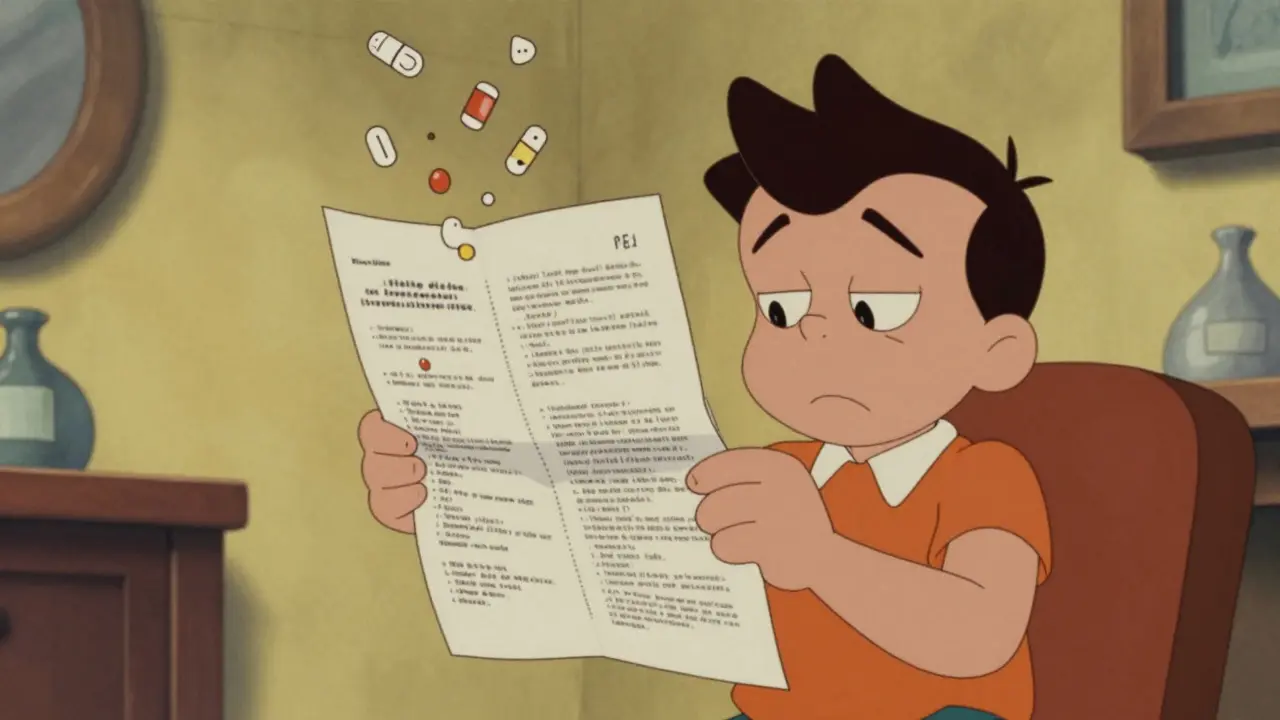
You might think all generics are the same. They’re not. The FDA says generics must have the same active ingredient, strength, and effect as brand-name drugs. That’s true. But they don’t have to look the same. Shape, color, size, even taste can change every time your insurer switches you to a different generic manufacturer. For some people, this causes real anxiety. A 2017 study found that patients on generic topiramate (used for seizures and migraines) who switched between different versions were more likely to be hospitalized. Why? Because they didn’t recognize the pill. They thought it was the wrong drug. Some stopped taking it altogether. This isn’t just about confusion. It’s about trust. If you’ve been on the same pill for years, and suddenly it looks different, you might doubt whether it’s working. That doubt can lead to missed doses. And for people with chronic conditions, that’s a recipe for disaster.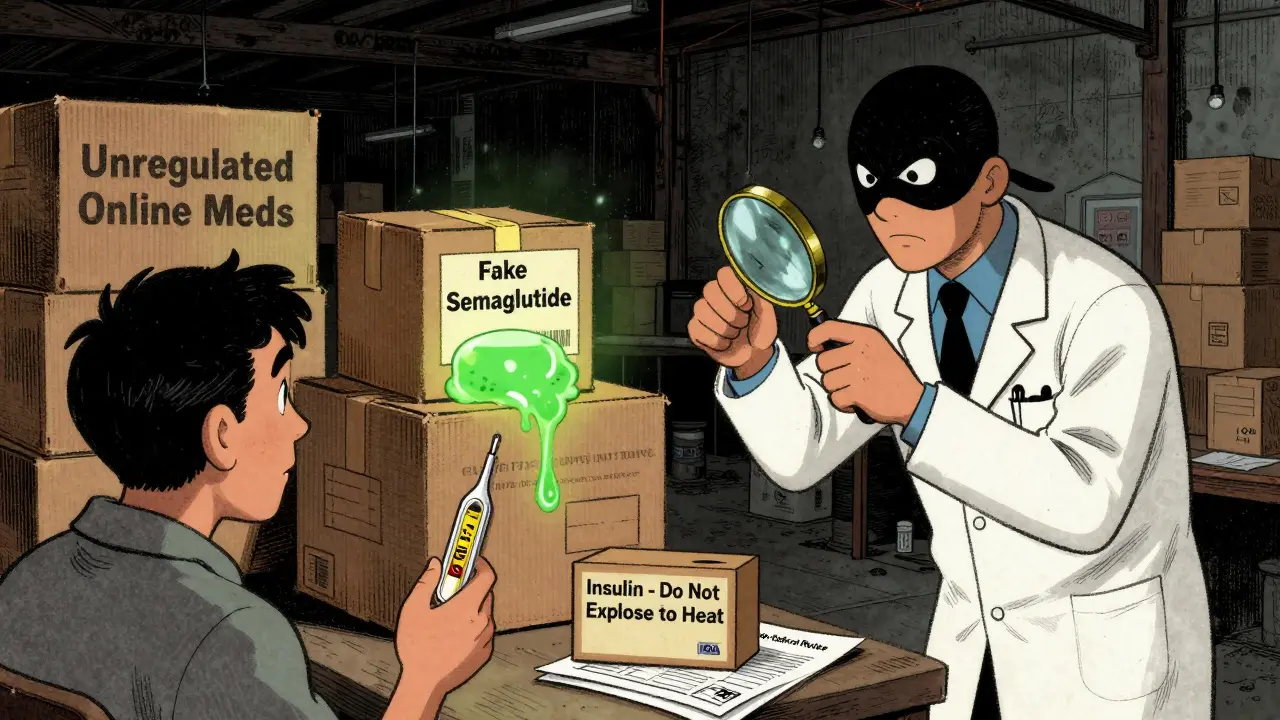
Who’s Left Behind
Mail-order works well if you have insurance. But what if you don’t? For uninsured patients, the cost of mail-order can be brutal. Take semaglutide or tirzepatide-new weight-loss drugs. At a retail pharmacy, they might cost $1,000 a month. Through a direct-to-consumer mail-order site, they’re still $500 a month. That’s still more than most people can afford. And here’s the kicker: many of these online pharmacies aren’t regulated like traditional ones. They don’t require a prescription. They don’t verify your identity. They don’t check for interactions. Some are just websites selling unapproved versions of drugs-sometimes fake, sometimes expired. The FDA has cracked down on illegal online pharmacies, but they’re still out there. If you’re looking for a deal, be careful. A cheap price doesn’t mean safe.What You Can Do to Stay Safe
If you’re using or considering mail-order generics, here’s how to protect yourself:- Order early. Don’t wait until you’re out. Set up your refill two weeks before your supply runs out. That gives time for delays.
- Check the pills. When your meds arrive, compare them to your last bottle. If they look different, call your pharmacist. Ask if it’s the same generic.
- Know your meds. If you’re on insulin or other temperature-sensitive drugs, ask the pharmacy how they ship them. Do they use cold packs? Is there a tracking system?
- Stick with one pharmacy. Try to get all your prescriptions filled through the same mail-order service so your pharmacist can check for interactions.
- Don’t use random websites. Only use mail-order pharmacies linked to your insurance or a major pharmacy chain. Avoid sites that don’t require a prescription.
The Future of Mail-Order
The trend isn’t slowing down. McKinsey predicts that by 2027, nearly half of all chronic medication prescriptions in the U.S. will be filled through mail-order. That’s up from 31% today. But with growth comes pressure. Lawmakers are starting to pay attention. H.R. 4892, the Pharmacy Delivery Safety Act, is currently in committee. It would require temperature monitoring, clearer labeling, and better reporting of damaged shipments. For now, the system is a mixed bag. It helps people stay on their meds. It saves money-for insurers, not always for patients. It’s convenient, but it’s not foolproof. The real question isn’t whether mail-order generics are good or bad. It’s whether we’re willing to fix the parts that are broken. Because right now, your life could depend on a box that’s sitting in a hot truck for three days.Are mail-order generics as effective as brand-name drugs?
Yes, by law. The FDA requires generic drugs to have the same active ingredient, dosage, strength, and effectiveness as their brand-name counterparts. The only differences are in inactive ingredients, shape, color, or packaging-which don’t affect how the drug works. Many people assume generics are weaker, but that’s a myth. The real issue isn’t effectiveness-it’s consistency and safety during shipping.
Can I get my insulin through mail-order safely?
You can, but it’s risky. Insulin is sensitive to heat and can lose potency if exposed to temperatures above 86°F for more than 24 hours. Studies show only one-third of mail-order shipments keep medications in the safe temperature range. If you use insulin, ask your pharmacy how they ship it. Do they use insulated packaging and cold packs? Can you track the delivery? Consider picking up insulin at a local pharmacy if you’re unsure.
Why does my generic pill look different every time?
Because your insurance company switches between different generic manufacturers to get the lowest price. Each manufacturer makes the same drug but with different colors, shapes, or markings. This isn’t a mistake-it’s standard practice. But for some people, especially older adults or those with cognitive issues, this causes confusion and anxiety. If you’re worried, ask your pharmacist to stick with one manufacturer, or request a consistent version.
Is it better to use mail-order or my local pharmacy?
It depends. For chronic medications you take every day-like blood pressure or cholesterol pills-mail-order is often cheaper and more convenient. For anything you need right away-antibiotics, pain meds, inhalers-stick with your local pharmacy. Also, if you take multiple drugs, using one pharmacy (mail-order or retail) helps your pharmacist catch dangerous interactions. If you split prescriptions, you lose that safety net.
What should I do if my medication arrives damaged or looks wrong?
Don’t take it. Contact your pharmacy immediately. Take photos of the package and the pills. Ask for a replacement and a new shipment with temperature controls if needed. If you’re on insulin or another critical drug, go to your local pharmacy right away to get a replacement. Report the issue to the FDA’s MedWatch program-it helps track safety problems.
Are mail-order pharmacies regulated like regular pharmacies?
They’re licensed by state boards, but federal oversight is weak. There’s no requirement for temperature monitoring during shipping, no mandatory reporting of damaged medications, and no standard for how long a package can sit in a warehouse or delivery truck. The FDA can investigate complaints, but they don’t proactively inspect mail-order facilities like they do retail pharmacies. That’s why safety issues often go unnoticed until someone gets hurt.


Beth Beltway
Let’s be real - this whole mail-order system is a corporate cash grab disguised as convenience. PBMs are raking in billions while patients get stuck with pills that might’ve melted in a Texas truck. The FDA logs over a thousand incidents and does nothing. This isn’t healthcare - it’s supply chain roulette. And don’t get me started on the generic switching. People panic because their pill changed color. That’s not a glitch - it’s a feature designed to keep you confused and compliant.
Insulin? Don’t trust it. Temperature logs? Nonexistent. You think your $10 copay is saving you money? You’re paying for it in ER visits and failed treatments. This system is rigged, and the people who need it most are the ones getting screwed.
And yet, we’re supposed to be grateful? No. We need regulation. Not suggestions. Not ‘tips.’ Laws. Penalties. Accountability. Until then, this isn’t progress - it’s negligence with a website.
Oh, and ‘order early’? That’s not advice - that’s a Band-Aid on a gunshot wound.
Natasha Plebani
The structural epistemology of pharmaceutical distribution in the U.S. reveals a profound dissonance between commodification and therapeutic efficacy. The PBM-mediated model operates under a logic of rent extraction rather than health optimization - a neoliberal artifact wherein pharmacological access is subordinated to margin maximization.
Temperature instability in transit is not merely a logistical failure; it is a biosemiotic rupture - the materiality of the drug becomes divorced from its intended semiotic function. The pill, once a signifier of therapeutic certainty, becomes an ambiguous sign - its efficacy contingent on the ambient conditions of a FedEx van.
Moreover, the epistemic violence of generic switching undermines patient autonomy. When identity is tied to pharmacological form - color, shape, imprint - the disruption of that form triggers ontological insecurity. The body no longer recognizes its own remedy. This is not pharmacology. This is psychological destabilization under the guise of cost-efficiency.
We must reconceptualize medication delivery not as a transaction, but as a covenant between the patient and the therapeutic system. Without integrity in the chain of custody, the entire edifice of adherence collapses.
owori patrick
I come from Nigeria, where many people get meds from local pharmacies or even street vendors. I’ve seen people take pills without knowing what’s inside. So when I read this post, I felt both relieved and scared.
Relieved because at least here, you know what you’re getting - mostly. Scared because this system looks like it’s built to exploit people who are already tired. The temperature thing? That’s terrifying. My aunt in Lagos uses insulin, and she’d never risk a delivery like that.
I think we need to remember: medicine isn’t a product. It’s a lifeline. And if we’re going to ship it across the country, we owe people more than a $10 copay. We owe them safety. Consistency. Respect.
Maybe the answer isn’t to stop mail-order - but to fix it. Like, actually fix it. Not just add a cold pack and hope for the best.
Claire Wiltshire
Thank you for such a thoughtful and well-researched piece. The data on adherence rates and temperature failures is particularly compelling. As a pharmacist, I see the consequences of this system every day - patients arriving with expired insulin, confused about new pill appearances, or unaware that their 90-day supply was shipped from a warehouse in Arizona during a 105°F heatwave.
I always advise patients to request temperature-controlled shipping if available, and to always verify pill appearance with their pharmacist before taking anything new. If you’re on insulin or other biologics, I strongly recommend picking up at a local pharmacy unless you’ve confirmed the mail-order provider uses validated cold-chain logistics.
Also, please report any damaged or suspicious medications to MedWatch. These reports matter. They’re the only way regulators will take action.
And yes - stick with one pharmacy. Your pharmacist is your best ally in catching dangerous interactions. Don’t let cost savings cost you your health.
Niamh Trihy
My mom’s on three different meds through mail-order. One came in a box that smelled like it had been left in a car all summer. She didn’t take it. Called the pharmacy. Got a replacement the next day.
But here’s the thing - she didn’t know she *could* call. No one told her. The letter just said ‘Your meds are on the way.’ No warnings. No instructions. Just a box.
Maybe the real problem isn’t the system. It’s the silence around it. We assume people know what to do. They don’t. We need clear, simple, bold warnings on every shipment. Not fine print. Not a website link. Actual labels.
And maybe - just maybe - we should stop pretending this is ‘convenient’ when it’s actually terrifying.
Kathleen Riley
It is an incontrovertible fact that the contemporary pharmaceutical supply chain, as it pertains to the distribution of generic medications via mail-order mechanisms, is predicated upon a framework of obfuscation and structural asymmetry of information. The consumer, in their role as a passive recipient, is systematically deprived of epistemic agency regarding the provenance, thermal integrity, and pharmacological fidelity of the substances ingested.
Furthermore, the phenomenon of generic switching - while economically rational for third-party administrators - constitutes a profound violation of the patient’s right to therapeutic continuity. The psychological dissonance induced by the alteration of pill morphology is not incidental; it is systemic. It is a feature, not a bug.
One must conclude, therefore, that the current paradigm is not merely inefficient - it is ethically untenable. Regulatory intervention is not merely advisable - it is a moral imperative.
Beth Cooper
Wait wait wait - so you’re telling me the government lets private companies ship life-saving drugs in unregulated boxes? And no one’s investigating? That’s not a glitch - that’s a cover-up.
I read about this last year. The FDA’s ‘1,200 reports’? That’s just the tip. The real number? 10x that. They bury it. Why? Because the PBMs fund political campaigns. Big Pharma owns Congress. You think your $10 copay is a deal? It’s a bribe. You’re being paid in pills to stay quiet.
And the ‘temperature control’ thing? They don’t even use ice packs. I’ve seen the videos. They just toss the box in the truck with a ‘good luck’ note.
Next thing you know, they’ll be shipping vaccines through Amazon Prime. And you’ll be thanking them for the free shipping.
Wake up. This is how they control us.
Melissa Cogswell
I’ve been using mail-order for my blood pressure med for 5 years. Never had an issue. But I always check the pill before I take it. If it looks different, I call my pharmacist. They always answer.
My advice? Don’t assume. Ask. Even if it feels like a hassle. It’s not worth risking your health over a $20 savings.
Also - if you’re on insulin, just go to the local pharmacy. It’s worth the extra trip. Trust me.
And if your meds arrive warm? Don’t take them. Call. Send a photo. Make noise. Someone’s got to speak up.
Bobbi Van Riet
My dad’s on six different meds. Four through mail-order. Two at the local pharmacy because he’s scared the mail-order ones will change again. He’s 72. He doesn’t understand why his pill looks different every time. He thinks the doctors are switching him to something new. He gets anxious. He stops taking them. Then he ends up in the ER.
I’ve sat with him for hours, comparing pill images online. It’s exhausting. And it shouldn’t be this hard.
I wish the pharmacy would just say: ‘Hey, we switched manufacturers. Here’s what it looks like now.’ Not a label that says ‘Generic Amlodipine 10mg’ - that’s useless. Show him the picture. Tell him it’s the same drug. Just a different color.
And for god’s sake - if you’re shipping insulin, use a cooler. That’s not hard. That’s basic human decency.
I just want my dad to feel safe taking his medicine. Is that too much to ask?
Holly Robin
They’re lying. EVERYTHING they say is a lie.
Mail-order isn’t saving you money - it’s a trap. The ‘$10 copay’? That’s the bait. The real cost? Your life. The pills are fake. The temperature thing? They don’t care. They’re testing you. See how many people will take melted insulin and still say ‘it’s fine.’
And the generic switching? That’s not about cost - it’s about control. They want you confused. So you don’t notice they’re slowly replacing your meds with something weaker. Or worse.
I’ve seen the inside. I know what happens in those warehouses. They mix batches. They repackage expired stock. They ship it anyway.
Don’t trust the system. Don’t trust the ‘advice.’ Burn the box. Go to the pharmacy. Pay more. Live longer.
Shubham Dixit
India has over 100,000 generic manufacturers. We export medicine to the world. We have quality control. We have cold-chain logistics. We have WHO-GMP certification.
And here you are - a country with the most advanced healthcare system on earth - letting your people receive pills in cardboard boxes that bake in the sun? This is not innovation. This is incompetence.
You have the technology. You have the money. You have the infrastructure. Yet you let your elderly, your diabetic, your asthmatic - your *people* - risk their lives because someone’s profit margin is too thin?
It’s not about money. It’s about values. And you’ve lost them.
Look to India. We don’t ship insulin in a FedEx truck without cooling. We don’t change pill shapes to confuse patients. We don’t hide markups behind insurance jargon.
Fix your system. Or stop pretending you care.
Sazzy De
My cousin got her insulin in the mail last summer. It was warm. She didn’t know what to do. Took it anyway. Her sugar spiked. She ended up in the hospital.
She’s fine now. But she won’t use mail-order again.
Just… check your meds. If they look weird, don’t take them. Call someone. It’s not a big deal. It’s your life.
And if you’re on something important? Just pick it up. It’s worth the drive.
Rohit Kumar
There is a deeper philosophical truth here: the commodification of health has severed the sacred bond between caregiver and patient. The pharmacy is no longer a place of trust - it is a node in a logistics network. The pharmacist is no longer a guide - they are a transactional processor.
The mail-order model reduces human suffering to a supply chain optimization problem. We treat medicine like a commodity, not a covenant. We forget that a pill is not just a molecule - it is a promise. A promise that someone, somewhere, cared enough to ensure it reached you intact.
When that promise breaks - when the insulin melts, when the pill changes color - we are not just losing efficacy. We are losing faith.
And faith, once broken, is harder to rebuild than any regulation.
Beth Cooper
Wait - you think the FDA’s ‘1,200 reports’ is all? That’s just the ones people had the guts to report. Most people don’t know how. Or they’re scared they’ll get cut off from their meds.
And the ‘temperature-controlled shipping’? That’s a marketing lie. I called three mail-order pharmacies. None of them could tell me how they kept insulin cold. One said ‘we use bubble wrap.’
They’re not just negligent. They’re lying.
And don’t get me started on the ‘generic switching’ - it’s a mind game. They want you to doubt your own body. So you’ll never question the system.
Wake up. This isn’t healthcare. It’s psychological warfare.