
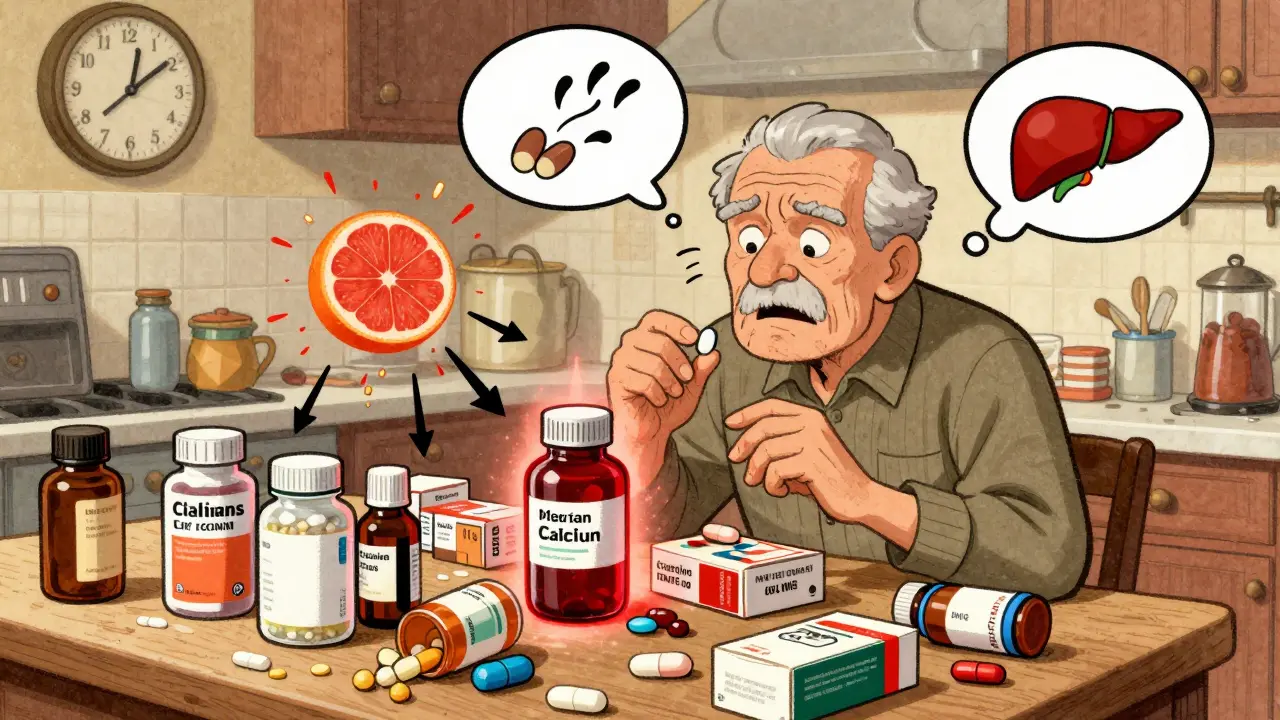
More than 4 in 10 adults over 65 in the U.S. take five or more prescription drugs every day. For many, it’s not a choice-it’s a necessity. Heart disease, diabetes, arthritis, high blood pressure, and depression often come together, each needing its own medication. But when you’re taking ten pills a day, the risk of dangerous drug interactions climbs fast. Some interactions cause dizziness that leads to falls. Others mess with your kidneys, liver, or heart rhythm. And some? They make your meds stop working altogether.
What Is Polypharmacy-and Why Does It Matter?
Polypharmacy isn’t just having a lot of meds. It’s taking five or more medications at the same time, regularly. The number five isn’t random. Studies show that’s when the chance of harmful drug interactions starts rising sharply. But here’s the catch: not all polypharmacy is bad. If every pill has a clear reason, works as it should, and you’re taking it safely, then it’s appropriate. The problem comes when meds are added without review, when side effects trigger more prescriptions, or when old drugs are never stopped.Think of it like a cluttered kitchen. You need the stove, the fridge, the sink. But if you pile up every spice, gadget, and leftover container, you can’t find what you need-and you might grab the wrong thing. That’s what happens with your meds. One drug causes nausea, so another is prescribed to stop it. That second drug makes you sleepy, so now you need something to stay awake. It’s a chain reaction called a prescribing cascade. And it’s one of the most common reasons people end up on too many pills.
How Medication Interactions Happen
Drug interactions don’t just happen between two prescriptions. They can happen between:- Two prescription drugs
- A prescription and an over-the-counter medicine (like ibuprofen or antacids)
- A drug and a dietary supplement (like St. John’s wort or fish oil)
- A medication and a food (like grapefruit with statins)
- A drug and a health condition you have (like kidney disease making some meds dangerous)
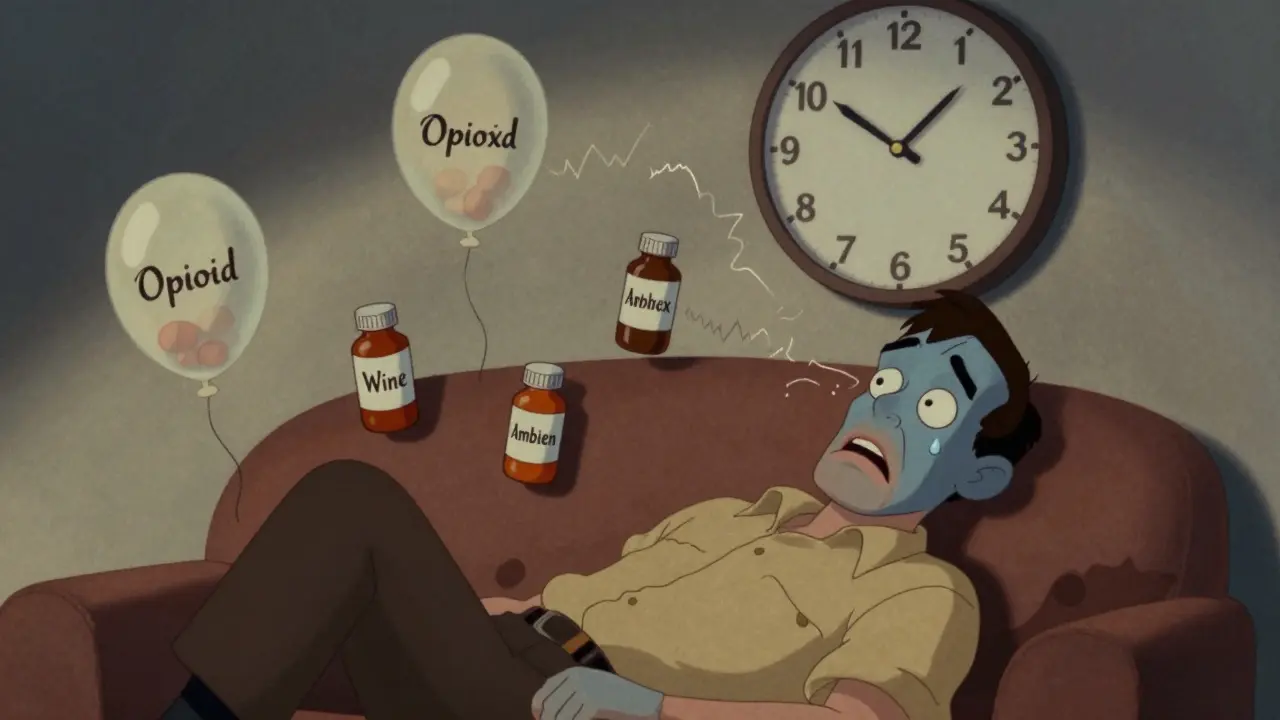
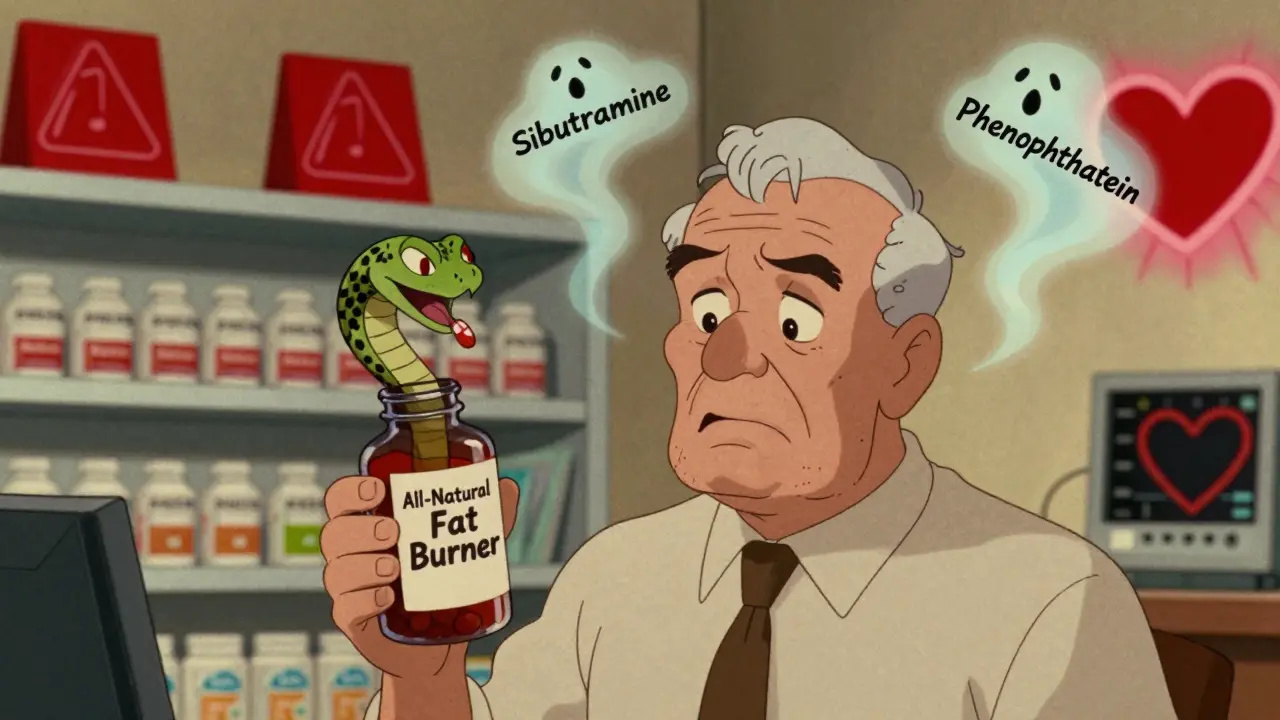
For example, taking blood thinners like warfarin with certain antibiotics can spike your risk of bleeding. Mixing sedatives with painkillers can slow your breathing to dangerous levels. Even something as simple as taking a calcium supplement at the same time as your thyroid medicine can block absorption-making one of your most important drugs useless.
And it’s not always obvious. You might feel fine. No dizziness, no nausea. But your liver is working overtime. Your kidneys are strained. Your blood pressure is creeping up. These silent effects build up over time-and that’s when serious problems show up.
The Five-Step Safety Plan for Managing Multiple Meds
Managing polypharmacy isn’t about cutting pills. It’s about making every single one count. The World Health Organization and top medical groups agree on a clear, five-step approach:- Review every medication-including supplements, vitamins, and OTC drugs-at least once a year, or after any hospital visit. Don’t assume your doctor knows what you’re taking. Many patients forget to mention herbal teas or magnesium pills.
- Link each drug to a diagnosis. If you can’t say why you’re taking a pill-like “for high cholesterol” or “for joint pain”-it’s time to ask. If there’s no clear reason, it might be safe to stop.
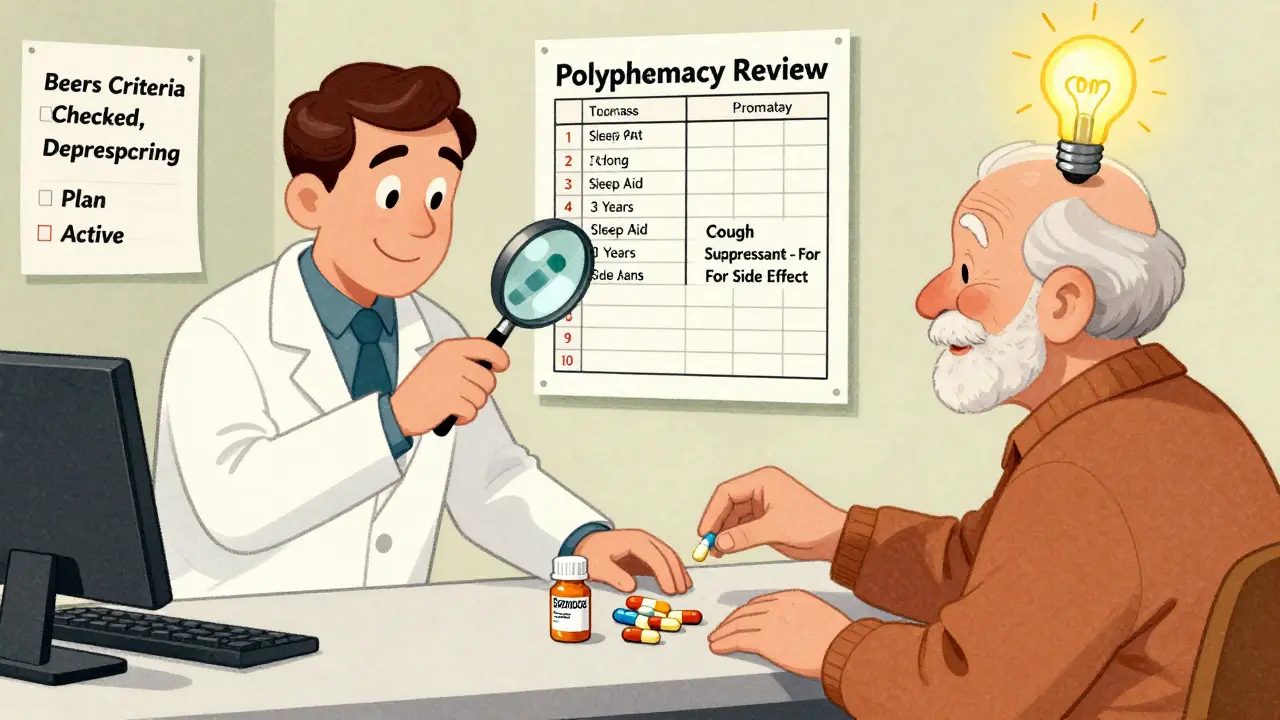
- Use the Beers Criteria. This is a list of medications that are risky for older adults. Your pharmacist or doctor can check your list against it. Some drugs on this list should be avoided entirely, others just need lower doses.
- Start low, go slow. When a new drug is added, begin with the smallest dose possible. Wait weeks to see how your body reacts. Don’t rush to increase it unless absolutely necessary.
- Never treat a side effect with another drug. If your blood pressure med makes you cough, don’t just add a cough suppressant. Talk to your doctor about switching to a different blood pressure drug instead.
Deprescribing: When Stopping Is the Right Move
One of the biggest mistakes in modern medicine is never stopping anything. A pill prescribed for a short-term issue-like pain after surgery-can linger for years. A sleep aid taken for a few weeks turns into a nightly habit. A statin started for borderline cholesterol might not even be needed anymore.Deprescribing isn’t about reducing the number of pills. It’s about removing the ones that no longer help-or that do more harm than good. Research shows that carefully stopping certain meds can improve energy, reduce falls, and even lower the risk of hospitalization.
But you can’t just quit cold turkey. Some drugs, like antidepressants, blood pressure meds, or steroids, can cause serious withdrawal symptoms if stopped suddenly. That’s why deprescribing must be planned. Your doctor should:
- Identify which meds are candidates for stopping
- Explain the benefits and risks of stopping each one
- Set a timeline to reduce the dose slowly
- Monitor you closely during the process
For example, a 72-year-old woman taking six meds for anxiety, insomnia, and joint pain was switched from a long-acting benzodiazepine to a short-term sleep strategy. Within three months, her balance improved, her memory cleared, and she no longer needed her nighttime pain pill. Her doctor didn’t take anything away-he replaced confusion with clarity.
Your Role: Becoming an Active Partner in Your Care
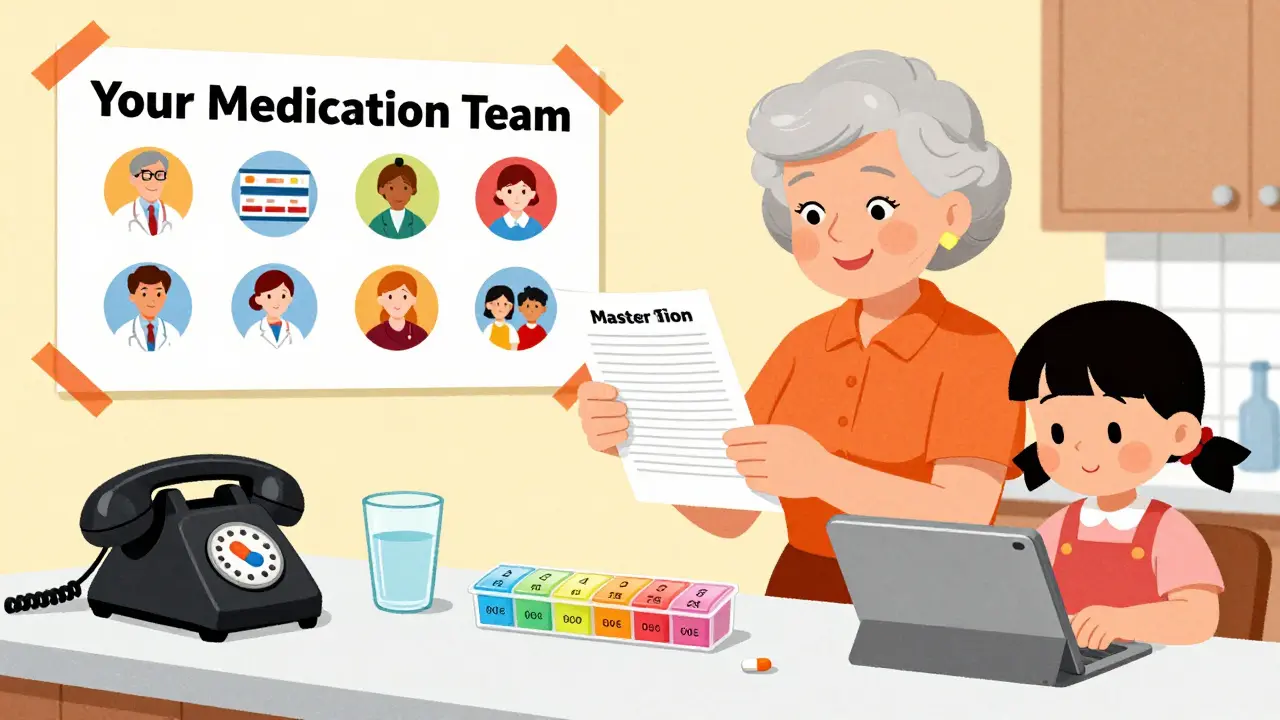
You’re not just a patient. You’re the most important person in your own care team. Here’s what you can do right now:- Keep a master list. Write down every pill, capsule, patch, and supplement you take. Include the dose, how often, why you take it, and who prescribed it. Example: “Lipitor 20 mg, once at night, for high cholesterol, Dr. Chen.”
- Bring your meds to every appointment. Don’t just tell your doctor what you take-show them. Put everything in a clear bag. Include bottles, boxes, even the empty ones.
- Use one pharmacy. All your prescriptions should come from the same place. Pharmacists can spot dangerous combinations before you even leave the counter.
- Link meds to daily habits. Take your morning pills after brushing your teeth. Put your evening ones next to your bedtime snack. Routine reduces missed doses.
- Report new symptoms immediately. If you feel foggy, dizzy, nauseous, or unusually tired, don’t wait. Call your doctor or pharmacist. It could be a drug interaction.
- Ask: “Is this still necessary?” At every visit, ask your provider to review your list. Say: “I’m taking a lot of pills. Are any of these no longer needed?”
Teamwork Makes It Work
No single doctor can track everything. Managing polypharmacy needs a team. Your primary care provider leads, but your pharmacist, nurse, and even your caregiver all play key roles.Pharmacists are your secret weapon. They know every interaction, every warning, every alternative. Ask to speak with your pharmacist during pick-up. Many offer free med reviews.
When you’re discharged from the hospital, make sure your discharge papers list every change to your meds-and that your primary doctor gets a copy. Too often, patients come home with new prescriptions, no explanation, and no follow-up. That’s how errors happen.
And don’t forget your family. If you live alone, ask a relative to help you organize your meds. Use a pill box with days and times labeled. Set phone alarms. If you’re confused about a new drug, have someone sit with you while you call your doctor.
What to Do If You’re Overwhelmed
If you’re taking eight, ten, or more meds and feel lost, you’re not alone. Here’s what to do next:- Make your master list-today.
- Call your pharmacy and ask for a free medication review.
- Write down your top three concerns: “I’m always tired,” “I keep falling,” “I can’t remember if I took my pills.”
- Bring your list and concerns to your next appointment. Say: “I want to simplify my meds. Can we review what’s still needed?”
- Don’t stop anything without talking to your provider first.
Small steps matter. One less pill might mean more energy. One fewer interaction might mean avoiding a hospital stay. This isn’t about cutting corners-it’s about making sure every pill you take actually helps you live better.
How do I know if I’m taking too many medications?
If you’re taking five or more prescription drugs daily, you’re in the polypharmacy range. But the real question isn’t the number-it’s whether each one still makes sense. Ask yourself: Do I know why I’m taking each pill? Have I been told when to stop any of them? Have I had a full review in the last year? If you can’t answer yes to these, it’s time to talk to your doctor.
Can over-the-counter drugs and supplements cause dangerous interactions?
Absolutely. Common OTC drugs like ibuprofen can raise blood pressure and harm kidneys when taken with certain heart meds. St. John’s wort can make antidepressants, birth control, or blood thinners ineffective. Even calcium and iron supplements can block absorption of thyroid or antibiotics. Always tell your doctor or pharmacist about everything you take-no matter how harmless it seems.
Is deprescribing safe? Won’t stopping meds make me worse?
Deprescribing is only done under medical supervision. Some meds, like antidepressants or beta-blockers, need to be tapered slowly to avoid rebound symptoms. But research shows that stopping unnecessary drugs often improves quality of life-reducing dizziness, fatigue, and confusion. The goal isn’t to stop everything-it’s to stop what’s not helping anymore. Many patients feel better after deprescribing because they’re no longer fighting side effects from drugs they don’t need.
How often should I have my medications reviewed?
At least once a year, and every time you’re discharged from the hospital or see a new specialist. If you’re on five or more meds, ask for a review at every annual checkup. Don’t wait for a problem to happen. Prevention is easier than fixing a reaction.
What’s the best way to keep track of all my medications?
Use a simple written list updated after every doctor visit. Include: drug name, dose, frequency, reason for taking it, and prescribing doctor. Keep it in your wallet or phone. Bring the actual bottles to appointments. Use a pill organizer with alarms. And always use one pharmacy-they can track everything and warn you about dangerous combinations.
Can I ask my pharmacist to help me cut down on pills?
Yes, and you should. Pharmacists are trained to spot drug interactions, unnecessary meds, and duplication. Many offer free medication therapy management (MTM) services at no extra cost. Ask: “Can you review my meds and tell me if any can be stopped or switched?” They’re often the first to catch problems your doctor might miss.




Aparna karwande
Let me tell you something-this post is a godsend. I’ve seen my mother take 12 pills a day because doctors kept adding more instead of asking, ‘Why are we even doing this?’ That ‘prescribing cascade’? It’s not a glitch-it’s a system failure. I once found her taking both a sleep aid and a stimulant because two different specialists didn’t talk. She was exhausted and wired at the same time. No one checks the full picture. Pharmacists? They’re the only ones who care enough to look. And yet, we treat them like order-takers. Shameful.
Jessie Ann Lambrecht
YES. This is the exact advice I give my elderly clients. I’m a geriatric care coordinator, and I can’t tell you how many times I’ve walked into a home and found a kitchen counter covered in pill bottles with no labels. One woman was taking three different blood pressure meds-none were even the right type for her. We cut it down to two, stopped the useless calcium supplement that blocked her thyroid med, and now she’s walking her dog every morning again. It’s not magic. It’s just clarity. Start with the master list. Do it today. Your future self will thank you.
Vince Nairn
so you’re saying if i take 8 pills and feel fine i should still ask if any can be cut? like… what if i just like taking pills? they make me feel responsible. also why do we always assume older people are dumb? maybe they like the ritual. the pills are their little daily victories. i’m not saying don’t review them-but don’t act like reducing meds is some moral crusade. sometimes the comfort is the cure.
Ayodeji Williams
bro this is so real 😭 i saw my uncle take 15 pills a day and he’s 74. one was for a back pain he got in 2008. he forgot he even started it. then he started falling. then they gave him a fall-prevention med. then he got dizzy. then they gave him something for dizziness. then he slept 18 hours a day. now he’s on a feeding tube. it’s not medicine. it’s a pyramid scheme. i told his doctor. he said ‘we’re just following protocol.’ bro. protocol is killing people. 🤡
Kyle King
you know who really benefits from polypharmacy? Big Pharma. They don’t want you to get better. They want you to stay sick. That’s why they fund ‘guidelines’ that push more pills. Why do you think every new drug comes with a side effect that requires another drug? It’s not medicine-it’s a business model. And your ‘Beers Criteria’? That’s just the tip of the iceberg. They’ve been suppressing deprescribing research since the 90s. Your doctor doesn’t know the truth. The pharmacy? They’re paid to push scripts. Wake up.
Kamlesh Chauhan
all this talk about pills and reviews and lists but no one talks about how doctors just dont listen. i had a friend who told his doc he was dizzy from his blood pressure med and the doc just added a new med for dizziness. no one asks what you feel. they just check boxes. i stopped going to doctors after that. now i just take turmeric and pray. at least that dont cost 300 bucks a month.
Emma Addison Thomas
As someone raised in the UK’s NHS, I’ve seen this play out in reverse. We’re taught to deprescribe early-sometimes too early. There’s a balance. But the American system, with its fee-for-service model, incentivizes adding, not subtracting. It’s structural. I’ve watched elderly patients in the US go from one specialist to another, each prescribing without a full picture. It’s tragic. But this post? It’s a rare beacon. The five-step plan is practical. And the pharmacist advice? Absolutely vital. I wish we had that kind of access here.
Mina Murray
you people are naive. the FDA approves drugs based on corporate lobbying, not science. every single one of those 'safe' meds has a hidden danger. did you know that 78% of statins are prescribed to people who will NEVER have a heart attack? they’re just profit generators. and don’t get me started on antidepressants-those are chemical lobotomies wrapped in a prescription. the 'master list'? it’s useless if your doctor’s on the payroll. your pharmacist? they’re just the middleman. the real answer? stop trusting the system. go herbal. go fasting. go off-grid. they don’t want you healthy. they want you dependent.
Rachel Steward
Let’s be brutally honest: polypharmacy isn’t a medical problem-it’s a metaphysical one. We’ve outsourced our bodily wisdom to pharmaceutical algorithms. We’ve turned the body into a machine that needs constant calibration, when in reality, it’s a living system that wants to heal itself if given space. Every pill you take is a surrender. A negotiation with your biology that says, ‘I don’t trust my own rhythm.’ The prescribing cascade? That’s not a chain reaction-it’s a spiritual collapse. We’ve forgotten that silence, rest, movement, and community are the original pharmacopeia. The five-step plan? It’s a Band-Aid. The real fix is radical self-trust. And that’s terrifying. So we take another pill.
Anthony Capunong
you all sound like you’re trying to sell yoga retreats or quit smoking hypnosis. my dad’s on 11 meds. he’s 81. he’s alive. he walks. he jokes. he eats. you think he gives a damn about ‘prescribing cascades’? he doesn’t know what a Beers Criteria is. he knows his pills keep him from dying. and guess what? they work. you wanna cut his meds? go ahead. see how fast he ends up in the ER. this isn’t a philosophy debate. it’s survival. stop acting like you’re saving people when you’re just trying to feel morally superior.
Jessie Ann Lambrecht
Anthony, I hear you. And I’m not here to tell your dad to stop his meds. I’m here to say: if he’s doing well, that’s amazing. But what if one of those 11 pills is just… there? What if it’s not helping, but it’s not hurting either? What if cutting one could give him more energy to walk, joke, eat? That’s not about being morally superior. It’s about quality. I’ve seen people go from ‘alive’ to ‘thriving’ after a careful review. It’s not about removing everything. It’s about removing the noise so the real help can shine. Your dad deserves that clarity too-not because we know better, but because he’s still here to enjoy it.