
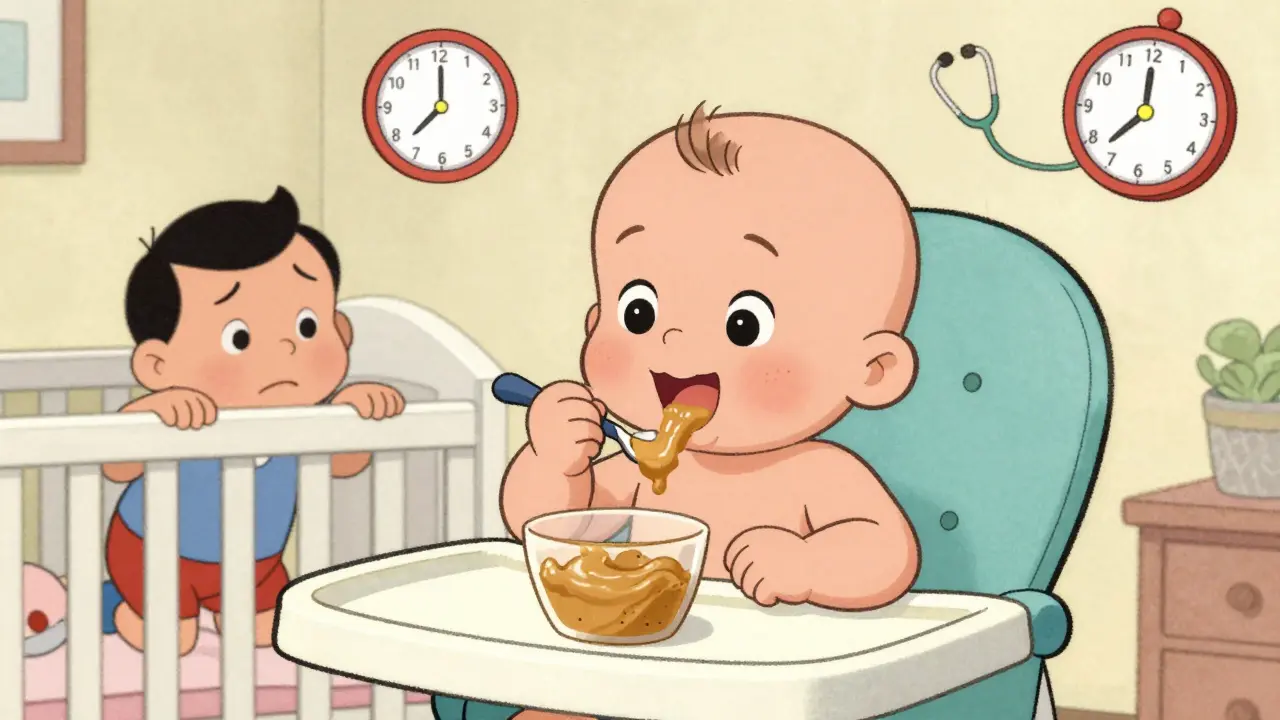
For years, parents were told to wait until their child was two or three before giving them peanut butter. It seemed like the safe choice. But by 2015, peanut allergies in kids had more than quadrupled since the 1990s. Something was wrong. Then came the LEAP study - a game-changer. It didn’t just flip the script; it rewrote the entire rulebook on how we prevent peanut allergies. Today, the answer isn’t to delay - it’s to introduce early, safely, and smartly.
Why Early Introduction Works
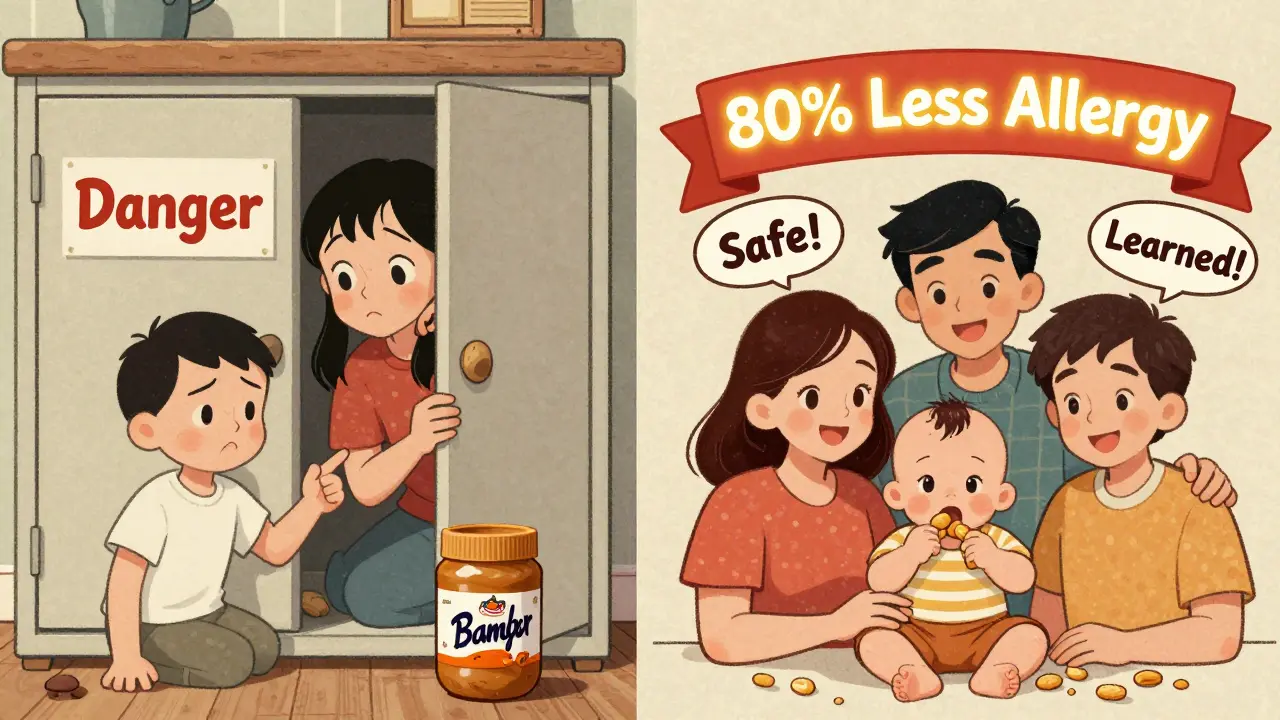
The old advice - avoid peanuts until age two - didn’t just fail. It made things worse. In 1997, only 0.4% of U.S. children had peanut allergies. By 2010, that number had jumped to 2%. Meanwhile, countries like Israel, where babies regularly eat peanut snacks like Bamba before six months, saw peanut allergy rates under 0.3%. That contrast didn’t happen by accident.
The LEAP study, published in 2015, followed over 600 high-risk infants - those with severe eczema or egg allergy. Half were given peanut protein three times a week starting at 4-6 months. The other half avoided it completely. By age five, 17% of the avoidance group developed peanut allergy. Only 3% of the group that ate peanut did. That’s an 80% drop in risk. Later, the EAT study confirmed this: when peanut was introduced early, allergy rates dropped by 75% overall, and by nearly 100% in kids with mild or moderate eczema.
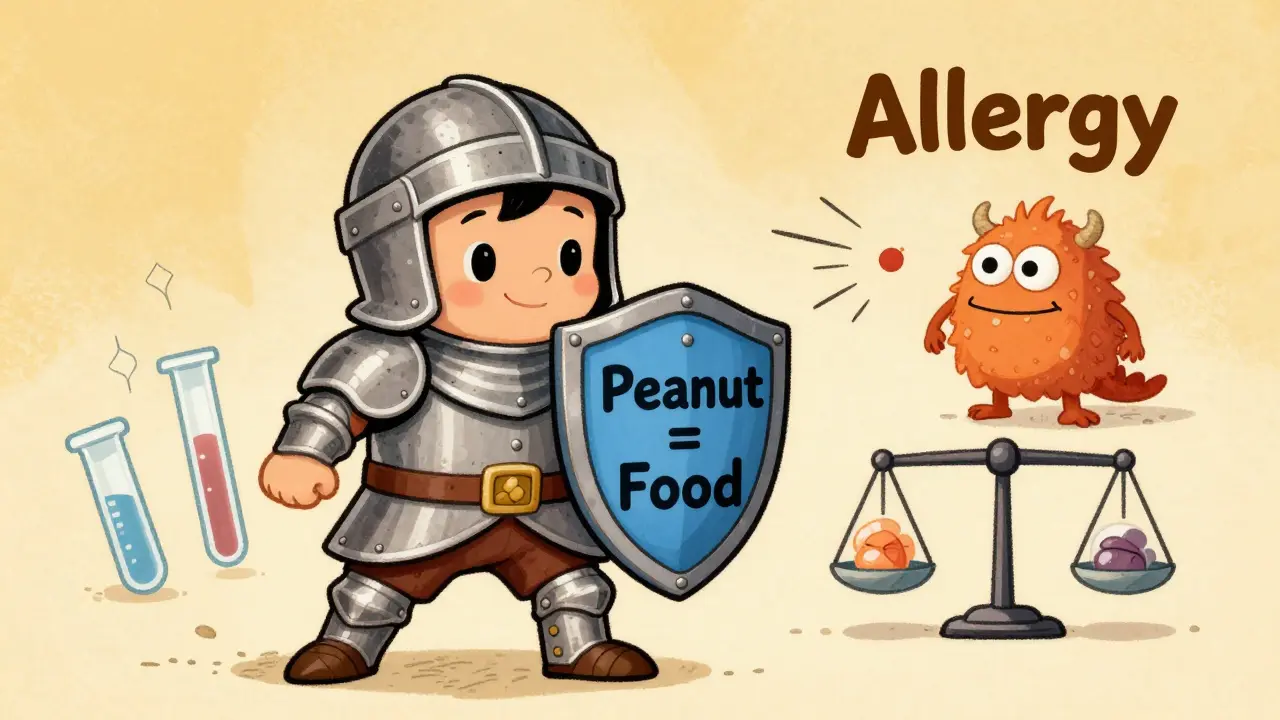
This isn’t about building tolerance through exposure - it’s about teaching the immune system early that peanut is safe. The window is narrow. Once a child’s immune system starts reacting to peanut, it’s too late for prevention. But if you introduce it before six months, especially for high-risk babies, you’re giving their body the chance to learn peanut is food, not a threat.
How to Introduce Peanut Based on Risk Level
The National Institute of Allergy and Infectious Diseases (NIAID) broke it down into three clear risk groups. You don’t need to guess - just match your child’s situation.
- High-risk infants (severe eczema, egg allergy): Start between 4-6 months. But don’t just hand them peanut butter. First, see a pediatrician or allergist. They’ll check for sensitization with a skin prick or blood test. If the test is negative, you can begin. The goal: 2 grams of peanut protein, three times a week. That’s about 2 teaspoons of smooth peanut butter mixed with warm water, breast milk, or formula. The first dose should be given under medical supervision - especially if eczema is severe. Bamba, a peanut puff snack, is another safe option approved in the LEAP study.
- Moderate-risk infants (mild to moderate eczema): Start around 6 months, at home. No testing needed. Just mix smooth peanut butter into purees or cereal. Watch for signs of reaction - hives, vomiting, swelling - but most won’t react. If they do, stop and call your doctor.
- Low-risk infants (no eczema or food allergies): Introduce peanut anytime after starting solids, usually around 6 months. No special steps. Just make sure it’s in a safe form - never whole peanuts, chunks, or crunchy peanut butter. Always use smooth, thinned-out peanut butter.
Don’t wait for perfect conditions. If your baby can sit up, hold their head steady, and swallow purees, they’re likely ready. But never introduce before 4 months. Their digestive system isn’t ready yet.
What Oral Immunotherapy (OIT) Is - and Isn’t
People often confuse early introduction with oral immunotherapy (OIT). They’re not the same. Early introduction is prevention. OIT is treatment.
OIT is for kids who already have a diagnosed peanut allergy. It involves slowly increasing doses of peanut protein under strict medical supervision, aiming to raise the reaction threshold. A child who used to react to a crumb might, after months or years of OIT, tolerate a whole peanut. But they’re not cured. They still have the allergy. If they stop taking the daily dose, the allergy often returns.
Early introduction, on the other hand, can lead to true tolerance. The LEAP follow-up study showed that even after a year without eating peanut, kids who had eaten it early still didn’t react. Their immune systems had learned. That’s prevention. That’s lasting change.
So if your child doesn’t have a peanut allergy yet - especially if they have eczema or egg allergy - early introduction is your best tool. OIT is only for those already diagnosed, and it’s not risk-free. It carries a higher chance of reactions, requires frequent doctor visits, and isn’t for everyone.
How to Safely Give Peanut to Babies
Whole peanuts? Never. Chunks? No. Crunchy peanut butter? Avoid it. These are choking hazards. Safe peanut means smooth, runny, and diluted.
Here’s how to do it right:
- Use smooth peanut butter (not natural or chunky - it can be too thick).
- Stir 2 teaspoons into 2-3 tablespoons of warm water, breast milk, or formula until it’s thin and runny.
- Or mix it into infant cereal, mashed banana, or applesauce.
- Give a small taste first - about the size of a toothpick tip.
- Wait 10 minutes. Watch for lip swelling, hives, vomiting, or trouble breathing.
- If no reaction, give the rest over the next hour.
- Repeat three times a week.
Some parents use peanut powder or specialized infant peanut products like SpoonfulOne or Ready, Set, Food! These are designed to dissolve easily and are pre-measured for safety. They’re not required, but they make dosing easier - especially if you’re nervous.
Always introduce peanut when your baby is healthy. No fever, no upset stomach. And never introduce peanut for the first time at night or when you’re far from medical help.
Why So Many Parents Still Wait
Despite clear guidelines, only about 39% of high-risk infants are getting peanut introduced early. Why?
Parental fear is the biggest barrier. One survey found 62% of parents were scared of a reaction. Others don’t know how to do it. Some pediatricians still give outdated advice. A 2023 study found only 54% of pediatricians could correctly describe the current NIAID guidelines.
There’s also confusion about what “high-risk” means. Not every baby with eczema needs an allergist visit - only those with severe eczema or egg allergy. And many parents think they need to wait until their baby is 6 months old, even if they’re ready at 4. The window opens at 4 months. Don’t miss it.
And then there’s equity. Black and Hispanic infants are 22% less likely to get early peanut introduction than white infants. That’s not because of choice - it’s because of access. Fewer specialists in underserved areas. Less education from providers. These gaps are still widening the allergy divide.
What’s Changed Since 2017
Since the NIAID guidelines came out in 2017, things are improving - slowly. Peanut allergy rates in U.S. children dropped from 2.2% in 2015 to 1.6% in 2023. That’s about 300,000 fewer kids with peanut allergies. The biggest drop? In high-risk groups. Children with mild eczema saw an 85% reduction. Moderate eczema: 87%. Severe eczema: 67%.
Industry has responded. Peanut products made for babies have grown 27% a year since 2018. New studies are looking at combining peanut with other allergens - egg, milk, tree nuts - early on. The PRESTO trial, expected to wrap up in 2026, is testing whether even earlier introduction (as young as 3 months) works for the highest-risk babies.
And the long-term data? Encouraging. Kids who ate peanut early and then avoided it for a year still didn’t react. That’s not just desensitization. That’s tolerance. That’s prevention.
What’s Next
We’re moving toward a future where peanut allergy isn’t something you grow into - it’s something you prevent. The science is settled. The guidelines are clear. The tools are available.
But progress depends on action. If your baby has eczema or egg allergy, talk to your pediatrician by 3-4 months. Ask for a referral to an allergist if needed. Don’t wait for the next well-baby visit. Don’t assume your doctor knows the latest. Bring the NIAID guidelines with you.
For low-risk babies? Just start. Mix peanut butter into their oatmeal. Let them taste it. Make it part of their diet. You’re not just feeding them - you’re protecting them.
The next generation won’t grow up afraid of peanut butter. They’ll just eat it - because we finally got it right.
Jenci Spradlin
just gave my 5mo peanut butter mixed in applesauce n she loved it. no reaction. 2 tsp = 1 tbsp of pb mixed with 3 tbsp water. easy. dont overthink it. i used store brand, not the fancy stuff.
Ashley Kronenwetter
While I appreciate the scientific rigor behind the LEAP study, I must emphasize the importance of consulting with a board-certified allergist prior to introducing peanut products to high-risk infants. The potential for anaphylaxis, though rare, remains a serious concern that cannot be mitigated by anecdotal evidence or online advice.
Diana Stoyanova
OMG I just read this and I’m crying. My son had severe eczema and we were terrified of peanut butter. We waited till he was 10 months. He got tested at 8 and was negative, but we were still scared. We finally did it at 10 and he ate a whole spoonful of peanut butter on a banana. No reaction. Now he’s 2 and eats peanut butter sandwiches every day. I wish I’d known this sooner. So many parents are scared because no one tells them this stuff. You’re not a bad parent for waiting-you just didn’t have the right info. 🙏❤️
tali murah
Oh, so now we’re supposed to trust a 2015 study over decades of medical wisdom? How convenient. Let’s just throw caution to the wind and feed our babies peanut butter like it’s baby food. Meanwhile, the number of kids with anaphylaxis in ERs has skyrocketed since these guidelines rolled out. Someone’s making money off this. Not sure if it’s Big Peanut or Big Pharma. But I’ll be keeping my child’s diet peanut-free until he’s 5. And I’ll sleep just fine.
Gregory Clayton
They’re telling us to feed peanut butter to 4-month-olds? Next they’ll say feed them MSG and sugar water too. This is why America’s kids are so weak. Back in my day, we didn’t give babies anything but breastmilk and formula until they could chew. And we didn’t have all these allergies. What happened? We stopped being Americans and started listening to scientists who don’t even have kids.
Jeffrey Hu
Actually, the LEAP study excluded infants with a positive skin prick test >4mm, which means the 3% allergy rate in the consumption group is only for those who passed screening. Also, the EAT study used peanut powder, not peanut butter, and had poor compliance. The real-world efficacy is less impressive than the headline suggests. Also, NIAID guidelines are based on extrapolated data from high-risk groups. Don’t treat this as gospel.
Patty Walters
i did the peanut butter mixed with breastmilk thing at 4.5 months with my daughter. she had mild eczema. no test. just a tiny dab first. no reaction. now she eats pb&j like a champ. i used a spoonful of smooth pb, thinned it with warm water, mixed it into her oatmeal. so simple. don’t make it harder than it is. also, bamba is legit. my cousin’s kid in israel eats it daily since 5mo. no issues.
Phil Kemling
What’s fascinating isn’t just the reduction in allergy rates-it’s the implication that our immune systems aren’t broken, they’re just misinformed. We’ve spent decades treating the immune system like a hostile force to be suppressed, when in reality, it just needs the right information early on. Peanut isn’t the enemy. Fear is. And maybe the real allergy we’re developing isn’t to food-it’s to trust.
Elisha Muwanga
Let me guess-this is the same logic that led us to low-fat diets, vaccines, and gluten-free everything. First, we were told to avoid it. Now we’re told to force it. Who’s next? Introducing shellfish at birth? Soy at 3 months? This isn’t science. It’s trend-chasing disguised as medicine. And the fact that pediatricians still don’t know the guidelines? That’s not ignorance-it’s negligence.
Heather Wilson
Interesting how the article conveniently omits the fact that the LEAP study’s control group had a 17% allergy rate-but only because they were high-risk infants with severe eczema and egg allergy. The general population’s baseline is far lower. So while early introduction helps high-risk kids, it’s not a magic bullet for everyone. And yet, parents are being pressured into it like it’s mandatory. That’s not informed consent. That’s fearmongering dressed as public health.
Drew Pearlman
This is the kind of post that gives me hope. I used to think I was failing as a parent because I was so scared to introduce peanut butter. I read every study, talked to five doctors, cried over a jar of peanut butter. But then I found a mom’s group on Reddit and saw real stories-not fear, not jargon, just real people doing it safely. My daughter ate her first peanut at 5 months. She’s 3 now, healthy, and loves peanut butter on toast. We didn’t need a clinic visit. We just needed to trust the science and each other. You’re not alone. We’ve got you.
Lindsey Wellmann
MY BABY ATE PEANUT BUTTER AT 4 MONTHS AND NOW SHE’S A GENIUS 🧠✨ I’m not even joking. She’s crawling, talking, eating everything. I didn’t wait. I didn’t panic. I just did it. And now? She’s the only kid in daycare who can eat PB&J without 12 people freaking out. #EarlyPeanut #NoRegrets 🥜❤️
Ian Long
I get the fear. I really do. But I also see how this debate is tearing families apart. One side says ‘trust science,’ the other says ‘trust your gut.’ What if both are right? Maybe the answer isn’t one-size-fits-all. Maybe we need to stop shaming parents who waited and start empowering those who want to try early. The goal isn’t to win an argument-it’s to protect kids. And that’s something we can all agree on.
Micheal Murdoch
Here’s the quiet truth nobody talks about: early peanut introduction isn’t just about allergies-it’s about equity. The kids who benefit most are the ones with access to allergists, pediatricians who know the guidelines, and the time to mix peanut butter into oatmeal three times a week. Meanwhile, in rural towns and underserved communities, parents are still being told to wait until two. And when their child reacts? They’re blamed for not following advice they never received. This isn’t just science. It’s justice. We need to make peanut introduction a public health priority-not a privilege. Not just guidelines on a website. Real support. Free screenings. Community clinics. Translation services. Because if we’re serious about prevention, we can’t leave anyone behind.
Maggie Noe
My son had severe eczema. We waited. We were scared. Then we found out he had a mild reaction at 11 months. We did OIT. It’s been 18 months. He can now eat a whole peanut butter cup. But he still has to take a daily dose. It’s expensive. It’s stressful. It’s exhausting. I wish we’d known about early introduction. I wish someone had just told us to try it at 5 months. We’d have saved so much pain. 🥲💔 Please, if you’re reading this and your baby has eczema-don’t wait. Talk to someone. Even if you’re scared. Just ask.