
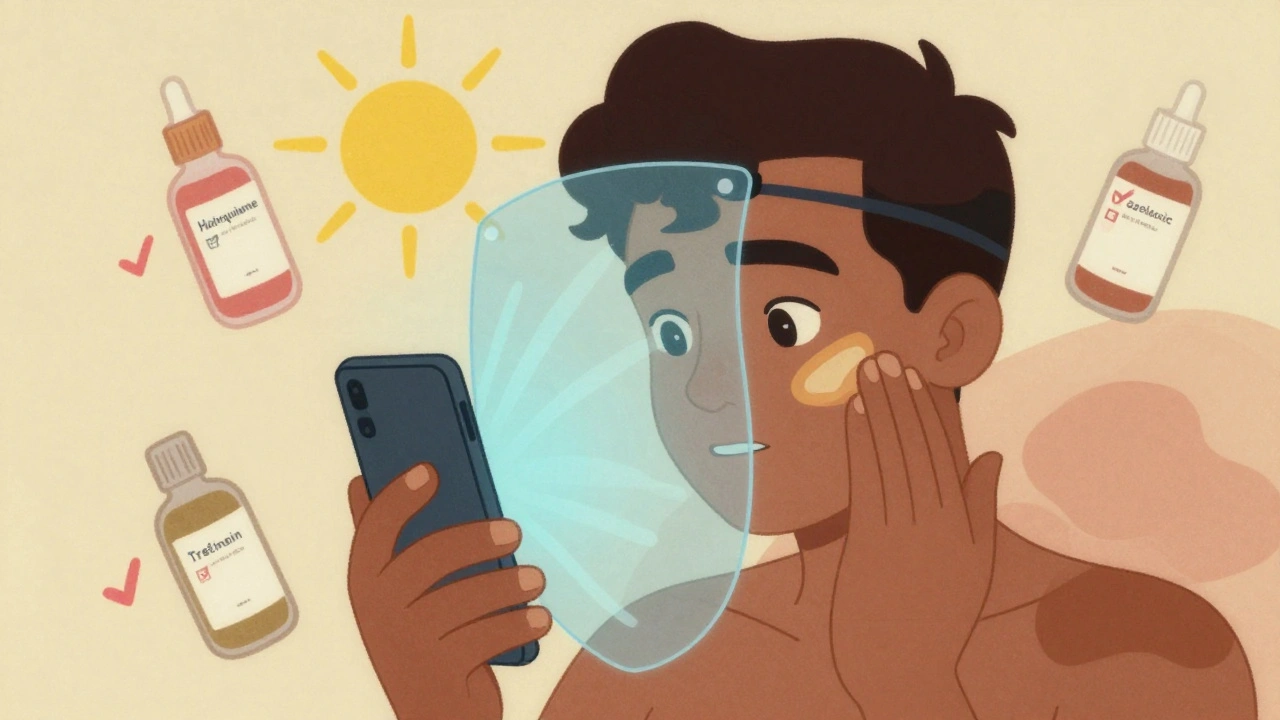
Why Hyperpigmentation Hits Harder in Skin of Color
When you have darker skin, a pimple, cut, or even a scratch doesn’t just heal-it often leaves behind a dark mark that lingers for months, sometimes years. This isn’t just a cosmetic issue. For many people with skin of color, these dark spots become a source of stress, self-consciousness, and even social withdrawal. The reason? Higher melanin levels. While melanin protects the skin from UV damage, it also makes the skin more reactive to inflammation. When the skin gets irritated-whether from acne, eczema, tight hairstyles, or even harsh skincare products-it overproduces pigment, creating patches that range from light brown to grayish-black.
This is called post-inflammatory hyperpigmentation, or PIH. It’s not an infection or an allergy. It’s the skin’s natural healing process gone too far. Unlike lighter skin tones, where redness fades quickly, darker skin turns darker. And unlike sunspots, which appear on exposed areas, PIH can show up anywhere the skin was injured-even under clothing or behind the ears.
What Makes Melasma Different-and More Tricky
If you’re seeing brown or gray patches mostly on your face-cheeks, forehead, upper lip-it’s likely melasma. This isn’t caused by trauma. It’s driven by hormones. Pregnancy, birth control pills, hormone replacement therapy, and even stress can trigger it. Melasma is far more common in women, especially those with Fitzpatrick skin types IV to VI. And unlike PIH, it doesn’t always fade after the trigger is removed. Many women find melasma returns every summer, even with sunscreen.
What makes melasma stubborn is that it doesn’t just sit on the surface. It digs deep into the dermis, the lower layer of skin. That’s why over-the-counter brighteners often don’t work. Prescription treatments like hydroquinone, tretinoin, and azelaic acid are needed. And even then, results take time. A 2022 study in the Journal of Clinical and Aesthetic Dermatology showed that combining topical tranexamic acid with sunscreen improved melasma in 78% of patients after 12 weeks-but only if they used it daily without skipping.
The One Thing You Can’t Skip: Sunscreen
There’s no treatment for hyperpigmentation that works if you’re not wearing sunscreen every single day. Not just when it’s sunny. Not just at the beach. Every day. Rain or shine, indoors or out.
Why? Because UV light-even through windows-triggers melanocytes to keep making pigment. And blue light from phones and screens? It can darken pigmentation too, especially in darker skin tones. That’s why dermatologists now recommend tinted sunscreens with iron oxides. These block not just UVA and UVB, but also visible light. And they blend better with brown skin, so you don’t get that ghostly white cast.
Look for SPF 30 or higher, broad-spectrum, and water-resistant. Apply it like you’re painting your face-two fingers’ worth for your entire face and neck. Reapply every two hours if you’re outside. And don’t forget your ears, neck, hands, and scalp if you have thinning hair. Skipping sunscreen won’t just make your dark spots worse-it can undo months of treatment.
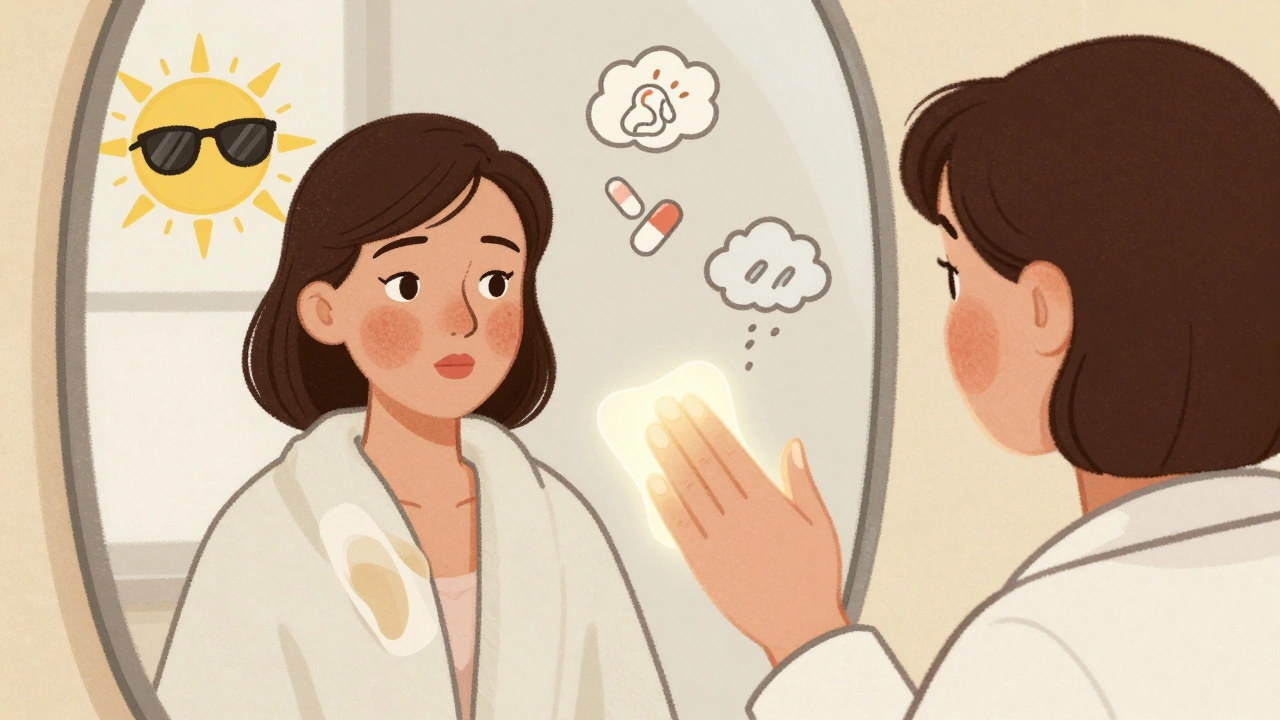
Topical Treatments That Actually Work
Not all brightening products are created equal. Some over-the-counter serums promise results but deliver nothing but irritation. Here’s what dermatologists actually prescribe for skin of color:
- Hydroquinone (2-4%): The gold standard for fading dark spots. It blocks the enzyme that makes melanin. Used for short cycles (3-6 months), then paused to avoid side effects.
- Tretinoin (0.025-0.1%): A retinoid that speeds up skin turnover and helps other ingredients penetrate. Often paired with hydroquinone for better results.
- Azelaic acid (15-20%): Gentle enough for sensitive skin. Reduces pigment and calms inflammation. Great for acne-prone skin.
- Vitamin C (10-20%): An antioxidant that blocks pigment production and brightens overall tone. Best used in the morning under sunscreen.
- Kojic acid and cysteamine cream (5%): Newer options with fewer side effects than hydroquinone. Cysteamine, in particular, has shown strong results in clinical trials for melasma.
Don’t stack five brightening products at once. That’s how you get irritation-and more PIH. Start with one, use it every other night, and build up slowly. If your skin stings, turns red, or flakes, stop. Talk to a dermatologist. Over-treating is a common mistake.
Keloids: When Scars Grow Beyond the Wound
If you’ve ever had an ear piercing, surgery, or even a minor cut that turned into a raised, rubbery lump that kept growing-chances are you have a keloid. These aren’t just big scars. They’re abnormal healing responses where the body makes too much collagen, and it doesn’t stop. Keloids are more common in people with skin of color-up to 15-20% of Black, Hispanic, and Asian populations develop them. They’re rare in lighter skin tones.
Keloids can form after anything that breaks the skin: acne, chickenpox, tattoos, vaccinations, or even insect bites. They’re not dangerous, but they can be painful, itchy, and restrict movement if they form near joints. And emotionally? They can feel like a permanent scar of trauma.
Treatment is harder than for hyperpigmentation. Creams and lasers alone won’t fix them. The most effective approach combines injections of corticosteroids (to shrink the tissue), silicone gel sheets (to flatten and soften), and sometimes pressure earrings (for ear keloids). In stubborn cases, surgery followed by radiation therapy may be used-but only by specialists who know how to prevent recurrence. Left untreated, keloids often come back bigger than before.
What Not to Do
There are so many TikTok trends and Instagram ads promising quick fixes for dark spots. But some of the most popular methods can make things worse:
- Scrubbing or exfoliating aggressively: This causes micro-tears, which trigger more PIH.
- Using lemon juice or vinegar: These are acidic and can burn darker skin, leading to more discoloration.
- Skipping sunscreen because you’re "already dark": Melanin isn’t enough protection. UV damage still happens.
- Trying chemical peels at home: Even mild peels can cause burns in skin of color. Always see a dermatologist trained in pigmented skin.
- Ignoring acne: The longer acne lasts, the more PIH you’ll get. Treat the acne first.

When to See a Dermatologist
You don’t need to wait until dark spots are unbearable. If you’ve had the same patch for more than three months, or if new spots keep appearing, it’s time to get help. A dermatologist who specializes in skin of color can:
- Confirm whether it’s PIH, melasma, or something else like lichen planus or discoid lupus.
- Prescribe the right combination of medications.
- Recommend safe in-office procedures like low-dose lasers or microneedling with growth factors.
- Help you manage keloids before they become large or painful.
Don’t settle for a dermatologist who says, "Just use sunscreen and wait." That’s not enough. You deserve a plan. Look for providers who list "skin of color" or "pigmented skin" as a specialty. The American Academy of Dermatology has a directory you can search by location and expertise.
Realistic Expectations
There’s no magic cure. Even the best treatments take 3-6 months to show noticeable results. And some dark spots never fully disappear. That’s okay. The goal isn’t perfection-it’s improvement. Many patients go from dark, obvious patches to faint, barely noticeable marks. That’s a win.
Also, relapse is normal. Stress, sun exposure, or hormonal shifts can bring back hyperpigmentation. That’s why maintenance is part of the plan. Keep using sunscreen. Keep using your prescribed cream, even after the spots fade. Think of it like brushing your teeth-you don’t stop once your cavity is filled.
Final Thoughts
Hyperpigmentation and keloids aren’t just skin deep. They affect confidence, relationships, and daily life. But they’re treatable-with the right knowledge and consistent care. You don’t have to live with dark spots that make you feel unseen. Start with sun protection. See a specialist who understands your skin. And be patient. Healing takes time, but it’s possible.
Can hyperpigmentation go away on its own?
Sometimes, but not always. Mild post-inflammatory hyperpigmentation from a small pimple or cut may fade in a few months. But if it’s caused by ongoing acne, melasma, or repeated trauma, it will likely persist without treatment. The darker the skin tone, the less likely it is to fade without intervention.
Is hydroquinone safe for long-term use?
No. Hydroquinone is effective for short-term use (up to 6 months), but long-term use can cause ochronosis-a condition where the skin turns blue-black. That’s why dermatologists prescribe it in cycles: 3 months on, 2-3 months off. Alternatives like azelaic acid, tranexamic acid, and cysteamine are safer for ongoing use.
Do lasers work for dark skin?
Some do, but many don’t. Traditional lasers like IPL or Q-switched Nd:YAG can cause burns or worsen pigmentation if used by inexperienced providers. Only use lasers from dermatologists who specialize in skin of color and use devices with longer wavelengths and cooling systems. Microneedling with radiofrequency or growth factors is often safer and more effective.
Can keloids be prevented?
Yes, if you’re prone to them. Avoid piercings, tattoos, and unnecessary surgeries. If you must get one, use silicone gel sheets immediately after healing. For acne, treat it early to prevent deep scarring. If you’ve had a keloid before, tell your doctor before any procedure-they may recommend steroid injections right after healing to prevent recurrence.
Why do some products turn my skin darker?
Some ingredients, especially in cheap brightening creams, contain mercury, hydroquinone in unsafe doses, or steroids. These can damage your skin barrier, trigger inflammation, and cause rebound pigmentation. Others, like certain essential oils or acids, can be irritating. Always check ingredient lists and avoid anything that causes burning or redness. If a product promises "instant results," it’s likely unsafe.
Libby Rees
Sunscreen isn't optional-it's the foundation. I've seen so many people skip it because they think melanin is enough, and then wonder why their PIH won't fade. Tinted sunscreen with iron oxides? Game changer.
Also, never underestimate the power of azelaic acid. Gentle, effective, and doesn't make your skin feel like it's screaming.
Gillian Watson
I live in London and even on cloudy days I slap on sunscreen. People here think it's just for beach days but UV penetrates clouds and windows. Tinted SPF is the only one that doesn't leave me looking like a ghost. Thank you for this post.
Ben Choy
I used to think keloids were just big scars until my cousin got one from a piercing and it kept growing like a living thing. The steroid injections helped but the silicone sheets? That’s what kept it from coming back. Don’t ignore early signs.
Karl Barrett
There’s a philosophical layer here that’s rarely discussed: hyperpigmentation isn’t just a dermatological issue-it’s a social one. In a world that equates light skin with beauty, dark spots become markers of otherness. Treatment isn’t just about pigment-it’s about reclaiming visibility. And that’s why consistent care matters more than quick fixes.
Yasmine Hajar
I used to scrub my face raw trying to get rid of PIH. Turns out I was making it worse. Started using tretinoin 0.025% every other night and my skin stopped screaming. Slow and steady wins the race. Also, vitamin C in the AM + sunscreen? Non-negotiable.
val kendra
Hydroquinone cycles are everything. I did 3 months on, 3 off, and my melasma went from obvious to barely there. But here’s the kicker-once I stopped sunscreen for a weekend, it came back like a ghost. Don’t be that person. SPF 30+ daily. Even indoors. Even when you’re WFH in pajamas.
Isabelle Bujold
I’ve been managing keloids since I was 14 after a bad acne scar turned into a raised lump on my chest. I tried everything-lotions, lasers, home remedies. Nothing worked until I found a dermatologist who specialized in pigmented skin and started combining corticosteroid injections with daily silicone gel sheets. It took 18 months, but now it’s flat, soft, and barely noticeable. The key? Consistency and specialist care. Don’t settle for generalists who say, 'Just wait and see.' You deserve better. Also, if you're prone to keloids, avoid tattoos, piercings, and unnecessary procedures. Your future self will thank you.
Jordan Wall
Honestly, most of this is common knowledge if you’ve read any peer-reviewed literature post-2018. The real issue is that dermatology as a field still lacks proper training in Fitzpatrick IV-VI skin. I’ve seen so many patients misdiagnosed because their derm thought PIH was 'just a tan.' Also, why is everyone still using 'hydroquinone' like it's 2005? Cysteamine is the future. And if you're not using tranexamic acid topically, you're doing it wrong. 🤦♂️
Jake Deeds
I’m sorry but if you’re using lemon juice on your face, you’re not just wasting time-you’re actively damaging your skin. And yet, I see it on TikTok every day. People think natural = safe. No. Lemon juice is acidic as hell and will burn your melanin-rich skin. And don’t even get me started on those ‘brightening’ creams with mercury. You’re trading one problem for a permanent one. Please, for the love of your skin, stop trusting influencers.
Alex Piddington
I appreciate the thorough breakdown. As someone who mentors young Black men on skincare, I’ve had to debunk so many myths. The biggest one? 'You don’t need sunscreen because you’re dark.' I tell them: melanin is a shield, not a force field. UV still gets through. And yes, blue light from screens contributes too. I’ve started handing out sample-sized tinted SPF to my mentees. Small steps.
Ashley Elliott
I just want to say thank you for mentioning microneedling with growth factors. I had a dermatologist tell me lasers were the only option-and they burned me. Then I found a specialist who used microneedling + PRP. My PIH faded over 4 months with zero side effects. Also, don’t forget your neck and hands. I didn’t, and now my hands look 10 years older than my face. 😅
Dematteo Lasonya
I had melasma after my second kid and thought it was permanent. Took me two years and three dermatologists before I found one who actually listened. Hydroquinone + tretinoin + daily SPF 50+ tinted sunscreen. No magic. Just consistency. Now I’m 80% better. Don’t give up.