Melasma Treatment: Effective Options and What Actually Works
When your face develops stubborn brown or gray-brown patches—often on the cheeks, forehead, or upper lip—you’re likely dealing with melasma, a common skin condition that causes dark, irregular patches due to overactive pigment cells, often triggered by sun exposure and hormonal changes. Also known as chloasma, it’s not dangerous, but it can be frustrating because it doesn’t fade on its own and often comes back even after treatment. Unlike regular sun spots, melasma is deeper, more widespread, and closely tied to hormones, which is why it’s so common in women, especially during pregnancy, while taking birth control, or during hormone therapy.
What makes melasma tricky is that sun protection, the single most important factor in preventing and managing melasma isn’t just about wearing sunscreen. You need broad-spectrum SPF 30 or higher every single day—even when it’s cloudy—and reapply every two hours if you’re outside. UV rays don’t just come from the sun; they pass through windows and reflect off surfaces like concrete and water. Without consistent protection, even the best treatments won’t stick. And if you’re using hormonal birth control or HRT, talk to your doctor. Switching to a non-hormonal option can sometimes make a big difference.
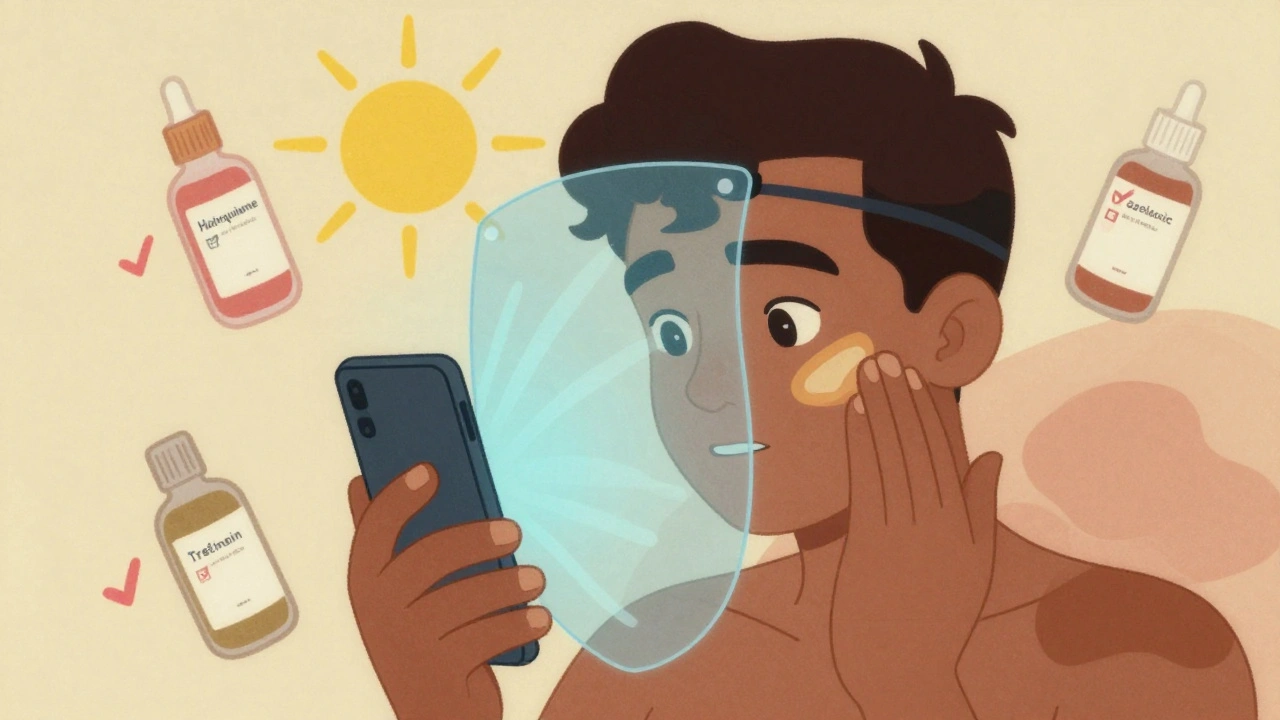
Topical treatments, like hydroquinone, tretinoin, azelaic acid, and tranexamic acid, are the first-line options for reducing melasma. Hydroquinone lightens pigment by blocking the enzyme that makes melanin. Tretinoin speeds up skin cell turnover so faded patches get replaced faster. Azelaic acid works gently and is safe during pregnancy. Tranexamic acid, often used as a cream or oral tablet, targets the connection between skin inflammation and pigment production. Many dermatologists combine these in a triple cream for better results. But don’t expect overnight changes—it takes 8 to 12 weeks to see anything, and maintenance is lifelong.
Chemical peels, lasers, and microdermabrasion sound tempting, but they’re risky for melasma. If done wrong, they can make the dark patches worse by triggering more pigment production. That’s why most experts recommend starting with gentle, consistent skincare and sun protection before considering stronger procedures. Even then, they’re best used as a supplement—not a replacement—for daily care.
There’s no magic cure, but melasma is manageable. The key is understanding that it’s not just a surface issue—it’s tied to your hormones, your sun habits, and your skincare routine. If you’ve tried a few products and nothing worked, it’s probably not the product—it’s the lack of consistent sun protection or an underlying hormonal trigger. The posts below cover real strategies people have used, from over-the-counter options to prescription routines, and what actually stuck after months of use. You’ll find out which ingredients deliver results, how to avoid common mistakes, and why some treatments fail even when they seem perfect on paper.
Skin of Color Dermatology: Managing Hyperpigmentation and Keloids
Hyperpigmentation and keloids are common, distressing skin conditions in people with darker skin tones. Learn what causes them, how to treat them safely, and why sunscreen is non-negotiable.
Popular posts