
Tetracycline Photosensitivity Risk Calculator
Personalized Risk Assessment
Enter your details to get your photosensitivity risk level and tailored sun protection recommendations.
What Tetracycline Photosensitivity Really Means
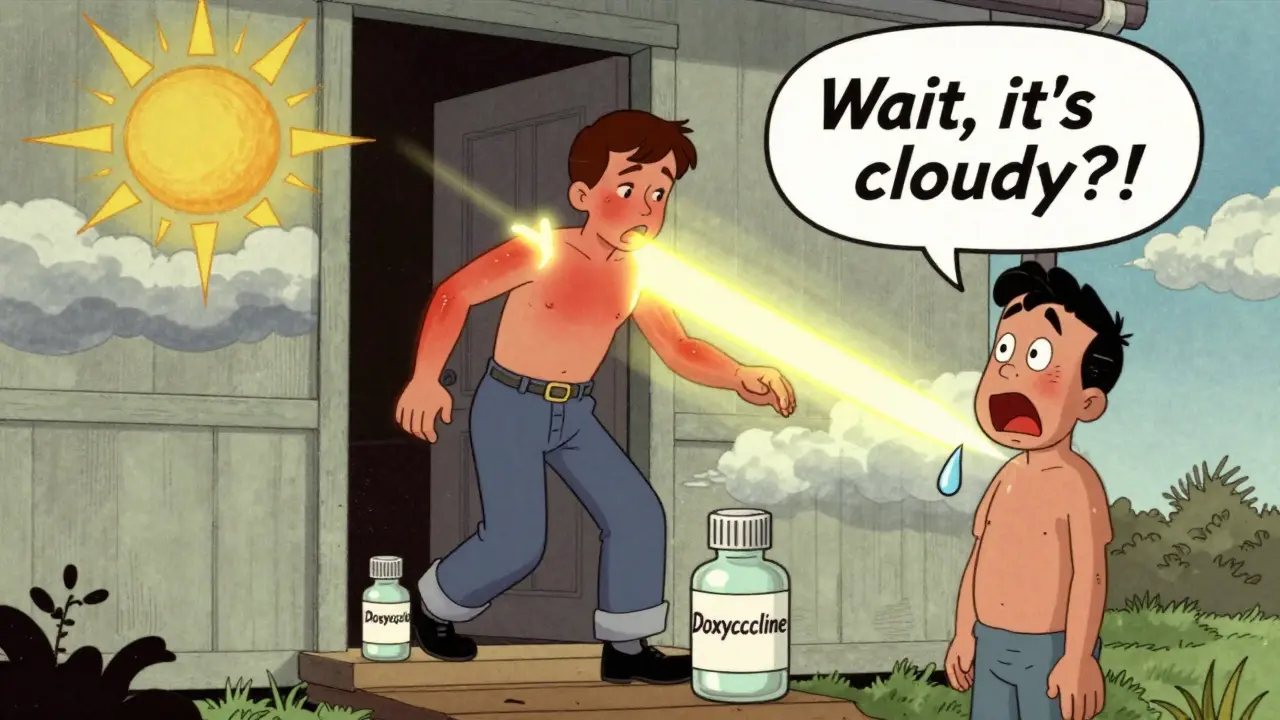
You’re on tetracycline or doxycycline for acne, Lyme disease, or a respiratory infection. Everything’s going fine-until you step outside on a cloudy day and get burned in under 20 minutes. No sunscreen, no beach, no tanning bed. Just normal morning light. That’s tetracycline photosensitivity-and it’s not a myth. It’s a real, common, and preventable side effect that catches most people off guard.
Unlike a regular sunburn, this reaction isn’t about how long you’ve been outside. It’s about what’s in your bloodstream. Tetracycline antibiotics absorb UV-A rays (320-425 nm), turning them into energy that damages your skin cells. The result? Redness, blistering, peeling, and sometimes dark patches that stick around for months. Nail separation (photo-onycholysis) and discoloration happen in up to 20% of users. And yes, it can happen even if you’re just walking to your car or sitting by a window.
Not All Tetracyclines Are the Same
When your doctor says "tetracycline," they might mean doxycycline, minocycline, or another version. But they’re not equally risky. Doxycycline is the biggest culprit. At standard doses (100 mg daily), about 1 in 5 people get a noticeable reaction. At higher doses (200 mg), that jumps to nearly half. Minocycline? Only 2% of users report photosensitivity. That’s why dermatologists often choose minocycline for acne patients who work outdoors or live in sunny climates-even though it costs a little more.
Here’s the breakdown:
| Antibiotic | Phototoxic Reaction Rate | Key Risks |
|---|---|---|
| Doxycycline | 15-42% | Sunburn, blistering, nail separation, hyperpigmentation |
| Demeclocycline | 13-42% | High risk, often used for SIADH, rarely for acne |
| Tetracycline (original) | 5-10% | Linked to pseudoporphyria (skin fragility, blisters) |
| Minocycline | <2% | Lowest risk; nail changes rare (1.5%) |
| Sarecycline (Seysara) | 3.2% | Newer, acne-specific, lower phototoxicity |
If you’re on doxycycline and spend time outside-even briefly-your risk is real. If you’re on minocycline, you’re still not immune, but your chances of a bad reaction are far lower.
How the Damage Happens (No Jargon, Just Facts)
It’s not magic. It’s chemistry. When tetracycline molecules in your skin soak up UV-A light, they get excited. That energy doesn’t just disappear. It gets passed to oxygen molecules, turning them into reactive oxygen species (ROS). These little troublemakers attack your cell membranes, proteins, and even your DNA. That’s what causes the redness, swelling, and blistering.
And here’s the scary part: you don’t need to be sunbathing. UV-A rays penetrate clouds, glass, and even light clothing. Sitting near a window at work? Driving in your car? Walking the dog at 8 a.m.? All of these can trigger a reaction. Studies show people get burned after as little as 15 minutes of exposure-especially if they’re fair-skinned or taking higher doses.
Photo-onycholysis (nails lifting off) usually shows up 3-6 weeks after starting the drug. It’s not painful, but it’s ugly and slow to heal. Discoloration? White, yellow, or brown streaks on nails. It’s not rare. It’s expected in a significant number of users.
What Doctors Don’t Always Tell You
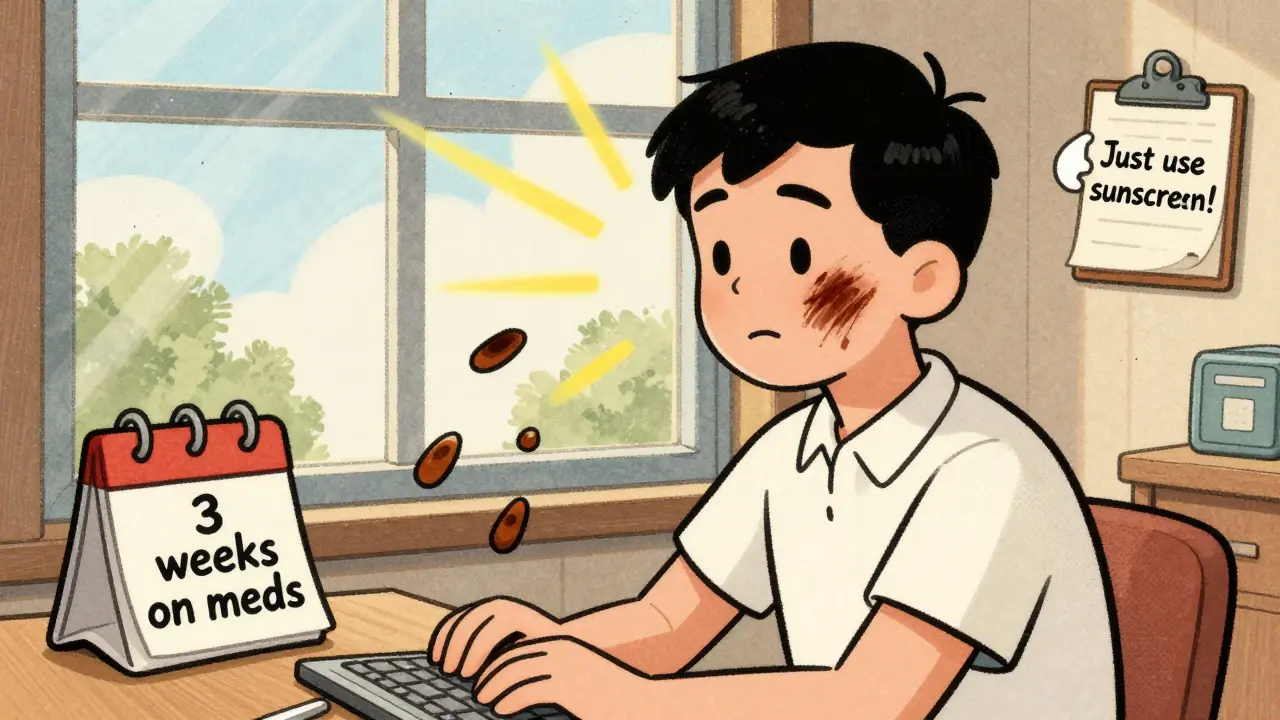
A 2022 survey by the American Academy of Dermatology found that 68% of patients who had a photosensitivity reaction said their doctor never warned them. That’s not negligence-it’s oversight. Many providers assume patients know about sun risks with antibiotics. They don’t. And when patients get burned, they often blame the sun, not the medicine.
On Reddit, a physician posted: "I’ve had three patients develop full nail separation on doxycycline. All quit the drug. None were told about this risk." On Healthgrades, one patient wrote: "My dermatologist said, ‘Just use sunscreen.’ That’s it. I got second-degree burns on my shoulders after walking to my car."
Doctors aren’t ignoring you. They’re just not trained to prioritize this side effect. But you can fix that. Ask: "Is this antibiotic likely to make me sun-sensitive? What’s the risk compared to other options?" If you’re on doxycycline and have outdoor hobbies, ask about switching to minocycline or sarecycline.
How to Actually Protect Yourself (Not Just "Use Sunscreen")
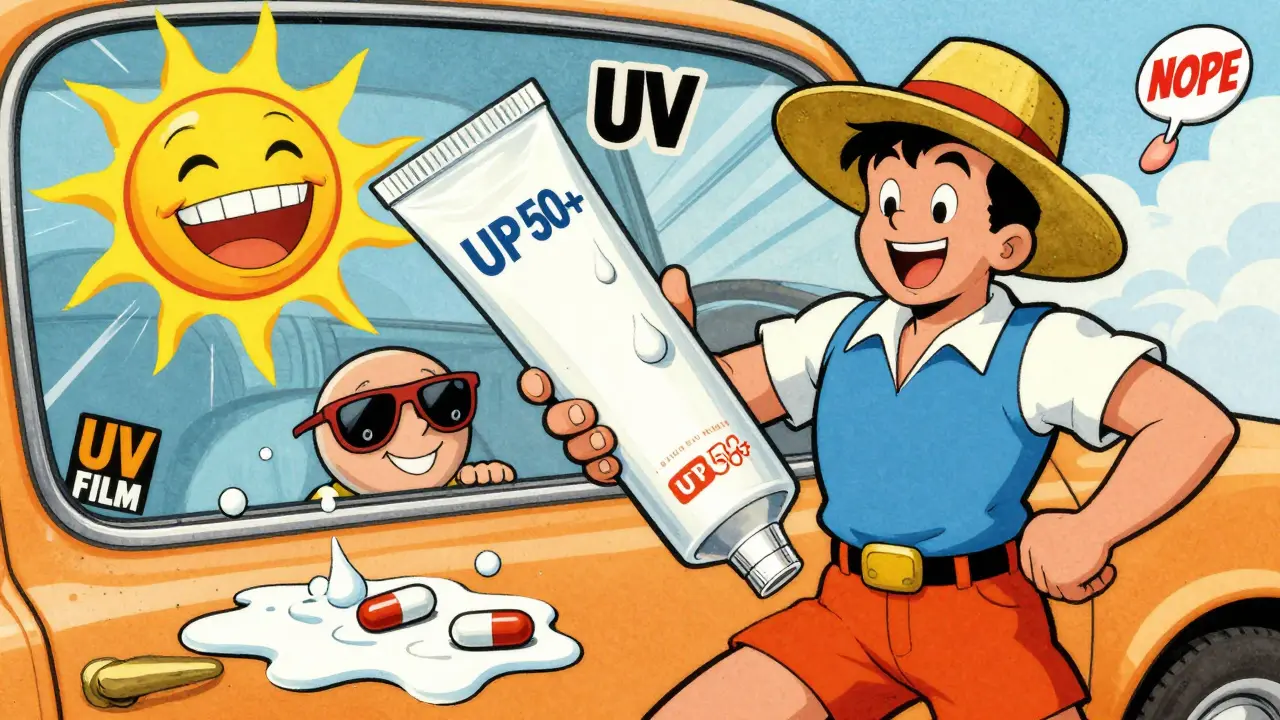
"Use sunscreen" isn’t enough. Most chemical sunscreens block UV-B and some UV-A, but not the full 320-425 nm range that triggers tetracycline reactions. You need mineral blockers: zinc oxide and titanium dioxide. These sit on top of your skin and physically reflect the dangerous wavelengths.
Here’s what works:
- Mineral sunscreen, SPF 50+ - CeraVe Mineral SPF 50, EltaMD UV Clear, or Vanicream. Apply 1/4 teaspoon for your face. Most people use too little-only 30% apply the right amount.
- Reapply every 2 hours - Even if it’s "water-resistant." Sweat, rubbing, and UV exposure break it down.
- Wear UPF 50+ clothing - Look for shirts labeled UPF 50+. Regular cotton blocks only 5-10% of UV-A. UPF fabric blocks 98%.
- Avoid 10 a.m. to 4 p.m. - UV-A is strongest then. Schedule walks, errands, or outdoor time before 9 a.m. or after 5 p.m.
- Wear a wide-brimmed hat - A 3-inch brim cuts UV exposure to your face and neck by 73%.
- Use UV-blocking window film - Your car windows block UV-B but not UV-A. Install film (like 3M or Llumar) to block 99% of the damaging rays.
And yes-this applies indoors. If you sit near a window for hours, you’re still getting UV-A exposure. One patient developed a stripe of hyperpigmentation on her cheek from sitting by her office window for months while on doxycycline.
What to Do If You Get a Reaction
If you notice redness, blistering, or peeling after sun exposure while on tetracycline:
- Get out of the sun immediately.
- Cool the area with a damp cloth-no ice, no butter, no aloe vera gel if it’s broken skin.
- Take ibuprofen (200-400 mg) to reduce inflammation.
- Don’t pop blisters. Cover them with a sterile bandage.
- Call your doctor. You may need to switch antibiotics.
Severe reactions can lead to scarring, long-term dark spots, or even hospitalization. If you’re in pain, have fever, or the area is oozing, go to urgent care. Don’t wait.
Alternatives That Don’t Make You Sun-Sensitive
If you’re on doxycycline and the sun risk is too high, talk to your doctor about alternatives:
- Minocycline - Best for acne patients with sun exposure. Lower risk, same effectiveness.
- Sarecycline (Seysara) - Newer, acne-only antibiotic. Only 3.2% photosensitivity rate. Higher cost, but worth it for outdoor lifestyles.
- Macrolides (azithromycin, clarithromycin) - Good for respiratory infections. No known photosensitivity.
- Fluoroquinolones (moxifloxacin) - Lower phototoxic risk than older ones like ciprofloxacin. Avoid if you have tendon issues.
Don’t assume your infection can’t be treated another way. Doxycycline is popular because it’s cheap and broad-spectrum-but it’s not always the best choice for your life.
Long-Term Effects and What’s Coming
One bad reaction can leave you with dark patches on your face or neck that last for a year or more. Some patients develop chronic hyperpigmentation that doesn’t fade-even after stopping the drug. That’s why prevention isn’t optional. It’s essential.
On the horizon: new tetracycline derivatives like omadacycline (Nuzyra) show only 2.1% phototoxicity in trials. Researchers are also testing "smart" sunscreens that neutralize tetracycline’s light-absorbing molecules before they cause damage. These are still in development, but they’re coming.
For now, your best defense is awareness, protection, and asking the right questions. Don’t wait for a burn to learn the lesson.
Final Checklist: Sun Safety While on Tetracycline
Print this. Tape it to your bathroom mirror.
- ☐ Confirm which antibiotic you’re taking (doxycycline = high risk)
- ☐ Switch to minocycline or sarecycline if you’re outdoors often
- ☐ Use mineral sunscreen (zinc oxide or titanium dioxide), SPF 50+, daily
- ☐ Reapply every 2 hours, after sweating or swimming
- ☐ Wear UPF 50+ clothing and a wide-brimmed hat
- ☐ Avoid sun between 10 a.m. and 4 p.m.
- ☐ Install UV film on car and home windows
- ☐ Check nails weekly for lifting or discoloration
- ☐ Tell your doctor if you get any sunburn-like reaction
It’s not about avoiding the sun forever. It’s about protecting yourself so you don’t pay for a month of antibiotics with months of skin damage.





Kathy Scaman
I got burned so bad on doxycycline I thought I’d been hit by a flamethrower. Just walked to my mailbox and came back looking like a lobster. No one warned me. Not my doctor, not the pharmacist. Just me, my stupid optimism, and a cloudy Tuesday.
Bryan Fracchia
This is one of those things that feels like a trap. You take the pill because you’re sick, and then the world becomes hostile. I switched to minocycline after my shoulders turned into roadkill. Best decision I ever made. Sun’s still out there, but now I can actually enjoy it.
Timothy Davis
You people are overreacting. Sunscreen is sunscreen. If you’re getting burned through UPF 50+ clothing and zinc oxide, you’re either applying it wrong or you’re genetically predisposed to being a walking sunburn. Stop blaming the antibiotic and start taking responsibility.
fiona vaz
I’ve had patients with photo-onycholysis on doxycycline. It’s heartbreaking. One woman cried because her nails looked like they’d been chewed by a dog. I always mention this now-no exceptions. Even if they’re 70 and only walk to the mailbox. Prevention is easier than repair.
Sue Latham
Oh honey, if you’re on doxycycline and you think SPF 30 is enough, you’re living in a 2008 YouTube tutorial. Get your act together. Mineral sunscreen. UPF shirts. UV film. Or just stay inside. You’re not a sun deity, you’re a walking chemical reaction.
James Dwyer
I’ve been on minocycline for six months now. No burns, no peeling, no weird nail stuff. Just clear skin and the ability to walk outside without fear. If your doctor won’t switch you, find a new one. This isn’t optional.
jonathan soba
Interesting that the article mentions sarecycline but doesn’t note its cost. At $800 a month, it’s a luxury drug for people who can afford to avoid the sun. Meanwhile, the rest of us are stuck with doxycycline and a $12 bottle of zinc oxide that we ‘forget’ to reapply.
matthew martin
I used to think sunburns were just part of being alive. Then I got tetracycline-induced blistering after sitting in my backyard reading a book. Now I wear a hat indoors when the sun hits the window. I’ve got a UV meter on my desk. I check my nails every morning like they’re a weather report. It’s not paranoia-it’s survival.
Chris Urdilas
So let me get this straight: you’re telling me I can’t even sit in my car without getting roasted? And the solution is to spend $200 on window film and $50 on sunscreen I have to reapply every two hours? Cool. I’ll just take the burn. At least it’s free.
Phil Davis
I tried the mineral sunscreen. It left a white cast like I’d been dusted with flour. So I stopped. Now I just avoid sunlight. It’s easier. My skin’s fine. My social life? Not so much. But hey, at least I don’t look like a melted candle.
Irebami Soyinka
America thinks everything can be fixed with a product. UV film? UPF shirts? You think this is the first time a human got burned by medicine? In Nigeria, we just say: ‘Don’t go out.’ No sunscreen, no film, no fuss. Just stay in the shade. Simple. Effective. No capitalism required.
Katie Mccreary
You’re all so dramatic. I took doxycycline for 3 weeks and only got a little redness. You guys are making this into a trauma narrative. Just use sunscreen. Stop whining.
Kevin Kennett
I used to be one of those people who thought sunscreen was for the beach. Then I got a stripe of hyperpigmentation on my cheek from my office window. Now I wear a hat indoors, I have UV film on my car, and I carry a tiny bottle of zinc oxide in my bag. It’s not about being paranoid-it’s about being smart. You owe it to your skin.
Jess Bevis
My dad’s from Ghana. He used to say, ‘Medicine has teeth.’ Didn’t know he meant literal sunburns. Now I know. Always ask: ‘What’s the hidden cost?’