
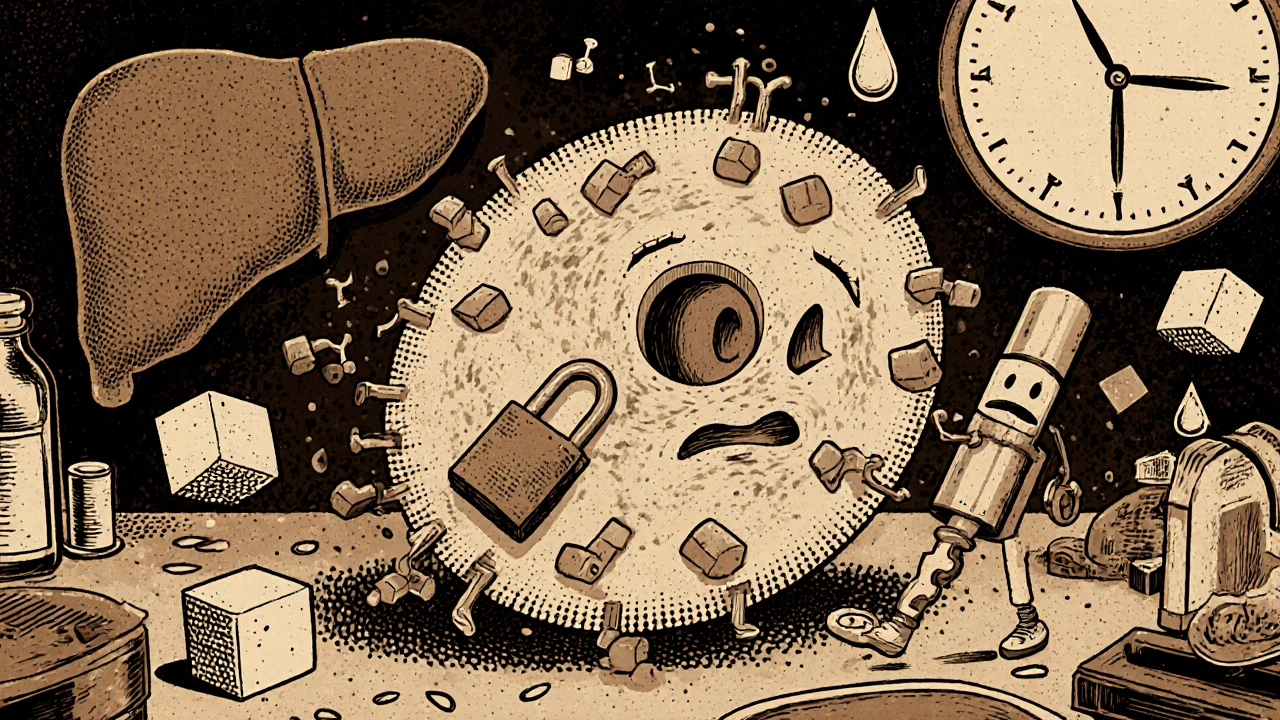
When your body stops responding to insulin like it should, things start to unravel-slowly at first, then all at once. This isn’t just about high blood sugar. It’s about your cells going deaf to the hormone that’s supposed to tell them: take in glucose. That’s insulin resistance, the silent engine behind most cases of type 2 diabetes. And it doesn’t happen in isolation. It’s tied to a cluster of warning signs called metabolic syndrome, which often shows up years before diabetes does. If you’ve been told you’re prediabetic, or you’re struggling to lose weight despite dieting, or your blood pressure keeps creeping up-this is why.
What Exactly Is Insulin Resistance?
Insulin is the key that unlocks your muscle, fat, and liver cells so glucose can get inside and be used for energy. In insulin resistance, those locks start to rust. The cells don’t respond well anymore. Your pancreas tries to compensate by pumping out more insulin. At first, it works. Blood sugar stays normal. But over time, the pancreas gets tired. It can’t keep up. Glucose piles up in your blood. That’s when you cross into prediabetes-and eventually, type 2 diabetes.
It’s not just about eating too much sugar. The real culprits are chronic overeating, especially refined carbs and fats. These flood your system with glucose and free fatty acids, which interfere with insulin signaling. Fat stored around your organs-especially your liver and belly-becomes inflamed. That inflammation blocks insulin’s message. Your body starts to store fat instead of burning it. You feel hungrier. You get tired. Your energy crashes after meals. These aren’t just annoyances-they’re biological red flags.
Metabolic Syndrome: More Than Just a Label
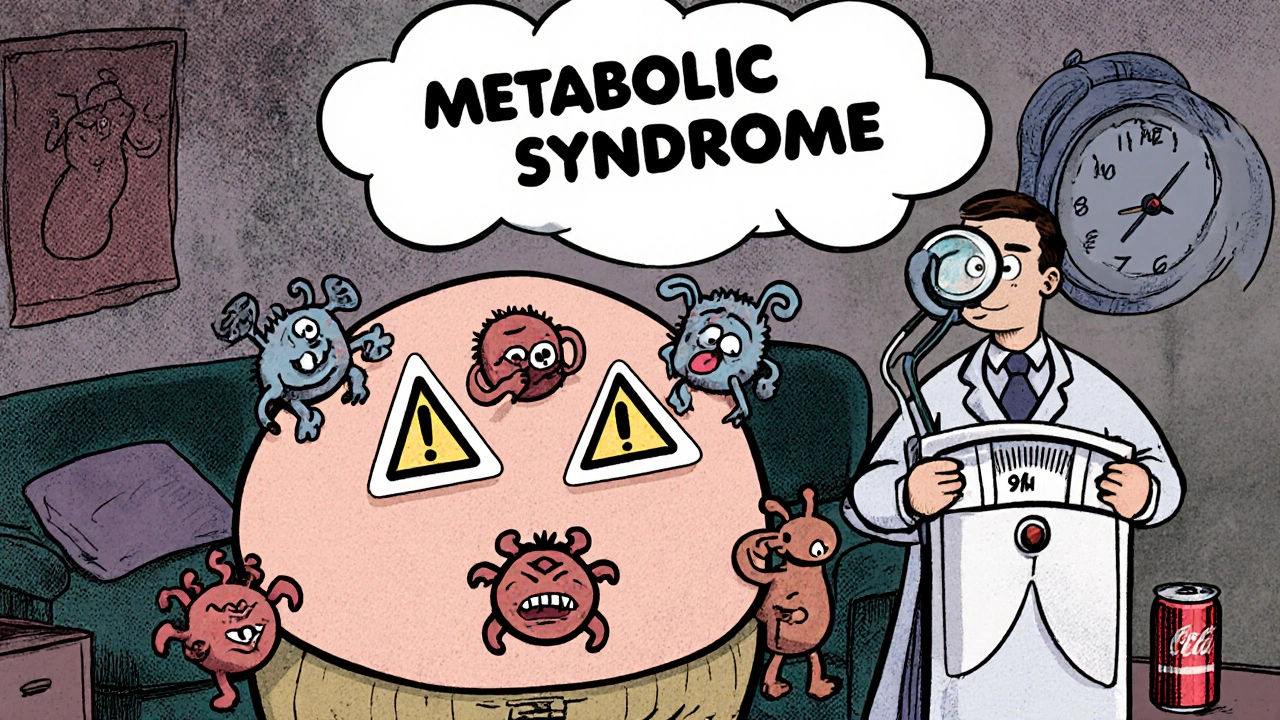
Metabolic syndrome isn’t one disease. It’s five warning signs that show up together. If you have at least three of these, your risk of heart disease, stroke, and type 2 diabetes jumps dramatically:
- Large waistline: 94 cm or more for men in Europe, 90 cm for South Asian or East Asian men; 80 cm or more for women
- Triglycerides above 150 mg/dL
- HDL (good cholesterol) below 40 mg/dL for men, 50 mg/dL for women
- Blood pressure at or above 130/85 mmHg
- Fasting blood sugar of 100 mg/dL or higher
What’s striking is how often these show up together. Someone with belly fat and high triglycerides almost always has insulin resistance-even if their blood sugar hasn’t crossed into prediabetes yet. That’s why experts are pushing to rename it metabolic dysfunction syndrome. It’s not just a cluster of symptoms. It’s a breakdown in how your body handles energy.
And here’s the hard truth: not all obese people develop metabolic syndrome. Only 30-40% do. Genetics matter. Where your fat stores, especially inside your liver and around your organs, determines your risk more than your total weight. Two people can weigh the same. One has fat under the skin. The other has fat wrapped around their liver. Only one is headed for diabetes.
The Progression: From Resistance to Diabetes
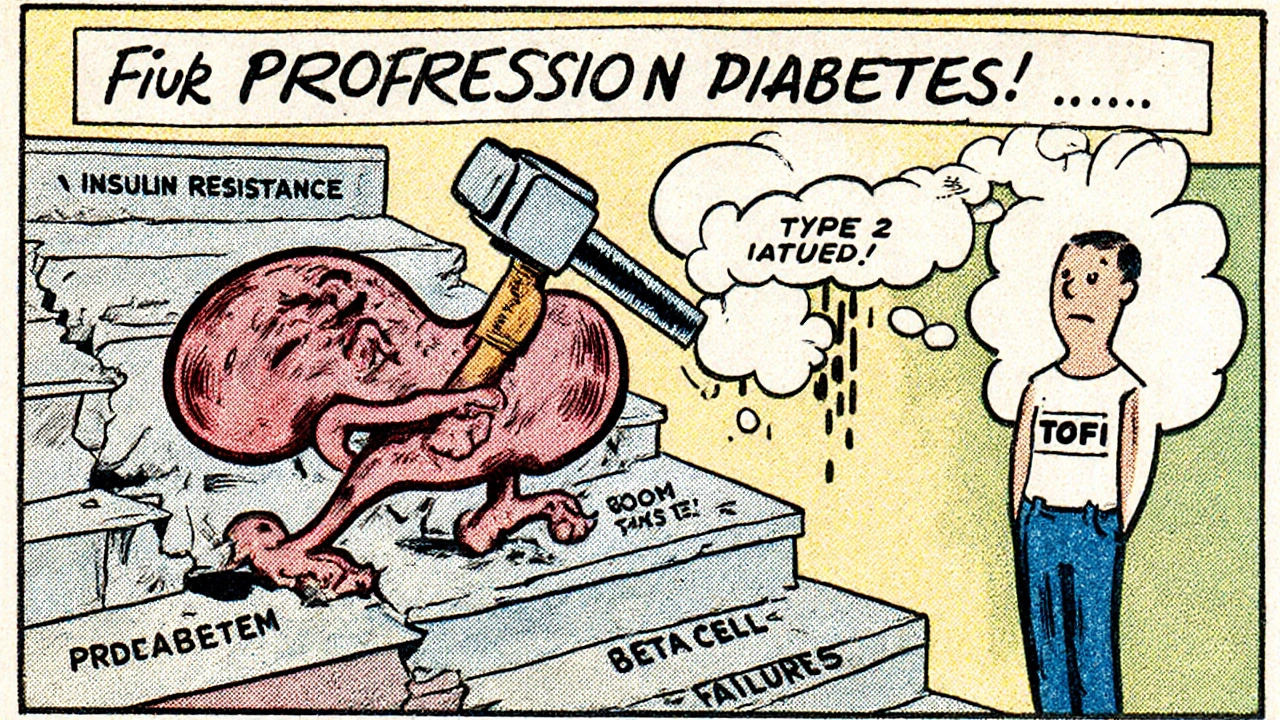
The path from insulin resistance to type 2 diabetes isn’t random. It follows a predictable pattern:
- Insulin resistance begins-cells ignore insulin. Pancreas makes more to compensate.
- Hyperinsulinemia-blood insulin levels climb. Fat storage increases. Hunger signals get messed up.
- Prediabetes-blood sugar rises above 100 mg/dL but stays under 126 mg/dL. Beta cells are still working, but barely.
- Beta cell failure-after years of overwork, the insulin-producing cells start dying off. At about 4-5% per year, they can’t keep up.
- Type 2 diabetes-fasting glucose hits 126 mg/dL or higher. The pancreas can’t produce enough insulin, even with maximum effort.
Studies show that people with metabolic syndrome are 5 to 6 times more likely to develop type 2 diabetes than those without. And if you have nonalcoholic fatty liver disease (NAFLD)-which affects nearly half of adults with metabolic syndrome-your risk doubles. The liver, when clogged with fat, becomes a major source of insulin resistance. It stops responding to insulin, so it keeps dumping glucose into the blood-even when you haven’t eaten.
Who’s at Risk? It’s Not Just Overweight People
Most people assume type 2 diabetes only affects those who are overweight. But that’s outdated. Around 20% of people with type 2 diabetes are at a normal weight. They’re called TOFI-thin on the outside, fat inside. Their fat is hidden around organs, not under the skin. This is especially common in South Asian populations, where even a BMI of 23 can carry high risk.
Age matters. After 45, insulin sensitivity drops naturally. But lifestyle accelerates it. Sitting all day, eating processed foods, not sleeping well-these aren’t just bad habits. They’re metabolic stressors. Stress hormones like cortisol raise blood sugar. Poor sleep messes with appetite hormones. Both make insulin resistance worse.
And it’s not just adults. Children as young as 10 are being diagnosed with prediabetes. The rise in sugary drinks, screen time, and sedentary lifestyles is hitting younger generations hard.
How Do You Know If You Have It?
There are no obvious symptoms at first. That’s why it’s called a silent killer. But some signs are common:
- Constant fatigue, especially after meals
- Cravings for carbs or sweets
- Difficulty losing weight, even with strict dieting
- Dark patches on skin (acanthosis nigricans)-usually on the neck, armpits, or groin
- High blood pressure or high triglycerides found during a routine checkup
Doctors test for it with a few simple labs:
- Fasting glucose (100-125 mg/dL = prediabetes)
- HbA1c (5.7-6.4% = prediabetes)
- Lipid panel (triglycerides, HDL)
- Waist measurement
If you’re over 45, overweight, or have a family history of diabetes, get tested-even if you feel fine. Early detection is the best defense.
Can You Reverse It?
Yes. And not just slow it down-reverse it. The Diabetes Prevention Program showed that people with prediabetes who lost 7% of their body weight and exercised 150 minutes a week cut their risk of diabetes by 58%. That’s more effective than metformin.
Here’s what works:
- Weight loss: Even 5-7% of body weight improves insulin sensitivity. For someone weighing 200 pounds, that’s 10-14 pounds.
- Exercise: Walking 30 minutes a day, five days a week, cuts insulin resistance by 25%. Strength training helps too-it builds muscle, which soaks up glucose.
- Diet: Cut ultra-processed foods, sugary drinks, and refined carbs. Focus on whole foods: vegetables, legumes, nuts, lean proteins, and healthy fats. Avoid fruit juice-even 100% juice spikes blood sugar fast.
- Sleep and stress: Aim for 7-8 hours of sleep. Chronic stress raises cortisol, which raises blood sugar. Meditation, breathing exercises, and regular movement help.
Medications like metformin can help, especially if lifestyle changes aren’t enough. But they’re not magic. They work best when paired with real change.
And now there’s something new: GLP-1 receptor agonists like semaglutide (Wegovy, Ozempic). In trials, people lost nearly 15% of their body weight and saw diabetes remission in two out of three cases. But these drugs are expensive and not meant to be lifelong. They’re tools to jumpstart change-not replace it.
The Bigger Picture
Metabolic syndrome and type 2 diabetes aren’t just individual health problems. They’re symptoms of a broken food system, a sedentary culture, and a healthcare system that waits for disease to happen before acting. In the U.S., nearly 40% of adults have metabolic syndrome. By 2050, one in three will have diabetes.
But it’s not inevitable. The Lancet Commission on Obesity says coordinated action-policy changes, better food access, school nutrition, workplace wellness-could reduce type 2 diabetes by 40-60% by 2035. That’s not just possible. It’s within reach.
If you’re reading this because you’re worried about your health, you’re already ahead. The first step isn’t a pill. It’s awareness. The second is action-even small, consistent steps. Your cells are still listening. They just need the right signals to start responding again.

Lauryn Smith
I used to think if I just ate less, the weight would melt away. Turns out, my body was screaming for balance, not punishment. Cutting out soda and walking after dinner changed everything. No magic, just consistency.
Bonnie Youn
STOP waiting for the perfect plan. Just move. Walk. Lift something. Eat one more veggie. Sleep like your life depends on it-because it does. You don’t need a coach. You need to start. Today. Not tomorrow. NOW.
Erin Nemo
My mom had prediabetes and reversed it by swapping white rice for cauliflower rice and doing yoga. She’s 72 now and hikes every weekend. It’s not about being thin-it’s about feeling alive.
ariel nicholas
So… you’re telling me that the entire medical-industrial complex has been lying to us for decades… and that the real solution is… eating broccoli and walking? Wow. Just wow. I mean, who knew capitalism wasn’t the answer to biology? Next you’ll say the sun rises in the east.
Rachel Stanton
Insulin resistance isn’t a moral failure-it’s a metabolic adaptation to chronic energy surplus. The liver becomes a glucose factory, adipose tissue releases inflammatory cytokines, and the pancreas burns out from overdrive. The fix? Reduce the flux. Prioritize fiber, resistance training, and circadian alignment. It’s physiology, not willpower.
Scotia Corley
It is, of course, entirely predictable that individuals who fail to regulate their dietary intake and physical activity would eventually succumb to metabolic derangement. The science is unequivocal. The failure lies not in the system, but in the individual’s refusal to adhere to basic biological principles.
Amber-Lynn Quinata
I’ve been through this. I cried in the doctor’s office. I felt so guilty. But then I realized-my body wasn’t broken. It was responding to the chaos I’d been feeding it. I started with one green smoothie a day. Then I slept 8 hours. Then I stopped checking my weight every morning. Now I’m off meds. And I’m not perfect. But I’m alive. 🙏❤️
elizabeth muzichuk
They don’t want you to know this. The food companies, the pharmaceutical giants-they profit from your suffering. You think this is about health? No. It’s about control. They sell you pills. They sell you diets. They sell you shame. But the truth? It’s quiet. It’s simple. And it terrifies them.
Debbie Naquin
Metabolic syndrome as a diagnostic cluster is a reductionist artifact of a biomedical paradigm that pathologizes adaptation. The real question is not how to fix insulin resistance but why the organism is being compelled into this state in the first place. The answer lies not in the cell, but in the culture.