Medication Checklist Generator
Create a personalized checklist of all medications you take for your brown bag review appointment. This tool helps ensure you don't forget anything important.
Prescription Medications
Over-the-Counter Medications
Supplements & Vitamins
Topical Medications
Your Medication Checklist
Important Note: Always bring the actual bottles with labels intact. This tool helps you remember what to bring, but your provider needs to see the actual bottles to check for expiration dates, dosage information, and potential interactions.
Imagine this: You’re 72, taking eight different pills a day. Some are prescriptions. Some are supplements your daughter swears by. One is that leftover antibiotic from last year’s cold. You don’t know why you’re still taking it, but it’s in the drawer, so you grab it. Then you go to your doctor. You try to remember everything. You forget one. You mix up the doses. By the time you’re done talking, your doctor has no clear idea what you’re actually taking. That’s not just a mistake - it’s dangerous.
This is why brown bag medication review events exist. They’re not fancy. They’re not high-tech. But they work. And they save lives.
It’s simple: you gather every single thing you take - pills, patches, liquids, vitamins, herbs, OTC painkillers, even that gummy multivitamin you chew every morning - and put them all in a brown paper bag. Then you bring it to your appointment. No lists. No guesses. Just the real stuff. Your pharmacist or doctor looks at each bottle, checks the labels, compares them to your records, and asks: Why are you taking this? Is it still needed? Is it safe with the others?
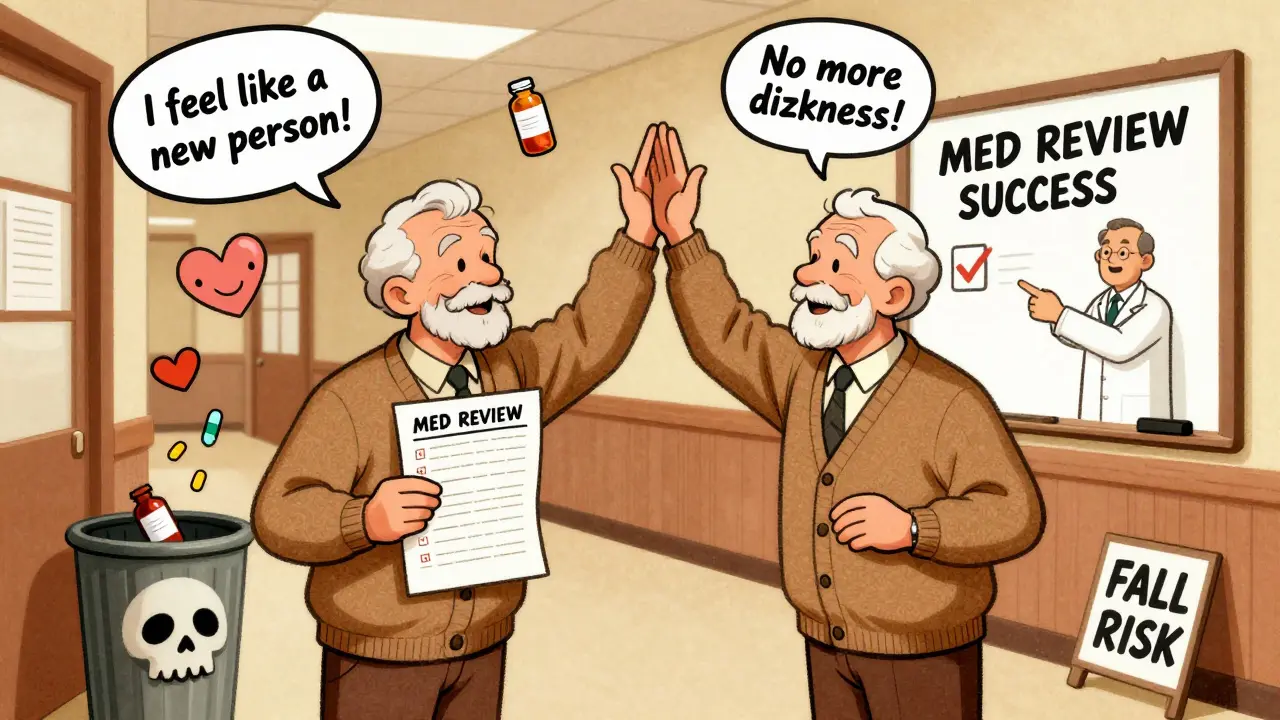
And here’s the scary part: studies show that when patients try to list their meds from memory, they get it wrong 80% of the time. One man in Arizona was taking two different beta blockers - from two different doctors - and didn’t know it. He was dizzy, tired, and nearly fell. The brown bag review caught it. He stopped one. Within a week, his energy came back.
What Exactly Goes in the Brown Bag?
You might think, ‘I only take a few things.’ But most seniors don’t. The average person over 65 takes 4.7 prescription medications and almost two over-the-counter products. That’s not counting supplements. And that’s where things get messy.
Here’s what you need to bring:
- All prescription medications - even ones you haven’t taken in months
- All over-the-counter drugs: Tylenol, ibuprofen, antacids, sleep aids, allergy pills
- All vitamins and minerals - including those fancy gummies or powders
- All herbal remedies: fish oil, turmeric, garlic pills, echinacea
- All patches, inhalers, eye drops, or topical creams you use daily
- All bottles, even if they’re half-empty or expired
Don’t leave anything out. Not because you’re being paranoid - because you might be missing something that’s hurting you. One woman brought a bottle of melatonin she’d been taking for years. Her doctor found it was interacting with her blood pressure medicine. She stopped it. Her BP stabilized.
And yes - include the expired stuff. Your provider needs to know what you’ve been holding onto. Many people keep old meds ‘just in case.’ But that’s how dangerous mix-ups happen.
Why This Works Better Than a List
You’ve probably been asked: ‘Can you tell me what medications you take?’
And you’ve probably panicked. ‘Uh… I take the blue one in the morning, the white one at night…’
That’s not enough. People forget names. They forget doses. They don’t know why they’re taking something. A 2016 study from the Agency for Healthcare Research and Quality found that out of 10 to 15 patients who tried to list their meds verbally, only two got it right.
But when they brought the actual bottles? Accuracy jumped to 92-95%. Why? Because the bottles don’t lie.
Look at the label. Is it a 10 mg pill? Or a 20 mg? Is it meant to be taken once a day or twice? Is it an extended-release version? Is it the same as the one you got last month? These details matter. And they’re impossible to remember accurately unless you’re holding the bottle.
Electronic lists? They’re better than memory - but still flawed. One study found they’re only 45-60% accurate. Why? Because not every medication is in the system. Maybe your doctor didn’t enter it. Maybe you got it from a clinic you didn’t tell your main provider about. Maybe it’s an OTC drug no one tracks. The brown bag fills those gaps.
Who Needs This the Most?
It’s not just for seniors. But it’s most critical for them.
According to the National Center for Health Statistics, 89.6% of adults 65 and older take at least one medication. More than half - 54.6% - take five or more. That’s called polypharmacy. And it’s a silent risk.
Each extra pill increases your chance of side effects, interactions, falls, confusion, and hospitalization. One study found that medication errors contribute to up to 20% of adverse drug events in hospitals. Most of those are preventable.
But it’s not just about age. If you see multiple doctors - one for your heart, one for your joints, one for your thyroid - you’re at higher risk. Each doctor might prescribe something without knowing what the others have ordered. That’s how people end up with duplicate drugs.
And if you’ve been hospitalized recently, or if you’ve had a fall, memory issues, or unexplained fatigue - a brown bag review should be your next step.

How to Prepare - Step by Step
It sounds easy. But most people mess it up because they wait until the day of the appointment.
Here’s how to do it right:
- Start 2-3 days before. Don’t wait until the night before. You need time to find everything.
- Gather everything. Go through every drawer, cabinet, purse, and medicine box. Don’t skip the bathroom cabinet. That’s where most forgotten meds hide.
- Don’t throw anything away. Even if it’s expired, even if you think you don’t need it anymore - bring it. Your provider needs to see it.
- Keep them in original bottles. No transferring pills to pill organizers for this review. The label has the name, dose, and instructions. The organizer doesn’t.
- Put it all in a brown paper bag. Yes, literally. It’s not about the bag. It’s about the ritual. The brown bag reminds you: this is serious. This is safety.
- Write down one thing you’re worried about. Is your stomach upset? Are you dizzy? Are you sleeping too much? Write it down. Bring it with you.
Pro tip: If you’re overwhelmed, ask a family member to help. They might spot something you’ve forgotten - or realize you’ve been taking a pill you thought you stopped.
What Happens During the Review
Don’t expect a 10-minute chat. A real brown bag review takes 30 to 45 minutes. That’s not a waste of time - it’s an investment in your health.
Here’s what your provider will do:
- Compare every bottle to your medical records
- Look for duplicates - like two different prescriptions for the same drug
- Check for dangerous interactions - like mixing blood thinners with certain herbs
- Ask if each medication is still necessary - many are prescribed for short-term use but kept for years
- Check doses - is it still the right amount for your age or kidney function?
- Look at expiration dates - old meds can lose potency or become unsafe
- Explain why you’re taking each one - in plain language, not medical jargon
And then comes the best part: you might get to stop taking something. In the Bexley and Greenwich pilot study, nearly two-thirds of participants had at least one unnecessary medication removed. That’s less clutter. Less cost. Fewer side effects.
One man in Seattle was taking four different sleep aids. He didn’t realize they were all sedatives. After the review, he stopped three. He now sleeps better - without the grogginess.
Common Problems - and How to Fix Them
Not everyone does this right. Here are the biggest mistakes - and how to avoid them.
Mistake 1: Forgetting key meds
People leave out OTC drugs, supplements, or topical creams. They think those don’t count. They do. A man took daily fish oil and vitamin D - and didn’t mention it. His blood thinner dose had to be lowered because the combination increased his bleeding risk.
Solution: Use a checklist. Write down every item you take - even if you think it’s ‘just a supplement.’
Mistake 2: Being embarrassed
Some people feel ashamed about hoarding old meds or taking too many. They hide them. Don’t. Your provider has seen it all. They’re not judging. They’re protecting you.
Solution: Remind yourself: this isn’t about blame. It’s about safety.
Mistake 3: Not preparing ahead
Bringing the bag the day of the appointment? You’ll forget something. And you’ll rush. The review won’t be as thorough.
Solution: Set a reminder on your phone three days before your appointment. Put it on your calendar. Treat it like a doctor’s appointment - because it is.
What Comes After the Review
The review doesn’t end when you leave the office.
Your provider should give you a clear, updated list of what you’re taking - and why. Make sure you understand each one. Ask: ‘What happens if I skip this?’ ‘What if I take it wrong?’
Use the teach-back method: repeat back what you heard. ‘So you’re saying I take the metformin with breakfast, and I can stop the sleep aid?’ If you can’t say it clearly, you don’t understand yet.
Also, ask for a printed copy. Keep it in your wallet or phone. Update it every time something changes.
And schedule your next review. The American Pharmacists Association recommends one every 6-12 months - especially if you’re on five or more meds. Don’t wait for a crisis.
Technology Can Help - But Not Replace
There are apps now that scan pill bottles and track your meds. Some pharmacies offer digital lists. That’s great. But they’re not enough.
Dr. Joanne Snyder’s 2024 study found that 41.3% of dangerous medication errors involved drugs that weren’t in any electronic record. Maybe it was a gift from a friend. Maybe it was bought online. Maybe it’s a supplement you got at the health food store. No app can know that unless you tell it - and you might forget.
That’s why the brown bag still matters. It’s the only way to see what’s really in your medicine cabinet.
Some clinics now combine the two: they scan your pills with a phone app during the review. That speeds things up. But the bag still comes first.
Why This Matters Now More Than Ever
By 2026, Medicare will require every Annual Wellness Visit to include a documented medication review. That’s not a suggestion. It’s a rule.
Why? Because it works. Kaiser Permanente started mandatory brown bag reviews for all patients over 65 in 2020. They saw a 22.3% drop in preventable hospitalizations.
And it saves money. The average cost of a medication-related hospital stay? Over $10,000. The cost of a brown bag review? Less than $50.
This isn’t just about taking pills. It’s about living well. About avoiding falls. About staying independent. About not ending up in the ER because you took something you didn’t realize you were still taking.
If you’re 65 or older - or if you care for someone who is - don’t wait for a problem to happen. Bring the bag. Ask the questions. Get the answers.
Your health is worth the time.